
Pocket Pokies Casino in Australia: An Offshore Operator in a Prohibited Market
Pocket Pokies sells itself as an Australian online casino. It is not. The brand holds a Curacao eGaming licence (No. 8048/JAZ, claimed on its own site), runs an 800+ game lobby, and advertises a welcome package of up to AU$5,000 plus 150 free spins. What it does not advertise, and what no affiliate page bothers to say out loud, is that the product it is selling is prohibited under Australian law. The Interactive Gambling Act 2001 makes it an offence to provide online casino games and online pokies to a person in Australia. Pocket Pokies is offshore, unlicensed for the Australian market, and exactly the kind of operator the ACMA has spent six years blocking out of the country. A player who reads past the banner and into the terms will find a 30% commission on withdrawals made before deposit turnover is met, a AU$500 daily cashout cap, and a free-spin clock that expires in 24 hours. The welcome bonus is generous. The cost of clearing it is not.

Data current as of 13 September 2026 and checked against the ACMA’s published enforcement and blocking data.
Table of Contents
- What Pocket Pokies Is and Where It Sits in the Market
- The Review: What the Numbers and Player Reports Actually Say
- Playing for Real Money: Deposits, Wagering and the Real Cost
- Joining Pocket Pokies: Sign-Up, KYC and the Mobile Experience
- Getting Your Money Out: Withdrawal Limits, Fees and Timelines
- Why Pocket Pokies Can’t Hold an Australian Licence
- The Curacao Licence: What It Does and Doesn’t Mean for Australians
- Fair Play, RTP and the Missing Audit Trail
- How the ACMA Enforces Australia’s Online Casino Ban
- What Your Pocket Pokies Bonus Actually Costs You
- The No-Deposit Offer: What You Get and the Strings Attached
- Which Games Your Free Spins Actually Unlock
- The Deposit Bonus Terms That Eat Into Your Balance
- How Pocket Pokies Stacks Up Against Other Offshore Casinos
- Playing Safely When the Safety Net Doesn’t Reach
- How We Evaluated Pocket Pokies and Its Australian Alternatives
- Is Pocket Pokies Worth the Risk? What the Figures Actually Say
- Frequently Asked Questions
What Pocket Pokies Is and Where It Sits in the Market
Pocket Pokies is a smaller offshore casino. Casino.guru’s Safety Index of 6.9 sits at the lower end of the brand-assessment scale, and the operator is flagged as a “Fresh online casino” — a label that reflects a short operating history rather than a vote of confidence. Estimated annual revenues are above $1,000,000, which puts Pocket Pokies in the small-operator bracket by industry standards. The brand carries a Curacao eGaming licence number (8048/JAZ) in its footer, the same way dozens of offshore casinos do, and the licence is claimed rather than independently verified by this review.
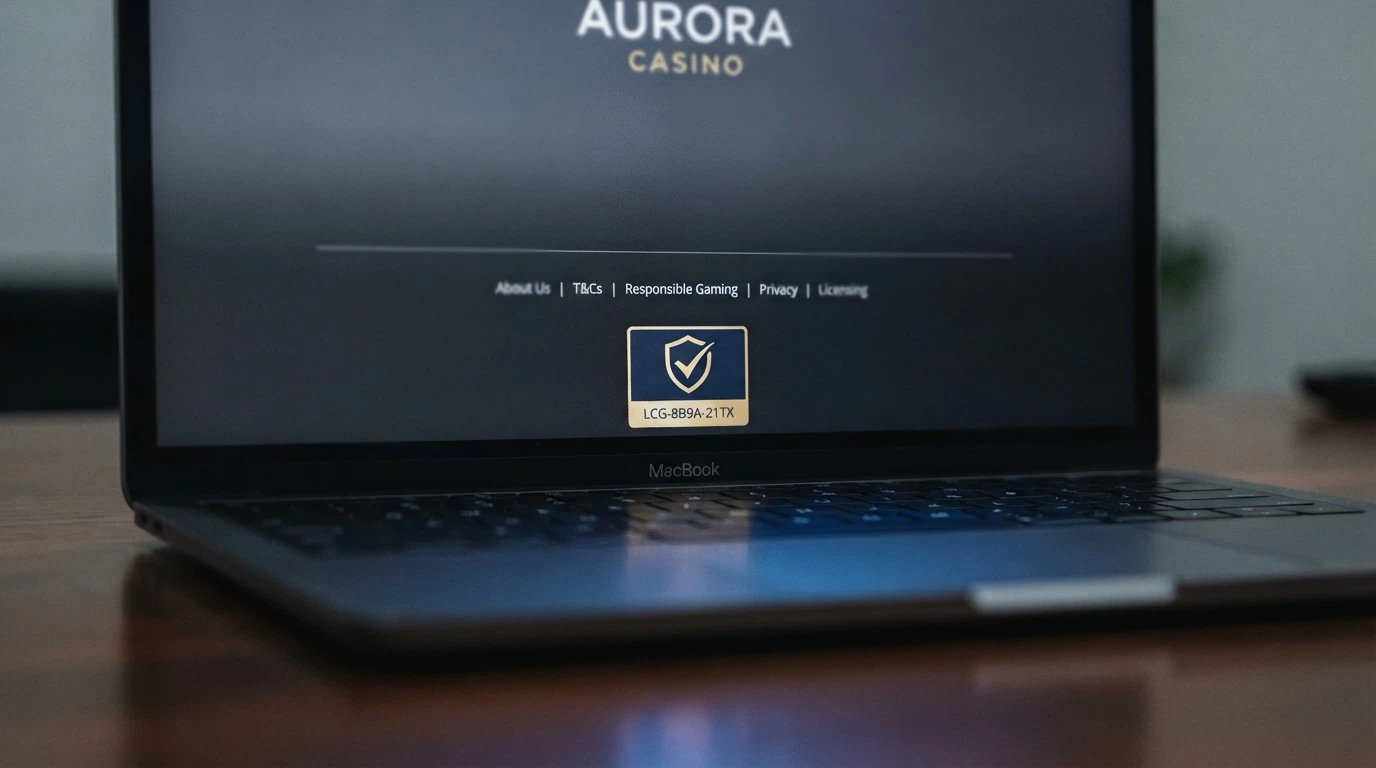
Curacao licensing is the offshore default. The regulator does not investigate player complaints the way the Malta Gaming Authority or the UK Gambling Commission do, and dispute resolution effectively runs through the operator itself. A Safety Index of 6.9 from Casino.guru reflects, in part, a short track record: there is not enough history to flag systemic problems, and there is also not enough history to clear them. “Fresh” is a neutral label, not an endorsement.
The brand positions itself to Australian players with AUD balances, AUD bonus figures, and language that treats “Australian casino” as a marketing line rather than a regulatory category. That positioning is the entire point of the page — the marketing says one thing and the legal status says another, and a reader who only sees the marketing loses the second half of the picture.
The Review: What the Numbers and Player Reports Actually Say
The Safety Index figure is one of the few third-party numbers a player can point to. Casino.guru’s 6.9 is built from complaint volumes, T&C fairness flags, the operator’s licensing status, and a handful of game-provider and payment-process checks. It is not a guarantee, but it is the closest thing to a reputation score a small offshore casino gets. At 6.9, Pocket Pokies sits in the range where Casino.guru flags “some unfair T&C clauses” in the operator’s terms. The clauses in question are not always published on the public review page, which is itself a transparency gap.
A second gap is the absence of independently published audit reports. The brand does not surface an eCOGRA, iTech Labs, or GLI certificate that a player can verify, and a third-party sweep (machash.com) notes that third-party audits are not publicly available. Reputable casinos publish a current RNG certification on a dedicated page; Pocket Pokies does not. That does not prove the games are unfair, but it removes a check a player would otherwise have.
The operating history is short. “Fresh” is not a warning sign by itself, but it means player-feedback data is thin, complaint-resolution patterns are still being set, and the operator has not been tested through a full regulatory cycle. For a player weighing the AU$500 daily withdrawal cap and the 30% pre-turnover commission against a “new casino” label, the calculation is: how much of the AU$5,000 welcome headline do you actually expect to walk away with, and is this the brand you want to test that on?
Playing for Real Money: Deposits, Wagering and the Real Cost
Deposits land through Visa, Mastercard, Bitcoin and other crypto, and a range of e-wallets — a payment menu that licensed Australian operators cannot legally offer. Credit cards and cryptocurrency have been banned for licensed online wagering since 11 June 2024, so any AUD casino that takes a Visa or a Bitcoin deposit is, by definition, an offshore operation outside Australian rules. The minimum deposit is AU$20, and minimum spin stakes on the pokies start from around AU$0.10.

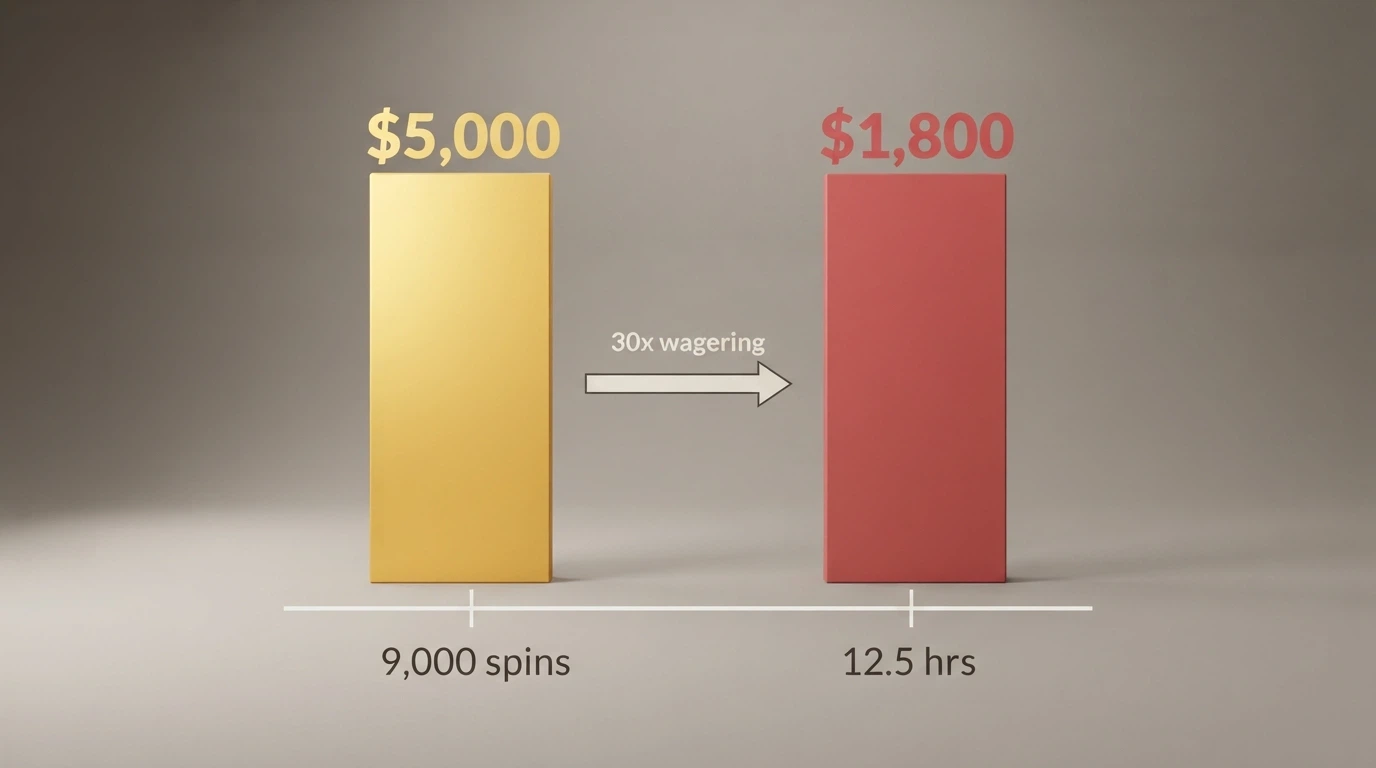
The wagering requirements that govern a bonus at Pocket Pokies sit at 30x to 40x, depending on the offer, and the maximum bet during bonus play is capped at AU$5 per spin. Those two numbers do the real work on the welcome page. A 150% match on a AU$1,000 first deposit produces a AU$1,500 bonus that must be turned over 30 times, which is AU$45,000 of required play before any withdrawal is possible. At the AU$5 cap, that is 9,000 spins. At a five-second spin interval, it is roughly 12 and a half hours of continuous play. The bonus is “free” in the sense that it is not paid for; it is not free in the sense that the time and the stake to clear it are yours.
The headline figure is loud, and the turnover obligation is where the cost lives. A player who treats the AU$5,000 welcome package as a free AU$5,000 has not read the same terms the operator has.
Joining Pocket Pokies: Sign-Up, KYC and the Mobile Experience
Registration follows the standard offshore flow: an email address, a password, basic personal details, and a confirmation link. KYC kicks in at withdrawal rather than at deposit, which is the norm for Curacao-licensed brands. A driver licence or passport and a recent utility bill are typically what the operator asks for when a player requests a cashout.
The mobile experience runs in a browser rather than a dedicated app. No Pocket Pokies app surfaces in the major Australian app stores, and the brand’s own site routes mobile users to the responsive web version. The browser experience is functional: the lobby scales, the pokies run on a vertical layout, and the cashier fits a phone screen. What a player does not get is the polished native-app feel a licensed wagering operator ships.
Customer support runs through live chat, and here the hours are a real friction point. The live-chat window operates from 16:00 to 10:00 GMT+11, which covers Australian evenings, nights, and early mornings — but leaves a daytime gap of roughly six hours in the middle of the working day. A player who hits a withdrawal problem at lunchtime AEST will be waiting for the chat to come online. Email support fills some of that gap, with response times in the order of hours rather than minutes. For a brand that asks for AU$1,500 of trust on the first deposit, the support hours are thinner than the lobby would suggest.
Getting Your Money Out: Withdrawal Limits, Fees and Timelines
This is where the marketing ends and the maths begins. Pocket Pokies sets daily withdrawal limits of AU$500, weekly limits of AU$3,000, and monthly limits of AU$10,000. A player who lands a serious win does not walk away with the whole balance in a day; the daily cap alone sets the pace. At AU$500 a day, a AU$10,000 win takes twenty days of consecutive withdrawal requests before the balance is empty.

The second number is the 30% commission on withdrawals made before the deposit turnover is met. If a player deposits AU$500, plays for an hour, and requests a withdrawal before turning the deposit over the required number of times, the operator takes 30% of the withdrawal as a fee. The clause is unusual among established operators; it functions as a penalty for changing your mind. The clause is also why the “claim your welcome bonus, then withdraw” sequence most players attempt is, at this brand, a 30% haircut on whatever you try to take out early.
Typical processing timelines sit in the three-to-seven-day range, depending on the payment method. Crypto withdrawals are faster; bank transfers slower. Verification checks at first withdrawal can add a day or two. None of this is unusual for an offshore casino. The 30% pre-turnover fee is. Read the withdrawal page before the first deposit, not after the first win.
Why Pocket Pokies Can’t Hold an Australian Licence
No online casino can hold an Australian licence, because no Australian licence for online casino exists. The Interactive Gambling Act 2001 (IGA) makes it an offence to provide online casino games, online pokies, and in-play betting to a person in Australia. The prohibition is on the provider, not the player. Section 15 of the IGA is what the ACMA enforces. The Act was strengthened in 2017 to close the loopholes that offshore operators were using to reach Australian customers, and the ACMA’s blocking powers date from that amendment.
Pocket Pokies is the kind of operator the IGA was strengthened to deal with. The brand holds a Curacao licence, takes Australian dollars, runs AUD-denominated bonuses, and markets directly to Australian players. None of that is illegal for the player, and the IGA does not target individuals. What is illegal, on the operator’s side, is the act of providing a prohibited interactive gambling service to a person physically in Australia. A Curacao licence changes nothing about that. It is a foreign regulator’s permission to operate from a foreign jurisdiction, not an exemption from Australian law.
The practical effect is the gap the player sits in. No Australian consumer protection reaches an offshore casino. The ACMA cannot recover a player’s money if the operator refuses a withdrawal. There is no Australian complaints body, no Australian ombudsman, and no Australian court that can compel a Curacao-licensed operator to act. The protection a player gets is whatever the operator’s own terms say, enforced by the operator’s own customer-service team.
The Curacao Licence: What It Does and Doesn’t Mean for Australians
A Curacao eGaming licence is a permission to operate a gambling business from Curacao under Curacao’s regulatory framework. The licence number that appears in a casino footer (8048/JAZ in Pocket Pokies’ case) is real, in the sense that Curacao does issue licence numbers and does maintain a register. What the licence does not do is extend any form of legal recognition into Australia. The IGA’s prohibition is on providing the service, not on where the operator is based, and no foreign licence exempts a brand from that prohibition.
Among player-dispute bodies and the wider affiliate-review industry, Curacao licensing sits at the lower end of the trust scale. The Malta Gaming Authority and the UK Gambling Commission publish enforcement actions, require periodic audits, and operate complaint channels that players can use. Curacao historically operated a master-licence system that allowed sub-licensees with relatively little direct oversight, and the new Curacao Gaming Control Board (GCB) framework introduced in 2023/2024 was designed to address those gaps. Pocket Pokies’ claimed licence number (8048/JAZ) was not independently verified during this review; the number appears on the brand’s own site and in third-party listings, but the GCB public register was not consulted to confirm it. A reader who wants certainty can check the register themselves; the brand’s footer is not the same document.
For an Australian player, the takeaway is straightforward: the licence is what the operator says it is, and that is the end of the verification chain that lives inside Australian borders.
Fair Play, RTP and the Missing Audit Trail
Pocket Pokies’ lobby RTP profiles sit in the 95% to 97% band — standard for a Curacao-styled casino and consistent with what published RTPs look like for the providers the operator carries. The 95% to 97% range is what the house edge is built on: every AU$100 a player wagers across the lobby returns, on average, somewhere between AU$95 and AU$97, with the remainder to the operator. That is how the casino makes money, and it is the same maths every other casino runs on.
The problem is not the RTP. The problem is the audit. Reputable casinos publish an RNG certification from an independent testing house (eCOGRA, iTech Labs, GLI, BMM Testlabs) on a dedicated page, and the certificate carries a date, a signature, and a scope. Pocket Pokies does not surface that document on its public site, and one third-party source (machash.com) notes that third-party audits are not publicly available for the brand. That absence is the practical implication: a player cannot independently verify that the games are running as advertised. The absence does not prove the games are unfair. It does mean a player is taking the operator’s word for it.
For a player who has read the term “provably fair” on a crypto-casino landing page, the standard to look for is the same: a published, dated, third-party test certificate, ideally with a recent issue date. Pocket Pokies does not pass that bar on the available evidence.
How the ACMA Enforces Australia’s Online Casino Ban
The Australian Communications and Media Authority (ACMA) is the federal regulator that enforces the IGA. The tool the ACMA uses most visibly is site blocking: since the first blocking request in November 2019, the ACMA has directed Australian ISPs to block 1,788 illegal gambling and affiliate websites as of August 2026. Over 230 illegal gambling services have withdrawn from the Australian market since 2017, which is a separate metric — services that closed Australian-facing operations rather than wait to be blocked.
The next phase of enforcement is legislated. The Interactive Gambling Amendment (Gambling Reform) Bill 2026 passed Parliament on 19 August 2026, and its measures commence on 1 January 2027. From that date, banks and payment providers gain express authority to block transactions to illegal gambling operators. The mechanism is the financial system itself: a player trying to deposit at an offshore casino may find the transaction refused at the bank, regardless of whether the casino’s payment processor is willing to accept it. The reform also caps wagering advertising at three ads per hour between 6:00 am and 8:30 pm, bars live-sport wagering advertising, prohibits athletes, celebrities, and influencers from promoting wagering, and tightens inducement marketing — including a three-month ban on direct-marketing inducements to anyone who has deregistered from BetStop.
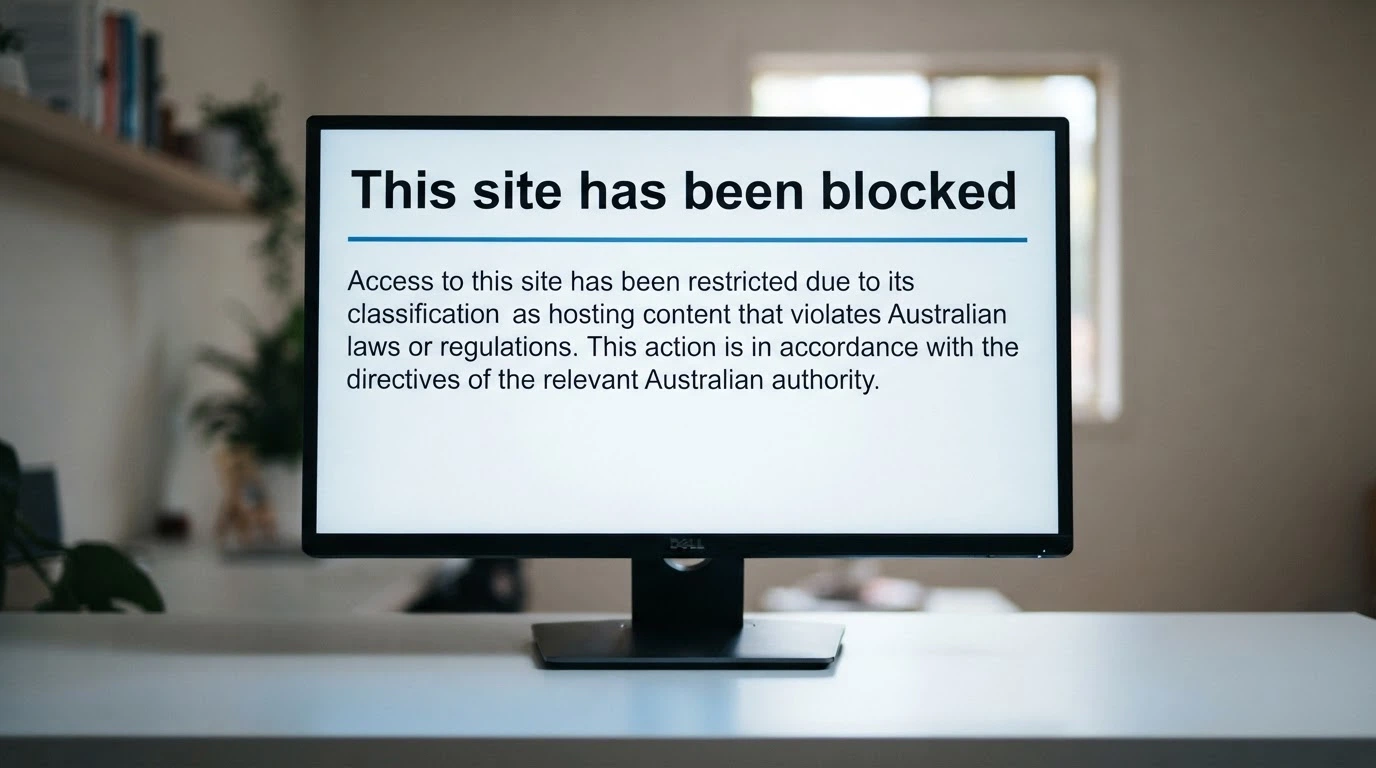
The enforcement that matters most to a player reading this page is the blocking risk. The ACMA’s 1,788 blocked sites are not a static number — it grows. Pocket Pokies is not on the public blocked list today, but the ACMA does not publish the list exhaustively, and offshore operators are added to it as the regulator builds cases. A player who holds a balance at Pocket Pokies on the day the site is added to a blocking order has no Australian recourse. The balance is on the operator’s servers, in the operator’s jurisdiction, under the operator’s terms. The page an Australian sees when the site is blocked is a regulator’s notice, not a withdrawal form.
The June 2024 payment ban — credit cards, credit-related products, and cryptocurrency banned for licensed online wagering — is the prior enforcement step. Any AUD casino that still takes a Visa deposit or a Bitcoin transfer is, by definition, outside that regime. Pocket Pokies is. The credit-card and crypto ban is one of the clearest signals an Australian player has that a brand is not part of the licensed system.
What Your Pocket Pokies Bonus Actually Costs You
The welcome package advertises up to AU$5,000 and 150 free spins across four deposits. The structure is: a 150% match up to AU$1,500 plus 50 free spins on Caishen Wins on the first deposit; a 100% match up to AU$1,000 plus 100 free spins on Mustang Gold on the second; a 150% match up to AU$1,500 on the third; and a 100% match up to AU$1,000 on the fourth. The total headline is the sum of the four tiers at maximum deposit. It is a marketing figure, not a free-AU$5,000 figure.
The wagering is 30x to 40x, and the maximum bet during bonus play is AU$5 per spin. Free spins expire within 24 hours of activation, which is the tightest clock on the page. A player who claims the first-deposit 50 free spins on Caishen Wins has until the same time tomorrow to use them, win or lose.
The worked maths, on the first-deposit tier alone: a player who deposits AU$1,000 and claims the full AU$1,500 bonus must turn over AU$45,000 at 30x, or AU$60,000 at 40x, before withdrawing the bonus-derived balance. At the AU$5 max-bet cap, that is between 9,000 and 12,000 spins. At a five-second spin interval, the lower end of that range is twelve and a half hours of continuous play; the upper end is closer to seventeen hours. The 24-hour free-spin clock on the 50 Caishen Wins spins runs out long before the wagering requirement does.
The “expected loss” of clearing a AU$1,500 bonus at 30x wagering with a 96% RTP (the midpoint of the 95% to 97% lobby band) is the AU$45,000 turnover multiplied by the 4% house edge, which is AU$1,800. That is the statistical cost of clearing the bonus, on average, before any withdrawal is possible. The bonus is “worth” AU$1,500 in the marketing; the expected cost of clearing it is AU$1,800. The marketing word the operator uses is “bonus.” The arithmetic the player’s bankroll experiences is a loss.
This is a statistical estimate, not a guarantee for any single session. A player can run above or below the average. The average is what the bonus is priced at, and the price is higher than the headline.
The terms that govern each offer type, in summary:
| Offer Type | Typical Value | Wagering Multiple | Max Bet During Clear-Down | Validity Window | Maximum Cashout | Eligible Games |
|---|---|---|---|---|---|---|
| First-deposit match | 150% up to AU$1,500 + 50 FS | 30x–40x on bonus | AU$5 per spin | Free spins expire within 24 hours of activation | Bonus-derived winnings capped at standard AU market cap | Caishen Wins for the free spins |
| Second-deposit match | 100% up to AU$1,000 + 100 FS | 30x–40x on bonus | AU$5 per spin | Free spins expire within 24 hours of activation | Standard AU market cap | Mustang Gold for the free spins |
| Third- and fourth-deposit matches | 150% up to AU$1,500; 100% up to AU$1,000 | 30x–40x on bonus | AU$5 per spin | Standard bonus validity | Standard AU market cap | Selected pokies |
| No-deposit bonus | 10–50 free spins or AU$10–AU$40 free chip | 30x–50x on winnings | AU$5–AU$10 per spin | 24–72 hours after activation | Modest cap, typically AU$50–AU$100 | Selected pokies only; table games commonly excluded |
The pattern across every row is the same: a generous headline, a heavy wagering multiplier, a tight max-bet cap, a short clock, and a cashout ceiling. The terms are not unreasonable by offshore-market standards. They are also not the terms a casual reader of the welcome page is picturing when they see “AU$5,000 + 150 free spins.”
The No-Deposit Offer: What You Get and the Strings Attached
The no-deposit bonus at Pocket Pokies typically takes one of two forms: 10 to 50 free spins on a selected pokie, or an AU$10 to AU$40 free chip credited to a new account. Either form is a way for the operator to put a number on a player’s screen before the player has deposited. The number is small. The conditions are not.
Wagering on the no-deposit bonus is 30x to 50x applied to the winnings from the spins or the chip. If a player claims the AU$40 free chip and turns it into AU$200 of winnings, the wagering requirement at 40x is AU$8,000 of play before any withdrawal. The free spins are restricted to selected pokies; table games are typically excluded from wagering entirely. The max bet during no-deposit wagering is AU$5 to AU$10 per spin, and the bonus must be cleared within 24 to 72 hours of activation. The maximum cashout is capped at a modest amount, in the AU$50 to AU$100 range that is standard for the Australian no-deposit market.
A no-deposit bonus is a trial, not a payday. The arithmetic supports that reading. A player who treats it as a free-AU$40 has not read the same terms the operator has. A player who treats it as 72 hours of risk-free pokie play on the house has.
Which Games Your Free Spins Actually Unlock
The 50 free spins on the first deposit land on Caishen Wins, a Pocket Games Soft pokie with a 96.92% RTP, medium volatility, six reels, and up to 32,400 ways to win. The 100 free spins on the second deposit land on Mustang Gold, a Pragmatic Play pokie. Caishen Wins carries a published maximum win of 4,936x the bet — the kind of headline that belongs on a pokie-info page and that the operator is happy to point to, but the multiplier is the long-tail outcome, not the average spin.

Mustang Gold’s exact RTP and volatility were not confirmed by this review. The title is a known Pragmatic Play release, but the page’s own figures stop at the bonus tier. A player who wants the precise number for Mustang Gold should check Pragmatic Play’s published spec sheet; the Pocket Pokies terms name the game but not the game’s numbers.
The practical effect of being locked into specific titles for bonus clear-down is that the wagering requirement is met on a narrow slice of the lobby rather than across the full 800+ game catalogue. The two chosen titles are not bad games. They are also not the games a player would necessarily pick if the wagering could be cleared on any pokie. The 24-hour expiry on the spins runs ahead of the wagering requirement, so a player who logs in late or who gets pulled away from the screen loses the spin value outright. The 50 Caishen Wins spins at a AU$0.20 stake are worth AU$10 in nominal spin value; the AU$10 is gone if the 24-hour clock runs out.
The Deposit Bonus Terms That Eat Into Your Balance
Beyond the match rate, three terms determine whether a bonus is claimable at all. The wagering multiplier is 30x to 40x. The max bet is AU$5 per spin. The game-weighting rules determine which games count toward the wagering requirement and at what percentage.
For deposit bonuses at Pocket Pokies, slots typically contribute 100% of each AU$1 wagered toward the requirement, while table games are commonly excluded or weighted down. That is standard Curacao-operator practice; the brand-specific game weighting was not confirmed by this review, but the pattern is consistent with what a player at a Curacao-licensed casino will encounter. The practical consequence: a player who tries to clear a bonus on blackjack or roulette will move the wagering bar very slowly, if at all. The bonus is cleared on the pokies or it is not cleared.
The AU$5 max-bet cap is the term that slows the clear-down. A player with a AU$1,500 bonus and a AU$60,000 turnover requirement at 40x could, in principle, run larger bets and finish the requirement faster. The cap prevents that. The cap is also a player-protection mechanism in reverse: it lengthens the time a player spends at the casino, and the time spent is where the expected loss lives.
The deposit bonus is a turnover contract, not a gift. Read the contract before signing it.
How Pocket Pokies Stacks Up Against Other Offshore Casinos
The honest context for Pocket Pokies is the set of offshore brands competing for the same Australian player. Every operator in this list is offshore. None holds an Australian casino licence, and none can, because online casino is prohibited under the IGA. The “Licensed in Australia?” column is the most important column on the table, and every cell in it reads the same.

| Operator | Licensed in Australia? | Offshore Regulator |
|---|---|---|
| Pocket Pokies | No | Curacao eGaming No. 8048/JAZ (claimed) |
| Rocket Play | No | Curacao GCB OGL/2024/1307/0748 |
| SkyCrown | No | Curacao OGL/2023/176/0095 |
| Royal Reels | No | Not confirmed |
| Stake | No | Curacao (offshore) |
| Rainbet | No | Not confirmed |
| Scream Casino | No | Not confirmed |
| FairGO | No | Not confirmed |
| Bizzo Casino | No | Not confirmed |
| WinSpirit | No | Not confirmed |
The “Not confirmed” entries reflect the limit of this review rather than the limit of what is true. The brands are present in the Australian market-share data and have documented player reach; their licence numbers were not independently verified by this run. A reader who cares about the exact licence can check each brand’s footer against the relevant regulator’s public register, the same way a reader would check Pocket Pokies’.
What the table does not show is the spread in the terms that determine a real-money session: the wagering multiples, the withdrawal caps, the no-deposit terms, the game-library size. Those vary across the set, and the operator write-ups below carry the specifics that research confirms.
Pocket Pokies: 800+ Games, a Curacao Licence and a 30% Withdrawal Fee
Pocket Pokies is the page’s subject, so it leads the comparison by default. The 800+ game library is broad for a small operator, the Curacao eGaming licence (No. 8048/JAZ, claimed) is the offshore default, and the welcome package — up to AU$5,000 plus 150 free spins — is louder than the cashout terms underneath it. The 30x to 40x wagering is heavier than Royal Reels’ 35x-on-bonus-only structure, and the AU$500 daily withdrawal cap is the tightest ceiling in the comparison. The 30% pre-turnover withdrawal commission is the term that no other featured operator is documented as charging. A player weighing Pocket Pokies against the alternatives is weighing a heavier bonus against a heavier fee — the headline is bigger, and so is the catch.
Rocket Play: A Curacao GCB Licence and Limited Verified Detail
Rocket Play holds a Curacao Gaming Control Board licence (OGL/2024/1307/0748) under Scores55 Tech B.V. The GCB framework is the newer regulatory tier that replaced the master-licence system in 2023/2024 and was designed to bring Curacao’s oversight closer to the standards of the MGA and the UKGC. Whether the GCB delivers on that intent in practice is something the regulator’s own enforcement record will show over time; the framework itself is the structural upgrade. Specific welcome-bonus, game-library, and withdrawal terms for Rocket Play were not independently verified by this review. The licence tier is the headline; the player-facing terms are not confirmed.
SkyCrown: The 7,200-Game Giant With 40x Wagering
SkyCrown is the largest library in the comparison: 7,200+ games from providers including IGTech, Booongo, and Voltent. The welcome package is a four-tier structure totalling up to AU$8,000 plus 400 free spins, with a 40x wagering requirement applied to the bonus and free-spin winnings. The bonus validity is 14 days for standard offers and 5 days for the high-roller tier, and the minimum deposit is AU$30. The library size is the differentiator; the 40x wagering is the cost. A player who wants the broadest game selection and is comfortable with a heavier multiplier will find the catalogue here that Pocket Pokies’ 800+ games cannot match. Those prioritizing lower wagering multiples and longer validity periods should look for alternatives.
Royal Reels: A $10 No-Deposit Entry Point and 5,400+ Pokies
Royal Reels is the only featured operator besides Pocket Pokies with a documented no-deposit offer: an AU$10 free chip after phone verification. The library runs to 5,400+ pokies from 40+ providers, the three-deposit welcome pack totals up to A$2,500 plus 50 free spins, and the wagering is 35x on the bonus only, with an A$5 per-spin cap during clear-down. The licence was not confirmed by this review, so the offshore status stands without a regulator name to attach to it. For a player who values a low-cost way to test a casino before depositing, the AU$10 no-deposit entry is the most accessible on the page. The smaller welcome total and the unverified licence are the trade-offs.
Stake: The Crypto Casino Australians Keep Finding
Stake is a high-profile crypto-native offshore casino. The brand has documented Australian player reach in the operators-skill market-share data and runs a Curacao licence. Specific welcome-bonus, wagering, and game-library details were not independently verified by this review. Stake’s reputation in the broader market is built on the crypto-banking model, the sports-betting integration, and the brand presence rather than on a deposit-match welcome package, which is itself a meaningful signal: the brand is competing on product, not on bonus size. A player who is already in the crypto-casino ecosystem and who treats Stake as a known name will read that signal as useful; finding little verified information here, users seeking a concrete welcome package may prefer other options.
Rainbet: Offshore Presence, Limited Verified Detail
Rainbet appears in the Australian market-share data as an offshore casino reaching local players. Specific bonus, licence, and game-library terms were not independently verified by this run, so the brand is described here as the market-share data describes it: a brand with documented Australian reach and limited publicly available detail on the player-facing terms. The verification work the brand does or does not publish is not visible in the research available for this page. Curious players should verify licence details directly on the operator’s site, as the brand requires independent confirmation of its current terms.
Scream Casino: Offshore Presence, Limited Verified Detail
Scream Casino is another offshore brand with documented Australian player reach. Specific bonus, licence, and game-library terms were not independently verified by this review. The brand’s public profile, in the research available for this page, is the market-share entry and little more. A reader who is comparing the long tail of offshore brands reaching Australian players will find Scream Casino in that set; a reader who needs a specific welcome package, a verified licence number, or a published RTP band will need to consult the brand’s own site directly.
FairGO: Offshore Presence, Limited Verified Detail
FairGO appears in the Australian market-share data as an offshore casino reaching local players. The “GO” suffix and the “Fair” prefix suggest a positioning aimed at trust, which is a positioning a reader should weigh against the absence of verified terms in the research available for this page. The brand is part of the long tail of offshore operators reaching Australian players, and the verification work — licence, welcome package, game library, withdrawal terms — was not done this run. Existing users may view the market-share entry as confirmation of its status, but verifying all terms directly with the brand remains essential before committing funds.
Bizzo Casino: Offshore Presence, Limited Verified Detail
Bizzo Casino is part of this same offshore tier, with similarly limited publicly available detail. Specific bonus, licence, and game-library terms were not independently verified by this review. Bizzo is part of the long tail, and the limited detail in the research available here is the limit of this page rather than the limit of what the brand publishes about itself. A reader comparing the offshore options will find Bizzo in the set; a reader who needs the specific numbers to make a decision will need to look at the brand’s own site.
WinSpirit: Offshore Presence, Limited Verified Detail
WinSpirit appears in the Australian market-share data as an offshore casino reaching local players. The brand is part of the long tail of operators competing for Australian traffic, and the specific player-facing terms — welcome package, wagering, game library, withdrawal caps, licence — were not independently verified by this review. A reader who is working through the offshore set systematically will find WinSpirit in the list; a reader who needs verified terms to make a decision will need to check the brand’s own site and the relevant regulator’s register directly.
How to Compare Offshore Casinos Without Getting Burned
Four checks are worth running on any offshore casino before a deposit lands. First, verify the licence against the regulator’s own register, not the casino’s footer. The Curacao Gaming Control Board publishes a public register; the Curacao eGaming master-licence system has a separate verification path; the MGA and the UKGC publish full licensee lists with disciplinary history. The footer is the operator’s claim; the register is the verification.
Second, read the withdrawal page. Daily, weekly, and monthly caps shape how fast a balance can be cashed, and pre-turnover fees shape how much of a balance survives the cashout. Pocket Pokies’ 30% pre-turnover commission and SkyCrown’s tighter bonus validity are the kind of terms that are easier to read before a deposit than to discover after a win.
Third, look for a published audit. eCOGRA, iTech Labs, GLI, and BMM Testlabs publish dated certificates for casinos that commission them. A current certificate is a positive signal. The absence of a certificate is not proof of unfairness, but it removes a check a player would otherwise have.
Fourth, check BetStop reality. The National Self-Exclusion Register covers Australian-licensed wagering services only. No offshore casino on this list is connected. A self-excluded player who moves from a licensed bookmaker to an offshore casino is not protected by BetStop, and an offshore casino’s own self-exclusion tool is the only mechanism in play.
The ACMA’s blocking record is the final reality check. The 1,788 sites blocked since November 2019 are not a static list, and the brand a player is depositing at today can be on it tomorrow. The balance at that point is the operator’s problem, not the ACMA’s.
Playing Safely When the Safety Net Doesn’t Reach
The Australian player-protection system was built for a licensed market. BetStop — the National Self-Exclusion Register — binds every Australian-licensed wagering service: 67,480 people have registered since launch in August 2023, and 41,290 exclusions were still active as at 31 July 2026. Seventy-eight per cent of registrants are under 40, and 38% chose a lifetime exclusion. The register is one of the most heavily used self-exclusion tools in the world for a market this size, and it works because the operators it covers cannot opt out.

What BetStop cannot do is reach an offshore casino. The register is built on a licensed-operator obligation, and Pocket Pokies is not a licensed operator. A player who excludes themselves from BetStop and then opens an account at Pocket Pokies is not protected by the registration. The same is true of every other brand in the comparison table. The Australian safety net stops at the border, and the offshore casino is on the other side.
The gambling-harm data behind the protection system is the reason the system exists. Roy Morgan’s March 2026 research puts 15.1% of Australian adults — 3.32 million people — at some level of gambling harm. The share experiencing harm from their own gambling is 13.0%, or roughly 2.86 million people. The dollar figure underneath the harm data is $36.0 billion lost to gambling in the 12 months to March 2026, an increase of $1.3 billion on the prior year, and an average of $1,635 per adult per year — the highest per-person gambling loss in the world. The Australian Institute’s analysis shows gambling losses have risen 75% since COVID-19. The numbers are large because the harm is large, and the harm is large because pokies and casino products are engineered to be played at pace.
For a player at Pocket Pokies, the offshore status means the help infrastructure designed for the licensed market is the help infrastructure that applies. The National Gambling Helpline (1800 858 858) is free, confidential, and staffed 24/7, regardless of where the player was playing. Gambling Help Online at gamblinghelponline.org.au runs a live chat, email support, and self-help resources around the clock. The National Debt Helpline (1800 007 007) is the financial-counselling route for people whose gambling has produced money problems. BetStop at betstop.gov.au covers the licensed wagering market and does not cover the offshore brands on this page. The help that answers is not a function of the operator.
Tools That Work: Deposit Limits and Session Controls
The practical steps a player can take split into three layers, and only the first one is at the operator. Pocket Pokies and other offshore casinos offer deposit limits, session timers, and site-level self-exclusion through the responsible-gambling page. The tools are real, and the operator that implements them properly is a better operator than the one that does not. Whether the limits hold across a withdrawal request, whether the self-exclusion is honoured across an account rebrand, and whether the session timer is enforced or advisory are questions a player answers by using the tools and watching what happens.
The second layer is the bank. From 1 January 2027, banks and payment providers gain express authority to block transactions to illegal gambling operators. The mechanism is the financial system itself: a bank that identifies a transaction pattern to a known illegal operator can decline the transaction before it lands. Before that date, a player can ask their bank to block gambling-related transactions on their card, set merchant-category blocks, or close the card and request a new number if a gambling site has stored it. A bank’s discretion today is the bank’s express authority tomorrow.
The third layer is the player. Self-imposed controls — a budget set before the session starts, a timer that ends the session regardless of outcome, a written rule about when not to play — work regardless of where the casino is licensed, and they work because the player is the one enforcing them. No offshore casino can override a player who has decided in advance that the session is over.
Reading the Signs: When Pokies Play Stops Being Entertainment
The behavioural signals that mark the line between a session and a problem are well documented. Chasing losses — putting another deposit in to recover what the previous deposit lost — is the most common early signal. Hiding play from a partner, a family member, or a friend is the next. Spending beyond means — drawing on rent money, credit, or savings earmarked for something else — is the signal that the entertainment budget has stopped being a budget. Playing longer than planned is the signal that the session timer, if one was set, has been overrun. The signals are not always loud. The pattern is what matters.
The Roy Morgan data is the context for why the signals matter. 15.1% of Australian adults are at some level of gambling harm. 13.0% are experiencing harm from their own gambling. The dollar cost of the harm is $36.0 billion a year and rising. The per-adult cost is the highest in the world. A player who notices one or more of the signals in their own behaviour is in a population the data describes, and the population the data describes is the population the help services were built for.
The self-assessment question is the simplest entry point: is the time and money I am spending on pokies something I would be comfortable showing on a bank statement to someone whose opinion I value? If the answer is no, the next call is the National Gambling Helpline on 1800 858 858.
Help That Answers: Australian Services That Work Regardless of Where You Played
The services a player can contact are not conditional on which casino they were using. The National Gambling Helpline is 1800 858 858 — free, confidential, and staffed 24 hours a day, every day. The line is run by the Department of Social Services and routes callers to counselling, financial advice, and self-exclusion support. Gambling Help Online at gamblinghelponline.org.au runs a 24/7 live chat, an email-support channel, and a self-help resource library. The National Debt Helpline on 1800 007 007 is the financial-counselling route for players whose gambling has produced debt problems, and the financial counsellors it routes to are free and independent. BetStop at betstop.gov.au is the National Self-Exclusion Register, with exclusions from three months to lifetime; the register covers Australian-licensed wagering services and does not cover offshore casinos, which is a limitation a player should understand before relying on it as a sole control.
A player who is reading this page because they are worried about their own play, or about someone else’s, can call the helpline today. The call is free. The conversation is confidential. The help is built for the exact situation the reader is in.
How We Evaluated Pocket Pokies and Its Australian Alternatives
The sources for this page are the public-record documents a reader can check themselves. The ACMA’s published blocking and enforcement data is the basis for the legality section. The Interactive Gambling Act 2001 and the Interactive Gambling Amendment (Gambling Reform) Bill 2026 are the statutes. Casino.guru’s Safety Index is the third-party reputation input. BetStop registration data is from the ACMA’s published figures. The harm-prevalence figures are Roy Morgan’s March 2026 research and The Australia Institute’s analysis of gambling losses. The operator-specific figures (welcome package, wagering, withdrawal limits, withdrawal commission, game library) come from Pocket Pokies’ own site and from affiliate review pages, cross-checked where the affiliate source and the operator source disagree.
The operator set is the offshore brands reaching Australian players in the operators-skill AU market-share data, ordered by relevance to the page’s subject. Pocket Pokies leads as the page’s subject. The remaining nine are the brands with documented player reach whose bonus terms, where confirmed, are documented in the operator write-ups; the brands whose terms were not confirmed are described qualitatively, with the gap named rather than papered over.
The criteria that ordered the ranking are: licence verifiability (is the licence number checkable against a regulator’s register), withdrawal-term fairness (daily caps, pre-turnover fees, processing timelines), bonus-term transparency (wagering, max bet, game weighting, validity), game-library breadth, and documented player reach in the Australian market. None of these criteria are weighted in a formal scoring model; they are the questions a reader should ask of any offshore casino, and the order in which the operator write-ups answer them.
The page’s own subject — Pocket Pokies — is the brand the evaluation is hardest on, because it is the brand the page is built around. A reader who disagrees with the framing can check the licence claim against the GCB register, can read the terms on the brand’s own site, and can compare the bonus and the withdrawal terms against the alternatives. The numbers on this page are the numbers in the sources. The conclusions are the editor’s.
Is Pocket Pokies Worth the Risk? What the Figures Actually Say
The welcome package is up to AU$5,000 across four deposits. The wagering is 30x to 40x. The lobby RTP is 95% to 97%. The expected loss on clearing a AU$1,500 first-deposit bonus at 30x wagering and 96% RTP is AU$1,800. The daily withdrawal cap is AU$500. The pre-turnover withdrawal commission is 30%. The Curacao licence is claimed and not independently verified by this review. The ACMA has blocked 1,788 sites since 2019. The 2026 reform bill gives Australian banks the power to block transactions to illegal operators from 1 January 2027. BetStop does not cover Pocket Pokies. The credit-card and crypto ban that has applied to licensed wagering since June 2024 does not apply here, because the operator is not licensed.
The maths on the bonus is unambiguous: the expected cost of clearing the offer is higher than the offer itself, and the offer is the marketing’s reason to deposit. The maths on the withdrawal is unambiguous: a serious win is met with a daily cap and, if the deposit turnover is not met, a 30% fee. The maths on the legal status is unambiguous: the operator is offshore, the licence is foreign, and the Australian consumer-protection system does not reach it. The maths on the ACMA is unambiguous: the regulator has been blocking offshore casinos for six years and the list is not finished.
Against the comparison set, Pocket Pokies has a wider welcome package than Royal Reels and a smaller game library than SkyCrown. It has the only documented 30% pre-turnover withdrawal commission in the comparison. It has a Safety Index of 6.9 from Casino.guru, a “Fresh” label, and an unverified licence number. It is not the worst option in the offshore set. It is also not the best, and the reader who treats the welcome headline as the answer to “is this casino worth playing at” has not asked the question the answer is built for.
The decision is the reader’s. The arithmetic is the page’s, and the arithmetic does not support treating the welcome bonus as a reason to deposit.
Frequently Asked Questions
What is the wagering requirement on the Pocket Pokies welcome bonus?
The standard wagering requirement at Pocket Pokies is 30x to 40x, applied to the bonus amount, with a maximum bet of AU$5 per spin during bonus play. A first-deposit AU$1,500 bonus at 30x requires AU$45,000 of wagering before withdrawal, and free spins expire within 24 hours of activation. The exact figure for a given offer sits in the bonus terms of the specific promotion.
How long do withdrawals take at Pocket Pokies Casino?
Typical processing times are three to seven days, depending on the payment method. Crypto withdrawals clear faster; bank transfers and card withdrawals are slower. First-time withdrawals require KYC verification, which can add one to two days to the timeline. Daily, weekly, and monthly caps of AU$500, AU$3,000, and AU$10,000 also shape how fast a balance can be emptied, and a 30% commission applies to withdrawals made before the deposit turnover is met.
Is Pocket Pokies connected to BetStop or the National Self-Exclusion Register?
No. BetStop covers Australian-licensed wagering services only. Pocket Pokies is an offshore casino operating under a Curacao eGaming licence, and offshore operators are not connected to the register. A BetStop exclusion does not stop a player from opening or playing at Pocket Pokies, and the operator’s own self-exclusion tool is the only mechanism that applies. For Australian-licensed wagering, BetStop remains the relevant register at betstop.gov.au.
What pokies can I play with free spins at Pocket Pokies?
The 50 free spins on the first deposit are locked to Caishen Wins (Pocket Games Soft, 96.92% RTP, medium volatility, six reels, up to 32,400 ways to win). The 100 free spins on the second deposit are locked to Mustang Gold (Pragmatic Play). No-deposit free spins are typically restricted to a selected pokie or a small group of selected pokies, and table games are commonly excluded from wagering. The game lock is part of the bonus terms, not a player choice.
What is the maximum cashout from the Pocket Pokies no-deposit bonus?
The no-deposit bonus at Pocket Pokies is typically capped at a modest maximum cashout, in the AU$50 to AU$100 range that is standard for the Australian no-deposit market. The exact cap is set per promotion, and the wagering requirement of 30x to 50x applies to the winnings before any cashout is possible. The cap, the wagering, and the 24 to 72-hour validity window together make the no-deposit bonus a trial, not a payday.
Can I use PayID or crypto to deposit at Pocket Pokies?
Crypto deposits via Bitcoin and other cryptocurrencies are accepted at Pocket Pokies. PayID is not documented as a deposit method in the available research, and licensed Australian wagering operators are the ones that use PayID and Osko for instant bank transfers. The fact that Pocket Pokies accepts credit cards and crypto is, in itself, a signal of offshore status: both payment methods have been banned for Australian-licensed online wagering since 11 June 2024.
What happens to my money if the ACMA blocks Pocket Pokies?
If the ACMA adds Pocket Pokies to a site-blocking order, Australian ISPs will prevent access to the site from Australian IP addresses, and the page an Australian player sees is a regulator’s notice rather than the casino. The ACMA cannot recover player funds, and there is no Australian complaints body that can compel the operator to release a balance. The balance is held on the operator’s servers, under the operator’s terms, in the operator’s jurisdiction. The reform bill that commences on 1 January 2027 gives banks the power to block transactions to illegal operators, which reduces the deposit side of the risk; the withdrawal side of the risk is the operator’s discretion.