
High-roller casinos in Australia: the offers, the odds and the offshore reality
A A$2,500 welcome bonus with a 35x wagering requirement means A$87,500 of turnover before the bonus funds turn into anything a player can actually withdraw. A A$15,000 headline figure with the same multiplier means A$525,000 — and a five-day clock to clear it. The arithmetic is unflattering, and it is what every bonus in this article rests on, however bright the banner number looks.
Data current as of 18 October 2026, licence claims verified against the Curaçao Gaming Control Board and operator footer disclosures.
Table of Contents
- What a high-roller casino actually is — and why most Australian-facing sites fall short
- Why your 2026 high-roller bonus is smaller than it looks
- Ranked: the 10 offshore casinos Australian high rollers turn to in 2026
- The pokies and table games that give high rollers the best odds in 2026
- High-roller play on the move: what mobile casino apps actually deliver
- The legal reality Australian high rollers are not being told
- Playing safely: the tools Australian high rollers have — and the gaps they need to know
- How we selected and ranked these high-roller casinos
- Your money, your move: what a high roller should actually do with this information
- Frequently asked questions
What a high-roller casino actually is — and why most Australian-facing sites fall short
A “high-roller casino” gets used loosely. The serious definition has three markers: a withdrawal ceiling that does not strangle a four-figure win, a VIP structure that scales with deposit size, and table limits on the live-dealer floor that make a meaningful stake possible. A casino without those three is a regular offshore site borrowing the term to look more substantial than it is.

None of the ten brands on the Australian high-roller shortlist hold an Australian online casino licence. The reason is not that they failed to apply. Under the Interactive Gambling Act 2001, no such licence exists — federally, in any state, in any territory. The IGA targets the provider, not the player, which is why an Australian punter can still open an account, deposit and play. The cost of that access is every Australian consumer protection that would have followed a licence: no Australian Financial Complaints Authority recourse, no BetStop coverage, no Australian Privacy Principles enforcement on the data the operator holds.
A page about “the best licensed online casinos in Australia” is describing something that does not exist. The list that follows is honest about that — every brand here is offshore, and the comparison is between offshore offers, not licensed ones.
The real definition: what separates a high-roller casino from the pack
The first marker is withdrawal integrity. A regular offshore casino might cap cashouts at A$2,000 per week, which means a A$20,000 win sits on the cashier for ten weeks, with the operator holding the bankroll the entire time. A high-roller tier lifts that ceiling — not always by an order of magnitude, but enough that a five-figure win comes out in one or two transactions rather than across a quarter.
The second marker is the VIP ladder. Entry-level sign-up offers do most of the work at a standard casino; the high-roller structure is what comes after. Each tier should unlock something concrete: a higher table limit, a dedicated account manager who answers the phone, a faster withdrawal lane, occasionally a custom bonus calibrated to the player’s actual play rather than a blanket promotion sent to the whole database.
The third marker is the live-dealer floor. A A$1,000 spin on a pokie is fine; a A$1,000 hand on a standard blackjack table is not always available. High-roller-friendly operators run Salon Privé or Diamond VIP rooms where the limits start where the regular tables end. The absence of those rooms tells a player the brand uses “high-roller” in marketing copy but not in the product.
A bonus can dress up the absence of all three. It is worth knowing which bonus you are reading.
Land-based vs online high-roller play: what you gain and what you lose
Crown Melbourne, The Star Sydney and the other state-licensed properties offer a physical high-roller experience under Australian consumer law. A complaint is heard by an Australian tribunal. A self-exclusion through the venue’s own program is enforced on the floor. Cash advances, credit and complimentary accommodation sit alongside the table play under one regulated roof. None of that translates to the offshore online casino an Australian high roller reaches through a browser.
The online trade-off is the trade every offshore player makes. The bonus percentages are larger than anything a land-based property offers — no Crown host will match a 600% deposit bonus, because no Crown host needs to. The convenience is total: a high-limit table at 2 am, a pokie library ten times the size of any physical floor, AUD denominated and crypto-accepted. The cost is the absence of every Australian safety net. A balance frozen by an ACMA block, a bonus voided for a marginal breach, a withdrawal delayed through an offshore compliance review — none of those have an Australian remedy.
The travel-and-status dimension is the other side. Land-based high-roller play carries comps, hotel stays, dining and the social standing a high roller may actually value. Online play does not. For a player who treats the casino as entertainment with a status element, that is a real loss, not a marketing line.
How we evaluate high-roller casinos: the criteria that matter
- Bonus T&C scrutiny. Wagering multiple, validity window and max-cashout cap decide whether a bonus is a gift or a labour contract. A wagering multiple under 35x is fair; the market range runs 25x to 45x.
- Game contribution weightings. Pokies contribute 100% of stake to wagering; table games 10–20%; live dealer 5–10%. A A$10 blackjack hand at 10% counts as A$1 against the playthrough. Clearing a 40x bonus on live dealer alone requires 400x turnover in real money.
- Max-bet-while-wagering rules. A$5 to A$10 is the standard ceiling while a bonus is active. One over-bet spin — even by A$1 — voids the bonus and the winnings attached to it. The rule is enforced strictly at some operators and unevenly at others; the strict ones are the safer houses to play at, because the rule is applied consistently rather than weaponised against big winners.
- Withdrawal integrity. Weekly and monthly caps, processing time once a request is lodged, and the conditions under which a withdrawal can be held. A high-volume player should know the ceiling before the first deposit, not after a five-figure win.
- Game-provider depth. Evolution, Pragmatic Play, NetEnt and Big Time Gaming are the four names that signal a serious library. Their presence tells a player the operator is paying for top-tier content; their absence tells a different story.
- Legal-disclosure honesty. The licence in the footer, the dispute resolution process in the terms, the responsible-gambling tools on the responsible-gambling page. None of it is regulated by an Australian authority, but the operator that writes it carefully is the operator that handles the rest of the relationship carefully.
Payment methods and crypto: what Australian high rollers can actually use
The legal deposit routes under Australian law — for licensed wagering — are debit card, bank transfer, PayID, Osko and BPAY. Since 11 June 2024, credit cards, credit-related products and digital currency (crypto) have been banned as payment for online wagering in Australia. The penalty for a licensed operator that accepts them runs to A$247,500.
What that means in practice: an Australian-facing gambling site that asks for a credit card or a Bitcoin deposit is operating outside Australian rules. The site is offshore, the licence is not Australian, and the consumer protections that would have followed an Australian licence do not apply. The payment request is the tell.
For a high roller depositing four figures, the practical dimension is the deposit ceiling. Debit cards carry their own daily caps; bank transfers and PayID clear at whatever the player’s bank allows. Crypto removes the cap entirely and the speed limit with it — but a player choosing crypto at an offshore casino has already accepted that the transaction sits outside Australian consumer law on both sides.
Why your 2026 high-roller bonus is smaller than it looks
The headline match percentage is the number the marketing page is built around. The wagering multiple is the number the bonus is actually worth. A 100% match on A$2,500 with a 35x playthrough is A$2,500 in bonus funds against A$87,500 in required turnover. At a A$10 spin on a pokie contributing 100%, that is 8,750 spins — roughly twelve hours of continuous play. The bonus funds, once cleared, convert to a withdrawable balance. The five-day clock the operator places on that window is the third number, and it is the one that decides whether the bonus is achievable.
A 5-day validity window on a 40x playthrough is the standard offshore play. A 7-day window is generous. A 14-day window is rare. The wagering is the same, the time is not — and time is the constraint a player runs into before money is. A high roller with a day job and a weekend play schedule is not going to clear 8,750 spins in five days. A bonus is not “free” because it is credited to a balance. It is free when it converts to cash a player can take out.
Welcome and deposit-match bonuses: the numbers behind the percentages
Caswino’s headline is the loudest in the set: 600% across four deposits, A$15,000 cap, 255 free spins, 35x wagering, 7-day validity per deposit tier. The arithmetic on the largest deposit is A$2,500 in bonus against A$87,500 in turnover against a 168-hour clock. Skycrown’s four-deposit package totals 450% up to A$8,000 plus 400 free spins, with 40x on bonus funds and 30x on free-spin winnings — and the operator splits the standard and high-roller tracks cleanly enough that the two sets of terms never overlap.
Wild Tokyo’s high-roller first deposit offers 110% up to A$2,500 plus 250 free spins for A$500+ deposits. The 50x wagering is the steepest in the ranked set, and the 5-day window makes it the hardest bonus here to clear without losing the lot. Vegazone’s high-roller tier is 100% up to A$2,000 plus 200 free spins at A$750+ deposits, 35x wagering, 5-day validity — and a withdrawal cap on cash bonus winnings of 10x the deposit, which reduces a A$2,000 bonus to a A$20,000 ceiling.
RocketPlay’s recurring 50% up to A$2,500 high-roller reload is the offer that keeps paying after the welcome package is gone. The catch is the same 5-day window the welcome bonus carries, applied to every reload. A player who plans a session can clear one a month; a player who treats the reload as a standing offer will see it expire.
No-deposit bonuses and free spins: what is real and what is marketing
A A$10 no-deposit sign-up bonus is a real offer when the operator publishes the wagering clearly and lets the player keep what they win within the cap. Royal Reels’ A$10 no-deposit bonus is one of the few genuine free-look offers on the Australian high-roller shortlist. The wagering sits in the 30x to 40x range, and the player learns the operator’s cashier before they have committed a dollar.
Free-spin mechanics are where the marketing gets most active. A 255-spin package at A$1.00 per spin is a A$255 face value — until the 35x wagering and the A$1,550 cashout cap are applied. A 30 free-spin no-deposit from Bizzo is a real offer with a real ceiling: the wins are subject to 40x wagering and the bonus is valid until 31 December 2026. Skycrown’s 400 free spins across four deposits sound generous; the 30x wagering on free-spin winnings and the 10x total free-spin winnings max cashout determine the actual ceiling, which is materially lower than the spin count implies.
The pattern across the set: free-spin value is in the cap, not the count. A 100-spin batch with a A$5,000 free-spin cashout ceiling is worth more in real terms than a 400-spin package with a A$1,550 ceiling, and the marketing does not flag the difference.
Bonus codes and the fine print that changes everything
A A$7.50 max bet is the standard rule while a bonus is active. A single A$8 spin does not just lose the stake — it voids the entire bonus balance and the winnings attached to it. Bizzo’s A$5 cap is enforced strictly enough that a A$6 spin will end the promotion; the strictness is the operator telling a high-roller player what kind of house they are dealing with. The rule that punishes the small breach the same as the large one is the rule applied consistently, and consistency is what a high-volume player actually needs.
The game contribution weightings are the second fine-print trap. A player who likes live dealer and assumes bonus wagering works the same as pokie wagering will discover, around spin 4,000 of an 8,000-spin requirement, that a A$25 blackjack hand contributes A$2.50 toward the playthrough. At 10%, a 40x bonus requires 400x turnover in live dealer. At 5%, the figure doubles. Clearing a bonus on the live-dealer floor is effectively impossible, and the bonus terms page says so in language a player who reads carefully will catch.
High-RTP games are sometimes restricted while a bonus is active. Rainbet blocks titles with RTP above 97.4% during wagering — which keeps a Mega Joker or Book of 99 from contributing to the playthrough. The restriction is not universal, but the pattern is: the higher the headline bonus, the more likely the operator is to gate the games that would clear it fastest. A bonus on the games that do not include the highest-RTP titles is a bonus with a slower path to cash.
Head-to-head: which high-roller bonus terms actually hold up
The wagering-to-validity ratio is the comparison that matters. FairGO’s 30x on bonus and deposit, with no max-cashout cap on the welcome bonus, is the most favourable ratio in the ranked set — the 100% up to A$200 is redeemable across five deposits for a A$1,000 total, and the absence of a cashout ceiling is rare among offshore operators. Royal Reels’ 30x to 40x range sits close behind; the A$500 cap on the welcome match is modest, but the A$10 no-deposit entry and the 2,000+ game library shift the comparison.
At the other end, Wild Tokyo’s 50x wagering on both cash and free-spin bonuses is the steepest multiplier in the set. Caswino’s 35x is moderate; the 7-day per-deposit validity gives a player more time than the standard 5-day window but the bonus is split across four tiers, each with its own clock. The Skycrown high-roller track is its own animal: 5-day validity on a A$10 max bet, separate from the standard 14-day A$7.50 track. The two never overlap, which means a high roller can play one path or the other, not both.
The operator whose terms fail at the headline is the one whose max-cashout cap guts the welcome figure. Vegazone’s 10x deposit cap on cash-bonus winnings reduces a A$2,000 bonus to a A$20,000 ceiling — generous on the surface, but the cap applies per deposit, not per session, and a player who runs the bonus across two qualifying deposits is operating under two separate ceilings. The marketing does not say so.
Ranked: the 10 offshore casinos Australian high rollers turn to in 2026
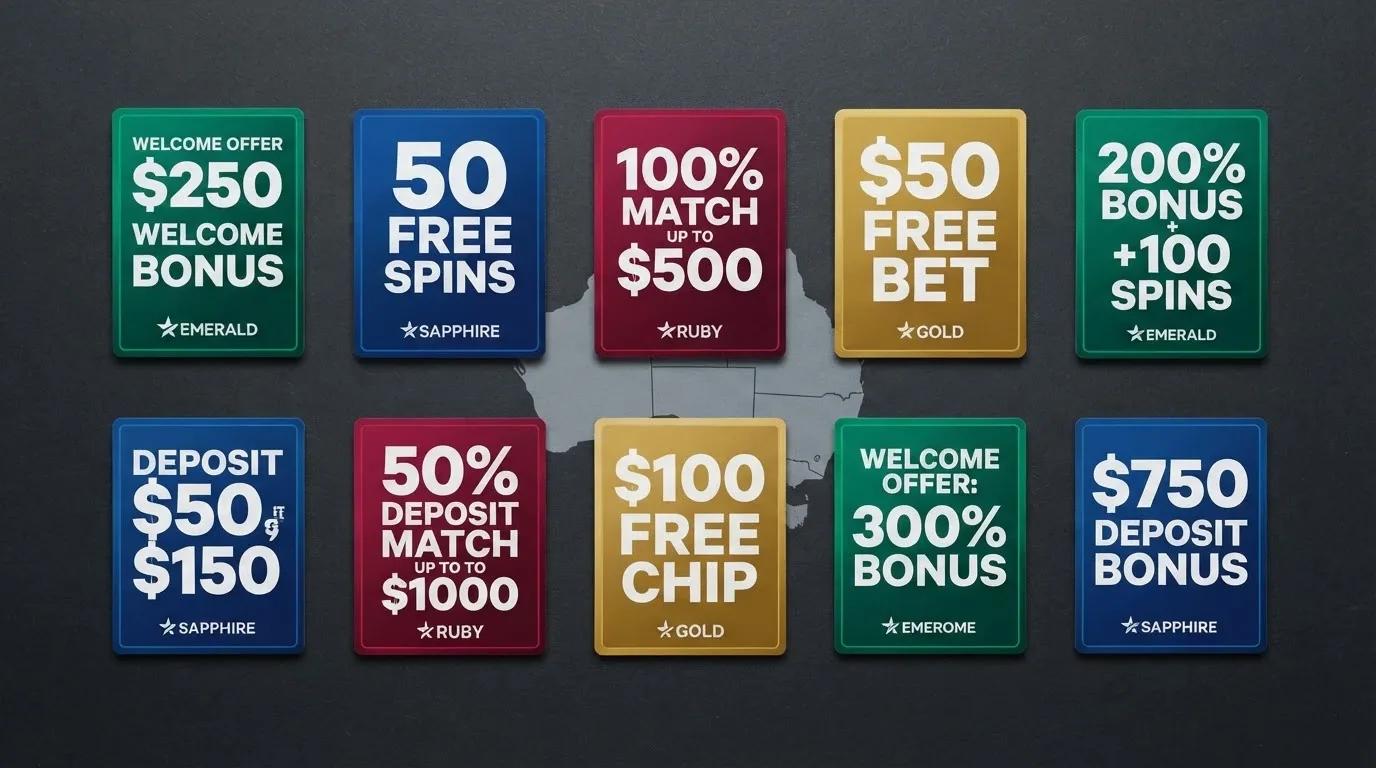
The ten operators below are the brands an Australian high roller actually reaches through the standard affiliate and review channels. Every one of them is offshore; none of them is licensed in Australia; the comparison is between offshore offers and the AU consumer law that does not follow the deposit. The ranking is built on bonus terms, game-library depth, withdrawal integrity and the honesty of the operator’s legal disclosures, weighted for the kind of player who deposits four figures and expects the cashier to behave.
| Operator | Offshore Licence Status | Welcome Bonus | Wagering Requirement | Game Library | Bonus Validity |
|---|---|---|---|---|---|
| Rocket Play | Curaçao | 100% up to A$1,000 + 100 FS | 40x | 500+ | 5 days |
| Skycrown | Curaçao | 450% up to A$8,000 + 400 FS | 40x bonus / 30x FS | 5,000+ | 14 days std / 5 days HR |
| Royal Reels | Curaçao | 100% up to A$500 + A$10 no-deposit | 30–40x | 2,000+ | — |
| Stake | Curaçao | — | — | — | — |
| WinSpirit | Curaçao | 200% + 25 FS | — | 1,000+ | — |
| Scream Casino | Offshore | — | — | — | — |
| FairGO | Offshore (RTG) | 100% up to A$200 × 5 = A$1,000 | 30x on bonus + deposit | ~280 | — |
| Bizzo Casino | Offshore | 30 FS no-deposit | 40x | — | Until 31 Dec 2026 |
| Caswino | Offshore | 600% up to A$15,000 + 255 FS | 35x | 62 FS-eligible | 7 days per deposit |
| Wild Tokyo | Offshore | 100% up to A$500 + 200 FS / 110% up to A$2,500 HR + 250 FS | 50x | 8,000+ | 5 days |
Rocket Play
RocketPlay runs a clean two-deposit welcome — 100% up to A$1,000 plus 100 free spins on Aztec Magic on the first, 100% up to A$1,000 on the second — backed by a recurring 50% up to A$2,500 high-roller reload on deposits of A$300 or more. The reload is the offer that keeps paying after the welcome package is gone, and the A$300 minimum deposit keeps it within reach of the high-roller tier without locking out the lower end.
The terms bite. Wagering is 40x on both the bonus and the free-spin winnings; the A$7.50 max bet is the standard offshore ceiling; the 5-day validity is the standard offshore clock. The A$5,000 max cashout on the welcome bonus and the A$300 cap on free-spin winnings are the real numbers to plan around. The A$300 free-spin cap is the figure that turns a headline A$1,000 welcome into a real-money ceiling below the welcome amount itself.
The 500+ game library, drawn from BGaming and Pragmatic Play among others, is modest by the standards of the set but covers the high-RTP titles a high-roller session needs. Players can find value here by planning a single, focused monthly bonus session rather than treating the reload as a continuous offer, which would likely result in missed expirations given the tight 5-day clearing window.
Skycrown
Skycrown’s 450% up to A$8,000 plus 400 free spins across four deposits is the biggest multi-deposit package in the ranked set. The four tiers are calibrated: 120% up to A$1,200 plus 125 free spins on Wolf Treasure (first deposit, A$30 minimum), with three further tiers across the subsequent deposits. The high-roller track is separate — its own A$10 max bet, its own 5-day validity, running in parallel to the standard 14-day A$7.50 track. A high-roller player picks one path; the two never overlap.
The free-spin mechanics are where the comparison turns. The 400 spins run across four titles — Wolf Treasure, Coin Volcano, 15 Dragon Pearls, Mighty Wild: Panther — with 30x wagering on free-spin winnings and a 10x total free-spin winnings max cashout. The 30x is a friendlier multiplier than the bonus-funds 40x, but the 10x cashout on a four-deposit package determines the ceiling. A high-volume player running the bonus across all four deposits is operating under the 10x cap on the cumulative free-spin winnings, not per tier.
The 5,000+ game library, drawn from IGTech, Booongo and Voltent, is the second-deepest in the set behind Wild Tokyo. The volume is a real strength for a player who wants the full Evolution live-dealer catalogue, Megaways titles and the higher-RTP pokies without bouncing between brands. The wagering and validity are the constraint; the library is the reward.
Royal Reels
Royal Reels’ welcome is a modest 100% up to A$500 — the smallest headline match in the ranked set — and that modesty is the point. The A$10 no-deposit sign-up bonus is the real entry, and it is one of the few genuine free-look offers in the Australian high-roller shortlist. A new player gets to test the cashier, the game selection and the withdrawal process before committing a dollar, and the 30x to 40x wagering range is consistent with the rest of the market.
The 2,000+ game library drawn from 30+ providers is the standout. Pragmatic Play, Evolution Gaming, Yggdrasil and Hacksaw Gaming all appear, which means the high-RTP pokies, the Megaways titles and a serious live-dealer floor are all in the same lobby. For a high roller who values library depth over headline bonus size, Royal Reels offers a cleaner entry than several of the louder brands above it.
The wagering band is the gap a player needs to verify before depositing. Research carries a 30x to 40x range rather than a single figure, which means the actual multiplier depends on the specific bonus or promotion claimed. High rollers interested in the welcome package should verify these specifics directly on the site, as terms can shift.
Stake
Stake is a different animal from the rest of the set. The Curaçao-licensed brand runs on a rakeback and VIP rewards model rather than a traditional welcome-match structure, and the absence of a confirmed welcome package this run is not a research gap so much as a reflection of how the operator is built. The value flows through ongoing play rather than a sign-up promotion, which is a model a high-volume player can find genuinely compelling and a one-off depositor can find opaque.
The model deserves a plain explanation. Rakeback is a percentage of the house edge returned to the player, calculated over volume rather than credited as a one-time bonus. VIP rewards scale with that volume — higher tiers unlock higher rakeback percentages, dedicated account management, faster withdrawals and bespoke promotions calibrated to the player’s actual play. For a high roller depositing four figures a week, the cumulative rakeback can exceed the headline figure of a standard welcome bonus. For a casual depositor, the model pays back far less.
The catch sits in two places. First, Stake is crypto-native — deposits are made in Bitcoin, Ethereum and other digital currencies, which under Australian law is a payment method banned for licensed wagering, and an indicator that the operator sits outside Australian rules. Second, the comparison to a standard welcome package is apples-to-oranges: a high roller who values the welcome headline is not the player the model is built for. High-volume players should measure the operator by its long-term rewards rather than traditional one-off welcome metrics.
WinSpirit
WinSpirit offers a 200% welcome bonus plus 25 free spins, with an ongoing cashback and loyalty programme attached. The 200% match is the second-highest welcome percentage in the ranked set, and the 25 free-spin sweetener adds a low-volume complement to the headline figure.
The honest problem with this offer is the unverified gap. Wagering requirements, bonus validity and the maximum cashout ceiling were not confirmed in the sources available this run. The cashback and loyalty programme are mentioned without specific percentages. A high roller considering WinSpirit should treat the absence of confirmed terms as a flag — not a disqualification, but a reason to read the bonus terms page directly before depositing, and to verify the numbers against the operator’s own current terms rather than a third-party review.
The 1,000+ game library is mid-sized by the standards of the set, and the operator accepts credit cards and e-wallets, which under Australian law signals an offshore operator. The library is the least of the concerns; the unconfirmed terms are the concern, and they are the reason a high roller should approach this offer with verification rather than trust.
Scream Casino
Scream Casino is the brand in this list that came back with the thinnest data set. The name appears in competitor content and in the affiliate channels Australian players actually land on, but the welcome bonus, free spins, wagering requirement, validity, max cashout and game providers were not confirmed this run. None of those specifications is something a high roller can plan a four-figure deposit around.
The right read on Scream Casino is the read the data supports. The brand is offshore, holds no Australian casino licence (none exists), and the absence of confirmed terms in the standard research channels is itself information. A high roller who already has an account and a relationship with the brand knows more than this article can offer. A high roller considering Scream Casino for the first time should treat the data gap as a reason to verify every term directly through the operator’s own pages before any deposit, and should plan a small test withdrawal before scaling.
FairGO
FairGO is a RealTime Gaming boutique — the only RTG-only library in the ranked set — and the operator that runs the most player-friendly terms in the comparison. The welcome bonus is a 100% match up to A$200, redeemable on each of the first five deposits for a A$1,000 total. The 30x wagering applies to bonus and deposit together, which is the lowest combined multiplier in the set. The no-deposit 20 free spins on Elemental Adventures carries a A$180 winnings cap.
The two standouts are the wagering and the cashout. The 30x on bonus and deposit is genuinely low by offshore standards. The absence of a max cashout ceiling on the welcome bonus is rarer still — most operators cap the welcome figure at 5x to 10x the deposit, which converts a large bonus to a smaller withdrawable ceiling. FairGO does not impose that cap, and for a high roller running the full five-deposit welcome, the cumulative ceiling is materially higher than at any other operator in the set.
The library is the trade-off. The 280-game RTG catalogue is small by the standards of the set and does not carry the Evolution live-dealer depth a high-roller table player might want. A player who values bonus terms and cashout integrity over library size has the right operator here. A player who wants the full live-dealer floor should look at Skycrown or Wild Tokyo.
Bizzo Casino
Bizzo’s 30 free spins no-deposit offer is the entry point, valid until 31 December 2026 at 40x wagering. The offer sits in the small set of genuine no-deposit free-spin deals on the Australian-facing market, and the 40x is the standard offshore multiplier on free-spin winnings.
The signature of Bizzo, the part that defines what kind of house it runs, is the A$5 max-bet rule and the strictness of its enforcement. A single A$6 spin voids the promotion. The rule is applied at the spin level, not the session level, and the operator that runs a tight line on a A$1 over-bet is the operator that will run a tight line on a bonus void, a withdrawal hold and a dispute. For a high-roller player, the consistency is worth more than a softer rule that is enforced selectively.
The gap to flag is the broader welcome package. The 30 free spins no-deposit is confirmed; the standard welcome match, the game-provider list and the full bonus terms on the first-deposit offer were not surfaced this run. To maintain full clarity, players should examine the first-deposit package terms before activating any no-deposit sign-up offer.
Caswino
Caswino’s 600% up to A$15,000 plus 255 free spins is the highest headline match in the ranked set. The 255 spins are distributed across four deposits (50, 100, 75, 30), the spin value is A$1.00, and the 35x wagering applies to each deposit tier with a 7-day clock per tier. The 7-day window is more generous than the standard 5-day offshore ceiling, and the A$1.00 spin value is higher than the free-spin defaults across the rest of the set.
The real number is the A$1,550 free-spin max cashout. Across 255 spins at A$1.00, the face value of the free-spin package is A$255. The cashout cap is 6x the face value, which sounds generous until the A$1,550 ceiling is set against the A$15,000 welcome headline. The free-spin winnings are capped at a fraction of the bonus figure, and the cap is the number a high roller plans around. A player who optimises the bonus for free-spin value is optimising for a small share of the package; the cash bonus is where the real ceiling sits.
The 62 certified free-spin-eligible games are a focused pool rather than a deep library. A high roller who plans to spend the bonus on the same titles that the free spins cover will hit a narrow game selection. The wagering is on the wider library, but the free-spin allocation is restricted.
Wild Tokyo
Wild Tokyo runs a standard welcome (100% up to A$500 plus 200 free spins, A$30+ deposit) and a separate high-roller first deposit (110% up to A$2,500 plus 250 free spins, A$500+ deposit). The full three-deposit package runs to A$3,300 plus 450 free spins. The 8,000+ pokie library is the largest in the ranked set, by a margin.
The wagering is the constraint. The 50x multiplier on both cash and free-spin bonuses is the steepest in the set, and the 5-day validity window is the standard offshore clock. A A$2,500 high-roller bonus at 50x requires A$125,000 in turnover — 12,500 spins at A$10 — and the 5-day window makes that target realistic only for a player who can sit down and clear the bonus in a single extended session, not for a player who balances the bonus across a working week.
The trade-off is the library. An 8,000-pokie catalogue covers every high-RTP title, every Megaways release and the bulk of the new-game pipeline. A high-roller player whose priority is game depth over bonus terms will find the right operator here. A player whose priority is the bonus clearing will find a steeper hill than at any other brand in the ranked set.
The pokies and table games that give high rollers the best odds in 2026
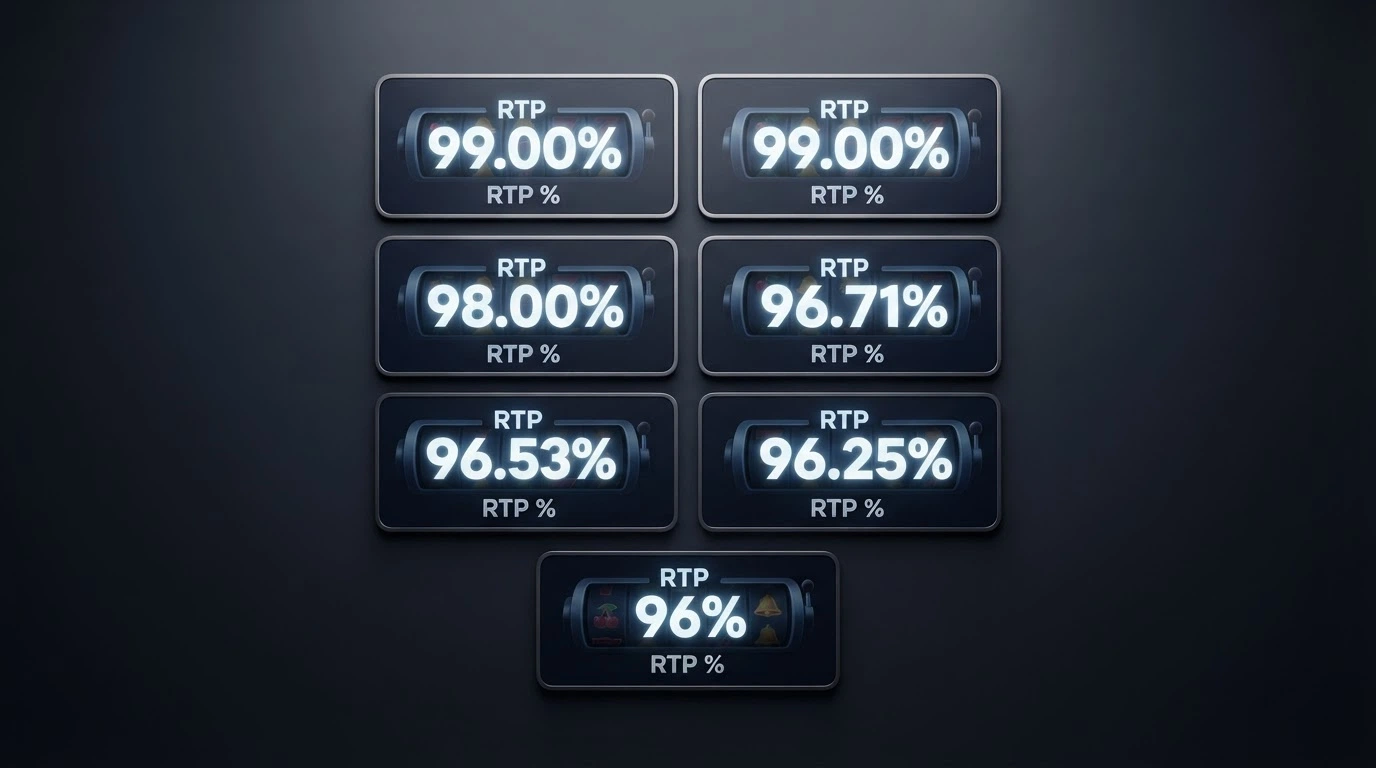
The house always has an edge, and the high-roller’s edge is not beating it. The edge is choosing the titles where the house takes the least, where the volatility matches the bankroll and where the max bet allows the stake size that makes the session worthwhile. A 3% RTP gap between the top and bottom of the highest-RTP pokies list compounds into thousands of dollars over a high-roller session — and the gap is wider than most players realise.
| Pokie Title | RTP | Provider | Volatility | Max Win |
|---|---|---|---|---|
| Mega Joker | 99.00% | NetEnt | Medium | 2,000x |
| Book of 99 | 99.00% | Relax Gaming | High | 12,075x |
| Blood Suckers | 98.00% | NetEnt | Low | 900x |
| Sugar Rush 1000 | 96.53% | Pragmatic Play | High (5/5) | 25,000x |
| Big Bass Bonanza | 96.71% | Pragmatic Play / Reel Kingdom | Medium-High (4/5) | 2,100x |
| Temple Tumble | 96.25% | Relax Gaming | Very High | — |
| Bonanza Megaways | 96% | Big Time Gaming | High | 26,000x |
Highest-RTP pokies: the titles where the house edge shrinks
Mega Joker and Book of 99 sit at 99.00% RTP — a 1% house edge, which is roughly one-third of what a standard 96% pokie charges. The dollar difference over a session of A$100 spins is stark. A player running 1,000 spins at A$100 on a 99% title loses an average of A$1,000. The same 1,000 spins on a 96% title costs A$4,000. The A$3,000 gap is the cost of choosing the wrong pokie on a high-roller bankroll.
Mega Joker is a NetEnt classic; the 99% RTP requires Supermeter mode and a max bet, and the 76.9% to 85.1% base-game RTP means a player who plays at lower stakes or skips the Supermeter is leaving the house edge intact. Blood Suckers at 98% is the friendlier low-volatility option — a smaller max win, a steadier session, and a house edge of 2% rather than the 4% standard. For a high roller with a longer session horizon, Blood Suckers is the title where the bankroll survives the most spins.
The catch is bonus-wagering restriction. Operators running an active bonus frequently block the highest-RTP titles from contributing to playthrough — Rainbet’s 97.4% RTP ceiling is the most explicit example, and the pattern recurs across the set. A high-roller session funded by bonus funds may not be able to play the titles where the house edge is smallest. The restriction is itself information: the operator is keeping the bonus-clearing path on the games that cost the player the most per spin.
Progressive jackpots and big-win pokies worth a high roller’s stake
The titles with max-win potential above 20,000x are the ones a high-roller session is built around — Bonanza Megaways at 26,000x, Sugar Rush 1000 at 25,000x. The Megaways engine on Bonanza runs up to 117,649 ways to win, which means a single spin’s outcome depends on a reel configuration that did not exist on the previous spin. The volatility is High; the dry spells sit alongside the rare big-win outcomes, and a bankroll that cannot survive 200 dead spins is the wrong bankroll for the title.
Sugar Rush 1000 at 96.53% RTP, 5/5 volatility and a A$240 max bet is built for the high-roller stake. The hit frequency of 34.48% means roughly one win in three spins, and the cluster-pays mechanic means a single spin can produce multiple winning combinations. The A$240 max bet is the highest in the high-RTP set and signals the title’s intended stake range. A session at A$50 a spin is not what the title is designed for.
The volatility dimension is the part a high roller cannot afford to skip. A 5/5 pokie demands a bankroll that can absorb the variance between the dead spells and the big wins. A bankroll built for a 3/5 title will be gone before Sugar Rush 1000’s 25,000x max win becomes realistically reachable. The math favours the patient, and the impatient lose the most at exactly the games where the headlines are largest.
Free-play vs real-money: why high rollers test before they deposit
Demo mode is the tool that lets a high roller assess volatility, hit frequency and the feel of a title at high stakes before risking a dollar. The operators that offer demo play give away a genuine selection tool; the operators that gate demo behind registration or skip it altogether are asking for blind trust on a four-figure deposit.
The standard across the ranked set is mixed. The larger operators (Skycrown, Wild Tokyo, Caswino) tend to offer demo play on most titles, because the game providers require it as part of the integration contract. The smaller or more aggressive operators (the no-deposit bonus specialists) tend to gate demo behind registration, which is a soft friction pattern that pushes a player toward the deposit path before the player has actually played the game. Neither pattern is conclusive, but a high roller who values the test-before-deposit workflow should pick an operator where demo play is open and unrestricted.
For a high-roller session specifically, demo play matters more than at lower stakes. The A$100 spin range requires a sense of how a title behaves at the stake size the bankroll can actually support. A pokie that feels generous at A$1 a spin can feel brutal at A$100, and the only way to learn the difference without losing the bankroll is to play the title in demo at the actual target stake.
Live dealer and table games at stakes that matter
The live-dealer floor at a high-roller-friendly operator runs baccarat, blackjack and roulette at tables where the limits start where the regular tables end. Salon Privé and Diamond VIP rooms on the Evolution and Pragmatic Play Live networks start at A$500 to A$1,000 a hand and run into five-figure max bets. The high-roller experience is in the dedicated rooms, not the public lobby.
The contribution-weighting trap is what stops a bonus-funded live-dealer session from clearing a playthrough. Live dealer contributes 5% to 10% toward wagering, against 100% for pokies. A A$25 blackjack hand at 10% counts as A$2.50 against the bonus. Clearing a 40x bonus on live dealer alone requires 400x turnover in real money; at 5%, that doubles to 800x. The math does not work, and the bonus terms page states the contribution rate plainly. A high-roller session on the live-dealer floor is a real-money session, not a bonus-funded one, and the bankroll should be planned on that basis.
Baccarat and blackjack are the table games where the house edge is lowest for a player using basic strategy. Baccarat’s banker bet carries a house edge of around 1.06%; blackjack, played with optimal strategy, runs around 0.5%. Roulette varies by variant — European single-zero at 2.7%, American double-zero at 5.26% — and a high-roller session should sit on the European wheel. The differences are small on a single hand and large over a session.
High-roller play on the move: what mobile casino apps actually deliver
A high roller depositing four figures from a phone needs more than a responsive website. The operator’s investment in a native app, the stability of the mobile cashier and the availability of the full game library on a small screen are the real test of whether mobile play is a feature or a friction point.

The standard across the Australian-facing offshore market is mobile browser play, not native apps. The HTML5 build of a modern casino lobby runs through Safari and Chrome without an app download, and the major operators (Skycrown, Wild Tokyo, Caswino) all maintain mobile-optimised cashier flows. The native app is rarer than the marketing suggests, and the operators that do ship an app tend to ship it for a single platform rather than both.
Native apps and downloads: which operators invest in the experience
A dedicated app signals the operator is investing in retention, not just acquisition. Push notifications for bonus offers, biometric login, and a UI built for the screen size rather than a desktop layout shrunk to fit it — those are the deliverables a native app is meant to provide. The operators that ship a real native app are the ones that have decided the mobile player is a long-term customer, not a one-off deposit.
The honest read is that the Australian-facing offshore market is mostly browser-based. The app is the exception rather than the rule, and the exceptions tend to be the larger operators with a longer mobile track record. A high-roller player who wants the app experience should verify availability through the operator’s own page rather than the app-store listing, and should plan for the browser experience as the default rather than the alternative.
Mobile browser play: what works without an app
The HTML5 mobile browser is the baseline, and on a modern smartphone the experience is close to a native app for the game library and the account-management screens. The cashier is where the gap shows. Bank-grade verification flows, identity-document upload and the multi-step deposit confirmation that a desktop player can complete with a mouse and a keyboard become tap-and-scroll exercises on a phone, and the friction is real on a four-figure deposit.
Live-dealer streaming is the other gap. A Evolution Salon Privé table on a 4G connection at a high-roller stake is a bandwidth-intensive stream, and the mobile browser is the layer where buffering and resolution drops show first. A high-roller session on the live-dealer floor benefits from a stable Wi-Fi connection rather than a cellular signal, and the browser-versus-app difference is small compared to the connection-quality difference.
The legal reality Australian high rollers are not being told
Every page a competitor publishes about “Australian online casinos” omits the central fact: online casino games and online pokies are prohibited under the Interactive Gambling Act 2001, and every brand an Australian high roller can reach is offshore. The .com.au domain, the AUD banking, the Australian-themed branding — none of it is what it looks like. The Curaçao licence in the footer is the actual authorisation, and no Australian regulator has ever issued an online casino licence.

The IGA targets the provider, not the player. An Australian punter does not face prosecution for opening an account and depositing at an offshore casino. The cost of that access is every Australian consumer protection that would have followed an Australian licence — no Australian Financial Complaints Authority recourse, no Office of the Australian Information Commissioner enforcement on personal data, no Australian consumer law on unfair contract terms. The deposit clears, the play continues, and the safety net that would have caught a complaint is not there.
Why every “Australian” online casino is actually offshore
A .com.au domain, AUD banking and an Australian flag in the brand identity create the impression of a local, licensed operator. The footer tells the real story. Curaçao is the most common offshore licence in the set: low-cost, minimal player-protection requirements, and the route most offshore operators choose when they need an authorisation to publish. The Curaçao Gaming Control Board does not enforce Australian consumer law, does not mediate disputes between Australian players and Curaçao-licensed operators, and does not hold a balance in trust if the operator fails.
The Northern Territory Racing and Wagering Commission is the de facto national licensor for Australian online bookmakers, and the state and territory regulators license their own operators. None of them licenses online casino games, because no such licence exists. The NTRWC licence on SportsBet, bet365 or Ladbrokes covers pre-event wagering, not casino games, and the licence is not transferable to a casino product. The distinction matters because the licensed bookmakers — the brands that do operate under Australian authorisation — do not offer the product this article ranks. Every casino brand on the shortlist sits outside that licensed framework.
ACMA enforcement, site blocking and what it means for your money
The Australian Communications and Media Authority is the federal body that enforces the IGA. Its tools are formal warnings, civil penalty proceedings, infringement notices, and the power to direct Australian ISPs to block illegal services at the network level. Since the first blocking request in November 2019, the ACMA has had 1,564 illegal gambling and affiliate websites blocked by Australian ISPs; more than 225 illegal services have withdrawn from the Australian market since 2017.
The practical risk for an Australian high roller is the block. An offshore casino operating today can be on the ACMA’s blocked list tomorrow, and the blocking is applied at the ISP level — Australian players cannot reach the site through a standard connection. Any balance sitting on a blocked site becomes inaccessible, and the offshore operator has no obligation under Australian law to return it. The IGA does not provide a mechanism for an Australian player to recover funds from a blocked site, because the site was operating illegally to begin with and the player was using an unlicensed service.
The 1,564-blocked figure is current. The 225+ withdrawals are the operators that chose to leave the Australian market rather than face the block. The number of brands still serving Australian players is the number that have not yet been named in an ACMA action, and the list shifts.
The 2026 reform: what changes on 1 January 2027
The Interactive Gambling Amendment (Gambling Reform) Bill 2026 passed Parliament on 19 August 2026, and its measures commence on 1 January 2027. It is not proposed, not pending — it is law with a start date. The reform reshapes advertising, inducements and payment blocking for every Australian-facing gambling operator, licensed and offshore alike.
- Advertising restrictions. No more than three wagering ads per hour between 6:00 am and 8:30 pm on television. A live-sport blackout: no wagering advertising from 15 minutes before to five minutes after a live sporting event. Radio wagering ads barred during school drop-off and pick-up times. Online wagering ads only to logged-in, age-verified users who have not opted out. No wagering advertising inside sports venues or on player or official uniforms. Athletes, celebrities and influencers barred from promoting wagering products.
- Inducement cooling-off periods. Direct marketing of inducements is prohibited for 14 days after a customer signs up, for three months after a person deregisters from BetStop, and indefinitely for customers identified as at risk of gambling-related harm.
- Payment-blocking authority. Banks and payment providers gain express authority to block transactions to illegal gambling operators. The mechanism that was previously a service offered by some banks becomes a regulatorily-backed power available across the sector.
- Other prohibitions. Foreign-matched lotteries and online keno are banned. Broadcasting of sporting odds is banned outright. The AdStop wagering-advertising opt-out register is announced but not expected to be operational by the 1 January 2027 commencement.
An offshore casino advertising a welcome bonus to Australians is breaking the prohibition itself, not merely an advertising rule. The reform does not legalise the offshore product; it tightens the regulatory environment around it.
Playing safely: the tools Australian high rollers have — and the gaps they need to know
Australia has built a serious harm-minimisation infrastructure — BetStop, the National Gambling Helpline, deposit-limit tools on licensed platforms. None of it reaches the offshore casino a high roller actually uses, and that gap is the single most important safety fact on this page.

The numbers behind the tools are large. Approximately 3.29 million Australians are affected annually by their own or another person’s gambling, including approximately 1.97 million adults with at-risk or problem gambling. The Australian Gambling Research Centre survey found 15% of Australians experienced gambling-related harm in the past 12 months — up from 11% in 2019 — equivalent to around 3 million Australians. Among regular monthly gamblers, 7.7% are classified as high risk. The annual health loss associated with gambling-related harm in Australian adults is estimated at over 400,000 Years Lived with Disability. These are not promotional figures; they are the prevalence data behind the existence of the tools.
BetStop self-exclusion: what it covers and the offshore gap it cannot close
BetStop is the National Self-Exclusion Register, launched on 21 August 2023. One registration excludes a person from every Australian-licensed online and phone wagering service for a period of three months to a lifetime. As of 31 March 2026, 59,830 people had registered, with 37,247 holding active exclusions. The register covers approximately 150 licensed wagering providers — the licensed bookmakers, the licensed racing and sports operators, the brands that hold an Australian authorisation.
The offshore gap is the entire point. None of the ten operators in this article is licensed in Australia, and none of them is connected to BetStop. A player who self-excludes from Australian wagering through BetStop can open an account at every brand in the ranked set the same afternoon, and the offshore operator has no mechanism that would prevent it. The exclusion binds the licensed side and only the licensed side. For a high roller who recognises a gambling problem and self-excludes from Australian wagering, the offshore casino remains open unless the player takes separate action to block it.
The minimum self-exclusion term is three months; the maximum is lifetime. A self-excluded player is also removed from marketing lists and is meant to be prevented from receiving inducements during the exclusion period. The marketing restriction applies under Australian law to licensed operators; an offshore casino is not bound by it.
Deposit limits, help services and the harm numbers every player should see
The National Gambling Helpline is 1800 858 858 — free, confidential and staffed 24 hours a day, seven days a week, across Australia. Gambling Help Online at gamblinghelponline.org.au provides live chat, email support and self-help advice. Financial counselling is available through the Department of Social Services for people affected by gambling harm. The infrastructure is real, and the people staffing it are trained for the specific call a high-roller player might make.
The harm data behind the infrastructure is the data every high roller should see. Gambling participation among Australian adults rose from 57% in 2019 to 65% in 2024 — a significant increase that runs alongside the rise in harm prevalence. The 15% who experienced gambling harm in the past 12 months, up from 11% in 2019, is the headline. The 7.7% of regular monthly gamblers classified as high risk is the group the most intensive interventions are designed for. The 400,000+ Years Lived with Disability is the cost measured in healthy life years lost.
Deposit-limit and take-a-break tools on licensed wagering platforms are real and are integrated with the operator’s own product. An offshore casino offers a deposit-limit toggle inside the account settings, but the tool is operated by the offshore operator with no Australian regulatory oversight — a high roller who sets a A$500 daily limit on a Curaçao-licensed site is relying on the operator’s own compliance with its own self-imposed rule. The BetStop and harm-reduction infrastructure does not extend to that site.
How we selected and ranked these high-roller casinos
The ten operators in this article were sourced from the affiliate and review sites Australian high-roller players actually land on, cross-checked against each operator’s own published bonus terms and evaluated against the criteria a high-volume player cares about. The set is not a paid-placement ranking; the ordering reflects bonus-term fairness, game-library depth, withdrawal integrity and the honesty of the operator’s legal disclosures.

The research evaluated the top ten results for the primary search query, focusing on six affiliate review and ranking pages alongside four operator review pages. The evaluation criteria were the four-axis comparison the operator table runs on — licence status, welcome bonus, wagering requirement, game library and bonus validity — weighted for the kind of player who deposits four figures and expects the cashier to behave. The licence-status check confirmed that no operator in the set holds an Australian casino licence, and the article states that plainly at the top of the ranking.
The unverified data is unverified. Where research could not confirm a welcome bonus, wagering requirement, validity or game-provider list, the operator’s table row carries an em dash and the write-up flags the gap. The operators that came back thin (Scream Casino, the gaps at WinSpirit, Bizzo and Stake) are written about with the data the sources support, not padded with material the sources do not carry. The page is a research deliverable, not a marketing one.
Your money, your move: what a high roller should actually do with this information
The article has laid out what is on offer. The offers are all offshore. The bonuses are all real; the terms are all written; the libraries are all there. The piece that is missing is the Australian consumer protection, and that is the piece the offshore operator cannot supply.
The decision is not which brand to pick. The decision is whether the offshore trade-off is one the reader is willing to make, and on what terms. A player who accepts the trade has ten offers to choose from, with the bonus terms and library depth to compare. A player who does not accept the trade has the licensed Australian wagering market — pre-event sports and racing betting through SportsBet, bet365, Ladbrokes and the rest — but no online casino, because the licensed product does not exist.
Three questions a high roller should answer before depositing, whichever operator they choose:
Before depositing, a player should answer three questions. First, do I understand the true cost of the bonus after wagering? A 600% match on A$2,500 means A$15,000 in bonus funds, A$525,000 in turnover, and a strict 7-day clock per tier—the bonus is defined by its clearing cost, not its headline amount. Second, do I accept that my balance could be frozen if the site is blocked? The ACMA has already blocked 1,564 illegal sites since 2019, and the IGA provides no fund-recovery mechanism for players. Finally, have I set an independent loss limit? Offshore deposit toggles rely on the operator’s own compliance; a personal, enforced ceiling is the only protection that reliably travels with the player.
The concrete actions are simple. Verify the licence in the footer — Curaçao, not Australia, because no Australian licence exists. Test the withdrawal with a minimum deposit before scaling to a four-figure sum. Read the bonus terms for the max-bet rule, the game-restriction list and the cashout cap. Set a personal deposit ceiling that is independent of any platform tool, and stick to it.
The article equips the reader to make the decision. It does not make the decision for the reader, and it does not point the reader at one of the ten brands as a place to play. The names are described, the terms are laid out, the gaps are flagged, and the rest is the reader’s call.
Frequently asked questions
How do VIP programmes at high roller casinos work for Australian players?
A VIP programme at an offshore casino awards points for real-money play, and those points convert to tier status, higher cashback percentages, faster withdrawals and access to a dedicated account manager. The structure is tiered: the higher the volume, the higher the tier, the better the terms. High-roller players in the top tiers typically receive bespoke bonus offers calibrated to their actual play rather than blanket promotions. The catch is that the programme is operated by an offshore operator with no Australian regulatory oversight, and the value of the tier benefits depends entirely on the operator’s willingness to deliver them.
What is the maximum withdrawal limit at high roller casinos accepting Australians?
Withdrawal limits at the offshore casinos Australian players reach typically run from A$2,000 to A$10,000 per week, with monthly caps at the higher end of that range. The VIP tiers often lift the weekly cap; the high-roller-specific tier at the more serious operators can clear five-figure withdrawals in a single transaction. Royal Reels and FairGO do not publish a confirmed max-cashout ceiling on their welcome bonuses, while Caswino caps free-spin winnings at A$1,550 and Vegazone limits cash-bonus withdrawals to 10x the deposit. A high roller should verify the specific limit at the operator before the first deposit, not after a big win.
Are high roller casino winnings taxable in Australia?
No. Betting and gambling winnings are not assessable income under section 6-5 of the ITAA 1997, and gambling losses are not deductible under section 8-1, unless the person is carrying on a business of betting. A recreational high roller keeps their winnings tax-free; the ATO does not assess casino payouts as personal income, and the operator does not withhold tax on Australian players. The rule does not change at the offshore-versus-licensed line — the tax treatment is the same, because the tax treatment is set by the player’s status, not the operator’s licence.
What protections do Australian players lose by using an offshore high roller casino?
The list is long. There is no Australian Financial Complaints Authority recourse on a disputed withdrawal. There is no Office of the Australian Information Commissioner enforcement on personal data. There is no Australian consumer law on unfair contract terms applied to the bonus terms the player agreed to. There is no BetStop coverage. There is no Australian regulator the player can contact if the operator voids a bonus, delays a withdrawal, or closes an account. The site can be blocked at any time by the ACMA, with a balance on it, and the IGA provides no recovery mechanism. Every protection an Australian consumer would expect on a domestic service is absent.
What is the difference between a standard welcome bonus and a high-roller casino bonus?
A standard welcome bonus is calibrated for the average depositing player — a 100% match at modest size, wagering in the 30x to 40x range, a 7-to-14-day validity window and a max-bet cap that suits penny-to-dollar stakes. A high-roller bonus is calibrated for the larger deposit — a higher match percentage, a higher cap, a higher minimum-deposit threshold and often a separate wagering track with a longer or shorter validity depending on the operator. The high-roller bonus is a separate offer, not a scaled-up version of the standard one, and the terms are usually written to suit the high-volume player who can clear the bonus in fewer, larger sessions. The Skycrown and Wild Tokyo high-roller tracks are the clearest examples in the ranked set.