
Where Australian Players Actually Stand With Ethereum Casinos in 2026
The label is everywhere in offshore casino marketing. “Ethereum casino.” “ETH accepted.” For an Australian player, though, the words carry more baggage than the rest of the world’s affiliates let on. No online casino holds an Australian licence, because none can be issued. Crypto deposits themselves are banned as a payment method for licensed Australian wagering since 11 June 2024. The whole category, by design, sits outside the local regulatory frame, which is exactly why it needs a guide written for what the page is, not what the marketing calls it.
This page ranks ten offshore operators that accept ETH from Australians in 2026. It walks through the bonus terms the way the T&Cs read, the deposit and withdrawal path on the blockchain, the no-KYC and provably-fair mechanics crypto casinos trade on, and the legal reality every player signs up under. Where the data is thin, the gap is named. Where the marketing is loud, the arithmetic is louder. A reader who finishes the page should know which operator fits which wallet, and what the whole exercise is going to cost them.
18 October 2026 · Licence claims cross-checked against the ACMA register and Curaçao / Anjouan licensor notices.
Table of Contents
- What an “Ethereum Casino” Actually Means for Australian Players
- Ranked: The Top Ethereum Casinos for Australian Players in 2026
- Why Your 2026 ETH Casino Bonus Looks Bigger Than It Really Is
- Getting Your ETH In and Out — Deposits, Withdrawals and the Instant-Cashout Promise
- No-KYC and Provably Fair — What Ethereum Casinos Offer That Fiat Casinos Can’t
- Ethereum Casinos on Your Phone — App, Browser, or Both?
- From Pokies to Live Blackjack — What You Can Actually Play With ETH
- Try Before You Stake — Free-Play and Demo Modes at ETH Casinos
- How to Pick an Ethereum Casino You Won’t Regret
- The Legal Reality — Why Every ETH Casino You Visit Is Offshore
- Staying in Control When the Casino Won’t Stop You
- How We Evaluated These Ethereum Casinos
- Your Money, Your Call — What to Actually Do Before You Deposit
- Frequently Asked Questions
What an “Ethereum Casino” Actually Means for Australian Players
The phrase does two things at once. “Ethereum” names a blockchain — the network that settles transactions in ETH, the native token. “Casino” names a product. The combination, in the wild, is a website licensed somewhere offshore that lets you deposit and withdraw in ETH rather than in fiat currency. There is no Australian example of that combination, because the Australian Communications and Media Authority, which enforces the Interactive Gambling Act 2001, makes it an offence to provide online casino games to a person physically in Australia. There is no licence to apply for. No state or territory has one to grant.
The IGA was written in 2001 and amended materially in 2017. Its reach is the provider, not the player. An individual punter who opens an account at an offshore site commits no offence under Australian law, but they step outside the regulatory frame in the process. The site’s licence is Curaçao, Anjouan, or somewhere similar; the site’s dispute resolution runs through that jurisdiction’s regulator, if the regulator accepts the complaint at all. The site’s consumer-protection obligations are not the ten measures in the National Consumer Protection Framework, which apply only to licensed Australian wagering operators. The site’s terms, in short, are its own.
Crypto makes the offshore-ness louder. Since 11 June 2024, credit cards, credit-related products and digital currency are banned as payment for online wagering in Australia. The ban was added to the IGA by the Interactive Gambling Amendment (Credit and Other Measures) Act 2023, and an operator that fails to enforce it faces penalties up to A$247,500. A site that takes ETH from an Australian player is, by virtue of taking that deposit, operating outside the rules the Act is enforcing. That is the line a player crosses when they open the wallet app at the cashier.
What the label really promises, then, is fast settlement and looser sign-up — wallet-to-wallet transfers, no bank intermediary, and an onboarding path that may stop at an email address. It does not promise, and cannot deliver, local protection. The two together are why offshore Ethereum casinos are popular with Australian players and why every page about them, this one included, has to make the legal frame the first thing it says.
Ranked: The Top Ethereum Casinos for Australian Players in 2026
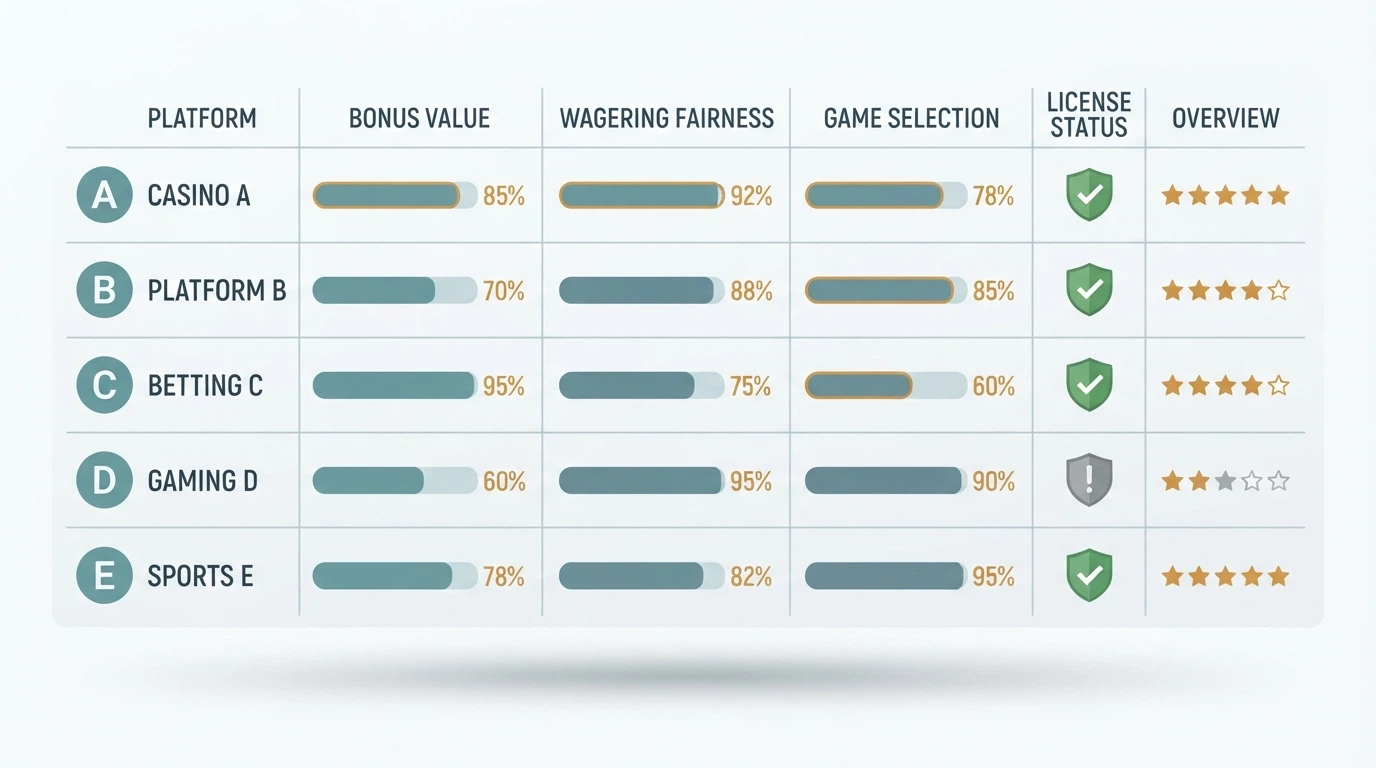
A “top” list of operators that share the same offshore status, the same lack of Australian consumer protection and the same prohibition under the IGA is not a ranking of trust. It is a ranking of which combination of bonus, wagering, library and payout speed costs the player least for what they get. The table below orders ten operators by how they look on those terms in 2026, with the no-Australian-licence fact flagged once in the operator section and inherited by every row.
| Operator | Licence | Welcome Bonus | Free Spins | Wagering |
|---|---|---|---|---|
| BitStarz | Curaçao | 100% up to A$2,000 / 1 BTC (first deposit); total package up to 5 BTC + 180 FS across four deposits | 180 | 40x bonus |
| 7BitCasino | Curaçao | 325% up to 5.25 BTC | 250 | 45x on no-deposit FS, 40x on deposit bonuses |
| BC.Game | Anjouan (Union of Comoros) | 300%+ multi-deposit package | — | 40x |
| Stake | Curaçao | No standard welcome bonus; rakeback + VIP programme | 0 | None (rakeback model) |
| HellSpin | Curaçao (TechOptions Group B.V.) | Up to A$1,200 + 150 FS | 150 | 40x |
| Neospin | Curaçao | Up to A$10,000 + 300 FS across four deposits | 300 | 40x |
| SkyCrown | Curaçao | 100% up to A$3,000 + 350 FS | 350 | 30x (deposit + bonus) |
| mBitCasino | Curaçao | — | — | — |
| Cloudbet | Curaçao | — | — | — |
| FortuneJack | Curaçao | A$10,000 + 250 FS | 250 | — |
Three rows end in em dashes where research could not confirm the figure: mBitCasino and Cloudbet, where welcome-bonus terms are not in this run’s evidence, and FortuneJack, where the wagering requirement specifically did not surface. Em dashes are not a snub. They are the honest answer for a comparison cell that would otherwise need to be invented. The spread on wagering, from 30x to 45x, is the single biggest variable in the table; on a A$2,000 bonus it is a A$30,000 gap in turnover before a withdrawal is possible. The spread on bonus size is enormous and almost meaningless by comparison, because every dollar of headline bonus is multiplied by that wagering figure before the player sees it back.
A second pass through the table: the operators with the largest headline bonuses (Neospin, FortuneJack, SlotsGem-style packages) are also the ones with the largest turnover demands, the most stages to clear, and the most conditions attached. BitStarz and 7BitCasino sit in the middle. SkyCrown’s 30x is the floor in the set, and that is the figure to anchor on when comparing. Stake is the structural outlier — no welcome bonus at all, a rakeback model that returns a percentage of house edge over time, and zero wagering, which makes it the only entry in the table where the “cost of the bonus” question has a clean answer: there is no bonus, so the question does not arise. The right operator for a player is the one whose structure matches their play pattern, not the one with the largest number at the top of the page.
BitStarz
BitStarz is the most-cited crypto casino in Australian affiliate rankings, and the operator most often held up as the “established” entry in the space. The first-deposit headline is 100% up to A$2,000 or 1 BTC, plus 180 free spins, with the total package reaching up to 5 BTC and 180 free spins across four deposits. The spins drop at 20 per day, so the full count takes nine days to land in a player’s account. The wagering requirement is 40x the bonus amount, with the same 40x applied to free spin winnings, and the bonus is valid for 14 days from credit. Minimum deposit is A$20, max bet while the bonus is active is €5 per spin or bet.
The number that gets a player is A$150. That is the maximum cashout from BitStarz’s no-deposit free spins, the kind of “free” offer that arrives without a deposit and exits with a cap so low that the marketing word stops meaning what it said. A player who wins 0.05 ETH on a no-deposit spin finds a ceiling of A$150 — and A$150 is the whole withdrawal, not the daily limit. The library sits at 4,500+ games, which is broad but no longer the largest in the set. The 40x wagering is the standard, not the floor.
BitStarz is the right pick for a player who wants one of the longer track records in the ETH casino space and is comfortable with a 40x turnover on the bonus money. It is the wrong pick for a player chasing the cheapest bonus-to-cashout path, because SkyCrown at 30x is cheaper to clear by A$20,000 of turnover on a A$2,000 bonus. The library is broad enough that the wagering requirement is clearable on slots, where games contribute 100% — a live-dealer grind would not move the needle.
7BitCasino
7BitCasino’s headline is the largest match percentage in the set: 325% up to 5.25 BTC across the deposit stages, plus 250 free spins. The wagering split is the operator’s own quirk and it is worth reading. No-deposit free spins carry 45x wagering. Deposit bonuses carry 40x. The bonus expires 14 days after each stage is credited, so a player who takes the full package has roughly two weeks per stage to clear, not two weeks for the whole thing. The minimum deposit is the standard A$20 equivalent. Slots contribute 100% toward wagering; live games contribute 0%. The free-spin cap is 1.6 mBTC per bonus, which is the conversion of a few hundred dollars at current prices, not a single withdrawal.
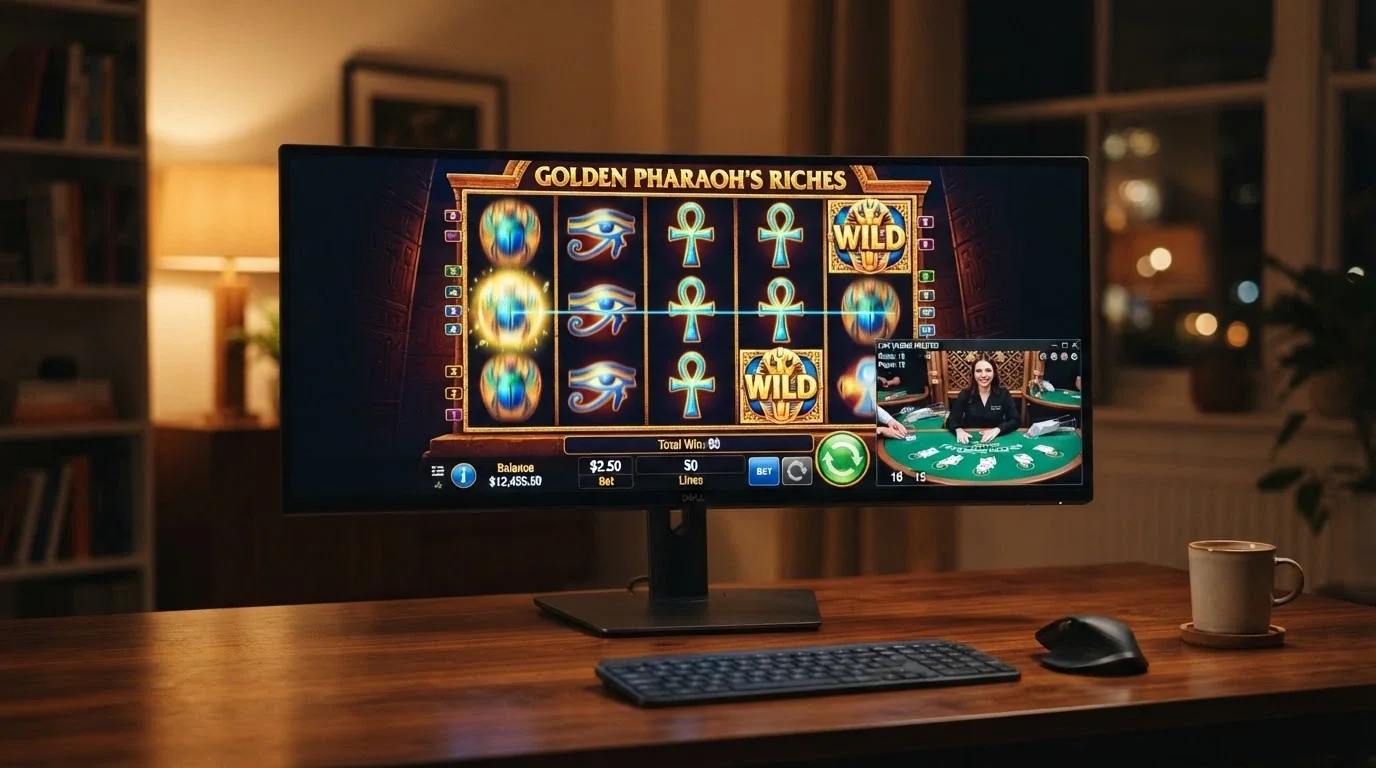
The 325% figure is unusual and worth pricing carefully. A 100% bonus doubles the bankroll; a 325% bonus quadruples-and-then-some. The clearing obligation scales with the bonus, and at 40x, a maxed-out first-stage bonus asks for turnover that takes most of a fortnight of regular slot play to clear. The 0% live-game contribution is the operator’s most aggressive line in the T&Cs — players who wanted to clear the bonus on blackjack or roulette will find their progress stays at zero while the bonus clock runs.
7BitCasino suits a player who specifically wants a high match rate and is happy clearing on slots only. It is the wrong pick for a live-dealer player and the wrong pick for a player who wants the smallest wagering multiple, because SkyCrown’s 30x is still cheaper on every dollar of bonus money. The Bitcoin denomination of the headline is also a tell — at a falling ETH price, the BTC figure protects the operator’s real value better than a flat A$ figure would.
BC.Game
BC.Game is the network-native pick. The operator supports over 9 ETH-compatible networks — ERC-20 mainnet, Arbitrum, Optimism, Polygon, Base, and others — and 60+ cryptocurrencies beyond that. The licence is Anjouan, in the Union of Comoros, not Curaçao, which is the structural differentiator for a player who has decided Curaçao is no longer enough diversification. The welcome package is 300%+ across a multi-deposit structure, with specific tiers not tabulated in this run’s evidence. Wagering is 40x.
Two features make BC.Game stand out. The first is no KYC for standard play — a player signs up with an email, deposits from a wallet, plays, and withdraws, with no identity document requested at the cashier. The second is BC Originals, the operator’s own provably fair titles, which publish the seed data a player needs to verify each outcome independently. The combination is the closest the category gets to a “trustless” experience, in the sense that the operator is not the only party who can confirm a result was fair.
The trade-off is the trade-off the whole no-KYC model rests on. There is no regulator to appeal to if a withdrawal is refused. There is no ombudsman. There is no Australian Consumer Law behind the operator. A player with a disputed balance at BC.Game has the casino’s own support, the Anjouan licensor if BC.Game’s licence is current, and nothing else. For a player who wants the network optionality and the verification maths, that is the right trade. For a player whose peace of mind rests on a regulator they can name, it is the wrong one.
Stake
Stake is the entry in the table that breaks the table. There is no welcome bonus. There are no free spins. There is no wagering, because there is no bonus to wager. The model is rakeback and a VIP programme — a percentage of the house edge returned to active players over time, scaled by volume. The licence is Curaçao, which is the standard for the set.
The case for Stake is the case against a welcome bonus. A A$2,000 bonus at 40x wagering is A$80,000 of slot turnover before the player can withdraw the bonus money as cash. A rakeback programme returns a smaller figure, but it returns it without the wagering obstacle and without the cap. A high-volume player who would clear a 40x bonus through play anyway is paying the wagering cost without gaining the bonus benefit, because the bonus money is locked until cleared. The rakeback model removes the lock.
The case against Stake is the case against an empty welcome offer. A new player who deposits 0.01 ETH and wants a chunk of bonus money to play with gets nothing. A player who does not play at the volume that makes rakeback meaningful gets a small percentage of a small house edge and stops. The model favours the player who would have been a high-volume bonus clearer at another site, and it offers almost nothing to a player who would not have been.
HellSpin
HellSpin’s welcome package is up to A$1,200 plus 150 free spins across multiple deposits, with the first deposit carrying 100% up to A$500 plus 100 free spins. Wagering is 40x, minimum deposit A$20, and the library sits at 5,000+ pokies. Pragmatic Play and Nolimit City are confirmed providers, which is the meaningful detail — those are two studios whose games dominate Australian-facing offshore casinos, and their presence means the pokies the player expects to find are the pokies on the floor.
The package is mid-weight by the set’s standards. A$1,200 is smaller than 7BitCasino’s BTC-denominated headline, smaller than Neospin’s A$11,000, smaller than FortuneJack’s A$10,000. The 150 free spins and 5,000+ pokies put it in the second tier of the ranked comparison. The 40x wagering keeps it in the standard band — neither cheaper nor more expensive to clear than the typical entry.
HellSpin is the right pick for a player who values the specific providers in the library over the size of the bonus. It is the wrong pick for a player chasing the largest bonus headline, because several other operators in the set top it. The Pragmatic Play / Nolimit City confirmation is the deciding detail for a player with a shortlist of favourite titles.
Neospin
Neospin’s headline is up to A$10,000 plus 100 free spins. Wagering is 40x, minimum deposit A$20, and the pokies library sits at 6,000+ games, the largest confirmed count among the ten operators.
The A$10,000 figure is a marketing word with a wagering multiplier attached. At 40x on the bonus, the A$10,000 is A$400,000 of turnover before the bonus money is cashable. A player who treats the welcome as a project will see a different cost from a player who treats it as one big lump. The 300 free spins are spread across the stages, so the full count arrives only when the player has deposited through every stage.
Neospin is the right pick for a player who wants a large bonus headline in the set and is willing to clear a 40x turnover on it. This operator caters to players who treat the welcome as a long-term project; those looking for a quick test may find the structure less suited to their needs.
SkyCrown
SkyCrown carries the lowest wagering multiple in the ranked set: 30x on the deposit plus bonus, against the 35x–40x that is standard across the rest. The welcome is 100% up to A$3,000 plus 350 free spins, which is competitive in absolute terms. The library includes Evolution Gaming live casino, confirmed, and a broad slot floor. The licence is Curaçao, with one affiliate source reporting a Malta Gaming Authority registration that is unverified in this run’s evidence and should be treated as reported rather than confirmed.
The 30x multiple is the figure that matters. A A$3,000 bonus at 30x is A$90,000 of turnover before the bonus is cashable. A A$3,000 bonus at 40x, by comparison, is A$120,000 — a A$30,000 gap on the same bonus, on the same games, from an offshore operator with the same legal status. On the deposit-plus-bonus basis, the gap widens further: 30x on a A$3,000 deposit plus a A$3,000 bonus is turnover of A$180,000, against A$240,000 at 40x. The difference is the size of a small car.
SkyCrown is the right pick for a player who wants the cheapest path from bonus to cashable in the ranked set. Operators should be judged on their confirmed Curaçao status, not on unverified claims like the Malta registration cited in some affiliate sources; we suggest treating such claims as marketing colour until a valid licence number appears on the Malta Gaming Authority register.
mBitCasino
mBitCasino is a long-standing crypto-only brand on a Curaçao licence, listed across multiple Australian-market top-10 shortlists. The welcome bonus, free spins, wagering requirement, validity period, maximum cashout, game providers and licence date were not confirmed in this run’s evidence, so the operator’s profile here is qualitative rather than specific.
What is known is the positioning. mBit is one of the older crypto-only casinos, the kind of brand that has been on shortlists for years and survives by reputation rather than by headline. The licence jurisdiction is the standard Curaçao. The model is crypto-only, which means a fiat-currency player has no option but to acquire ETH (or another supported coin) before depositing — that is the friction, not the bonus terms.
mBitCasino is the right pick for a player who already knows the brand and is willing to read the operator’s own terms page before depositing. Users should be aware that the wagering multiple and bonus cap are not listed here — those figures are absent from our research, and printing a guess would make the rest of the data on the page less trustworthy.
Cloudbet
Cloudbet is the sportsbook-casino hybrid in the set, on a Curaçao licence, with a combined product that covers sports betting and casino games under one account. Welcome bonus, free spins, wagering, validity, maximum cashout and game providers were not confirmed in this run’s evidence, so the write-up is qualitative.
The hybrid model is the detail. A player who wants to bet on the AFL and play slots in the same evening can do both from one wallet at Cloudbet, which is convenient if both products are wanted. A player who only wants casino play pays no price for the sportsbook, but also gains no benefit from it. The brand is one of the longer-running crypto sportsbook-casino hybrids, which is the reputation in lieu of confirmed bonus terms.
Cloudbet is the right pick for a player who specifically wants a sportsbook-casino hybrid under a crypto-only model and is willing to verify the bonus terms on the operator’s page. It is the wrong pick for a player who wants the bonus numbers printed here — they are not in the research, and a guess would damage the page.
FortuneJack
FortuneJack carries a A$10,000 welcome headline plus 250 free spins, on a Curaçao licence, with a long-running crypto-casino reputation. The wagering requirement, validity period, maximum cashout and game providers were not confirmed in this run’s evidence.
The headline is the detail. A$10,000 is in the same band as Neospin’s A$10,000–A$11,000, and well above the A$1,200–A$3,000 range that dominates the rest of the set. Whether the headline translates to a usable bonus depends on the wagering, and that figure is not on this page. A player who knows the brand from elsewhere will weigh the headline accordingly; a player who is reading the page cold should treat the A$10,000 as a marketing number, not a cashable amount.
FortuneJack is the right pick for a player who already knows the brand and is willing to verify the bonus T&Cs on the operator’s own page. It is the wrong pick for a player who wants the wagering multiple in this guide — that figure is not in the research, and the page is not going to print a guess.
Why Your 2026 ETH Casino Bonus Looks Bigger Than It Really Is
The marketing headline at the top of an Ethereum casino’s welcome page is a single number. The reality of clearing that number is a chain of smaller numbers, each one multiplying the headline until the cost the player actually pays is several times the figure they deposited. The gap is the bonus model, and the gap is the thing a player who reads only the headline never sees.

The first number is the wagering requirement. Across the AU-accepting Ethereum casino set, the standard is 35x to 40x the bonus amount, with SkyCrown at 30x as the floor and 7BitCasino at 45x on no-deposit free spins as the ceiling. A A$2,000 bonus at 40x is A$80,000 of qualifying turnover before the bonus money is cashable. The turnover is in slot spins at the stake-per-spin of the player’s choice, and the player’s choice is constrained by a second number: the maximum bet while clearing.
The max bet is the second number. Most Ethereum casinos cap a single spin or bet at A$5 to A$10 equivalent while a bonus is active. BitStarz publishes €5, which at current exchange rates sits toward the lower end of that band. A player who would naturally play at A$20 per spin has to drop to A$5 to clear, which doubles the number of spins required to clear the same turnover. The cap is enforced automatically — exceed it and the bonus and any winnings from it can be voided.
The third number is game contribution. Slots typically contribute 100% of each spin’s value to the wagering requirement. Live casino and table games typically contribute 10% or nothing. 7BitCasino publishes 0% for live games, which is the most aggressive version. A blackjack player who wants to clear a bonus on their preferred game finds that A$100 of blackjack bets moves the wagering meter by A$10, or zero. The bonus is, in practice, clearable on slots only — and the live-dealer library, however broad, is decorative during the clearing period.
A worked example from the BitStarz first deposit. The bonus is A$2,000, the wagering is 40x, the max bet is €5, and a 5-second interval per spin is the working assumption for slot play. The required turnover is A$2,000 × 40 = A$80,000. At €5 per spin, that is 16,000 spins. At five seconds per spin, that is 80,000 seconds, or roughly 22.2 hours of slot play. The figure is the time cost of clearing the bonus, not the time cost of the deposit — a player who has deposited their own A$2,000 on top of the bonus is clearing the bonus only, and the play time is the play time required for that.
The number a reader takes from this section is that “A$2,000 bonus” is shorthand for “A$2,000 of locked funds requiring roughly 22 hours of slot play to release, with a max-bet cap that constrains how the play is done”. The arithmetic is the same at every operator in the set. The multiplier changes; the structure does not.
No-Deposit Bonuses and “Free Spins” — What “Free” Actually Costs
The word “free” is the load-bearing word in crypto casino marketing, and the offers it attaches to are the most carefully constructed in the category. A no-deposit free-spin offer arrives without a deposit, plays without a deposit, and pays out — up to a cap. The cap is the offer, and the cap is the marketing word’s quiet footnote.
Vave’s 40 no-deposit free spins on Lady Wolf Moon MEGAWAYS are a worked example. The spins are free. The winnings carry a 40x wagering requirement. The winnings are capped at 50 USDT equivalent. At least one successful deposit is required before withdrawal. A player who wins 0.01 ETH on the free spins finds that figure sits below the 50 USDT cap, clears the 40x wagering on slots, deposits once to meet the withdrawal condition, and withdraws. A player who wins 0.05 ETH on the free spins finds the cap clips the withdrawal, and the 0.04 ETH difference evaporates. The cap is the cost the marketing word does not print.
BitStarz’s no-deposit free spins are capped at A$150 maximum cashout, with 40x wagering on the winnings. 7BitCasino’s no-deposit free spins carry 45x wagering, against 40x on deposit bonuses, and a 1.6 mBTC per-bonus cap. The pattern is consistent: no-deposit offers carry tighter conditions than deposit offers, because the casino is giving something for nothing and pricing the nothing accordingly. The industry consensus, where one is published, is that the best no-deposit carries wagering around 30x — and the figures in this set run higher, which tells a player how to weight the offers.
The honest reading of a no-deposit offer is that it is a free trial of a casino’s cashier and a pokie’s mechanics, not a payout. A player who wants to see how a particular operator handles a withdrawal should treat the no-deposit offer as a test of the withdrawal path, with the capped winnings as the cost of the test. A player who expects the no-deposit offer to fund a session is reading the marketing word and missing the cap.
Welcome and Deposit-Match Packages — The Multiplier Trap
The larger the bonus headline, the more deposit-matching stages the operator tends to attach to it, and the more total turnover the player owes before the bonus is cashable. SlotsGem’s AU-specific package — up to A$10,000 plus 750 free spins across three deposits at 35x wagering — is the largest AU-denominated welcome in the category. Neospin’s package — up to A$10,000 plus 300 free spins at 40x wagering — is close behind. Both are structured to lock in deposits, and both are structured to lock the player into a longer clearing horizon.
The one-deposit welcome is a different shape. A 100% up to A$500 bonus at 35x is A$17,500 of turnover, clearable in a session for a high-volume slot player. A A$10,000 bonus at 40x across three deposits is A$400,000 of turnover, staged across weeks. The headline is ten times larger, and the cost is twenty times larger. The trap is that the headline is what the player reads, and the cost is what the player pays.
A player’s choice is between a small bonus that clears quickly and a large bonus that locks their bankroll for a month. The small bonus is ideal for a player who intends to play once and withdraw, while the large bonus better suits those who plan for a longer campaign. The marketing presents the large bonus as the better offer simply because it is the larger headline. The T&Cs tell the rest.
Getting Your ETH In and Out — Deposits, Withdrawals and the Instant-Cashout Promise
“Instant” is the second load-bearing word in the marketing, and the gap between the marketing word and the wall-clock time is where the player experience is actually made. On-chain, an Ethereum mainnet transaction confirms in two to five minutes. In a no-KYC crypto casino, the on-chain confirmation is the start of the withdrawal, not the end, and the full process typically runs 10 to 25 minutes with network fees of A$2–15. The 10–25 minute band is the casino-side processing — the operator’s wallet sweeping the inbound transfer, the cashier authorising the withdrawal, the on-chain broadcast going out. None of that is the blockchain’s fault, and most of it is the operator’s choice.
The minimum deposit is the figure most players check first and most operators leave ambiguous. The standard minimum at AU-accepting crypto casinos is 0.005 ETH (around A$25) on mainnet and Arbitrum, or 0.01 ETH (around A$50) for mainnet-only casinos. The 0.005 figure is the floor a player should expect to see at an L2-supporting operator, and the 0.01 figure is the floor at a mainnet-only operator. A deposit below the minimum is bounced, with the ETH returned to the sending wallet less the network fee the player paid to broadcast the failed transaction. The fee is small but real, and it is the cost of the player’s mistake.
The deposit path is a wallet-to-wallet transfer. The player opens their wallet (MetaMask, Trust Wallet, Rabby, or any other self-custodial wallet that supports ETH), copies the casino’s deposit address, sends the ETH, and waits for the on-chain confirmation. The casino credits the account when it sees the confirmation — typically after a small number of blocks, depending on the operator’s threshold. The withdrawal path is the reverse, with the casino’s cashier authorising the on-chain transfer and the player’s wallet receiving the ETH. The asymmetry the player should know about is that the casino controls the speed of the withdrawal, and the player controls the speed of nothing in the process. A 10–25 minute withdrawal is fast for the category, but it is the casino’s 10–25 minutes, not the blockchain’s.
Layer-2 Networks — Why Arbitrum, Optimism and Polygon Change the ETH Casino Experience
The Ethereum mainnet is the most-decentralised and the most-expensive way to settle a transaction. Layer-2 networks — Arbitrum, Optimism, Polygon, Base, and others — inherit Ethereum’s security model but settle transactions in their own rollup, with lower fees and faster confirmations. For a player moving A$25 of ETH to a casino, the fee difference is the difference between a meaningful percentage of the deposit and a rounding error. For a player withdrawing A$500, the fee difference is the difference between a small annoyance and a noticeable cost.
LuckyDreams’ published withdrawal times give a worked comparison. Across 14 logged tests, the average Ethereum withdrawal times were 4 minutes via Arbitrum, 6 minutes via Optimism, 5 minutes via Polygon, and 11 minutes via mainnet. The mainnet figure is roughly 2–3x the L2 figures, and the gas-fee difference is wider — A$2–15 is the mainnet range, while L2 transactions typically settle for cents. The 11-minute mainnet figure is not slow by the standards of bank transfers, which can take days, but it is the slowest option the L2-supporting operator offers.
BC.Game is the operator in the set that supports the broadest L2 set, with nine ETH-compatible networks confirmed, including Arbitrum, Optimism, Polygon and Base. A player with BC.Game can choose the network that suits the size of the transaction: mainnet for large transfers where the absolute fee is small relative to the transfer, Arbitrum or Polygon for smaller transfers where the fee matters more. The choice is not available at mainnet-only operators, and the fee and wait time are not the player’s to negotiate.
The practical difference, in a number: a player depositing A$50 and withdrawing A$500 pays a network fee on each transaction. On mainnet, the deposit fee is around A$2–5 and the withdrawal fee is around A$5–15. On Arbitrum, the deposit fee is around A$0.10–0.50 and the withdrawal fee is similar. The total saving across one round trip is A$5–30, which is meaningful on a small bankroll and rounding on a large one. The L2 networks are not a luxury; they are a cost reduction on every transaction a player makes.
No-KYC and Provably Fair — What Ethereum Casinos Offer That Fiat Casinos Can’t
Two features define the crypto-casino category and do not exist at fiat-licensed operators. The first is no-KYC sign-up, where the casino creates an account on an email and a wallet address and never asks for an identity document. The second is provably fair gaming, where the casino publishes the cryptographic seeds that generated each game outcome and lets the player verify the result against a hash on the blockchain. Both are pitched as trust mechanisms, and both remove the regulator from the trust chain entirely. That is the trade.
No-KYC sign-up is the faster path. A player at BC.Game, for example, can register with an email, deposit ETH, and play within minutes — no driver’s licence, no passport, no proof of address. The friction that an Australian licensed wagering operator applies under the National Consumer Protection Framework’s identity verification measure is absent. The trade is that the operator is verifying nothing, which means there is no operator-side check on self-exclusion, no operator-side check on age, and no operator-side check on the player’s jurisdiction. A BetStop registration means nothing to an offshore casino that does not know who the player is.
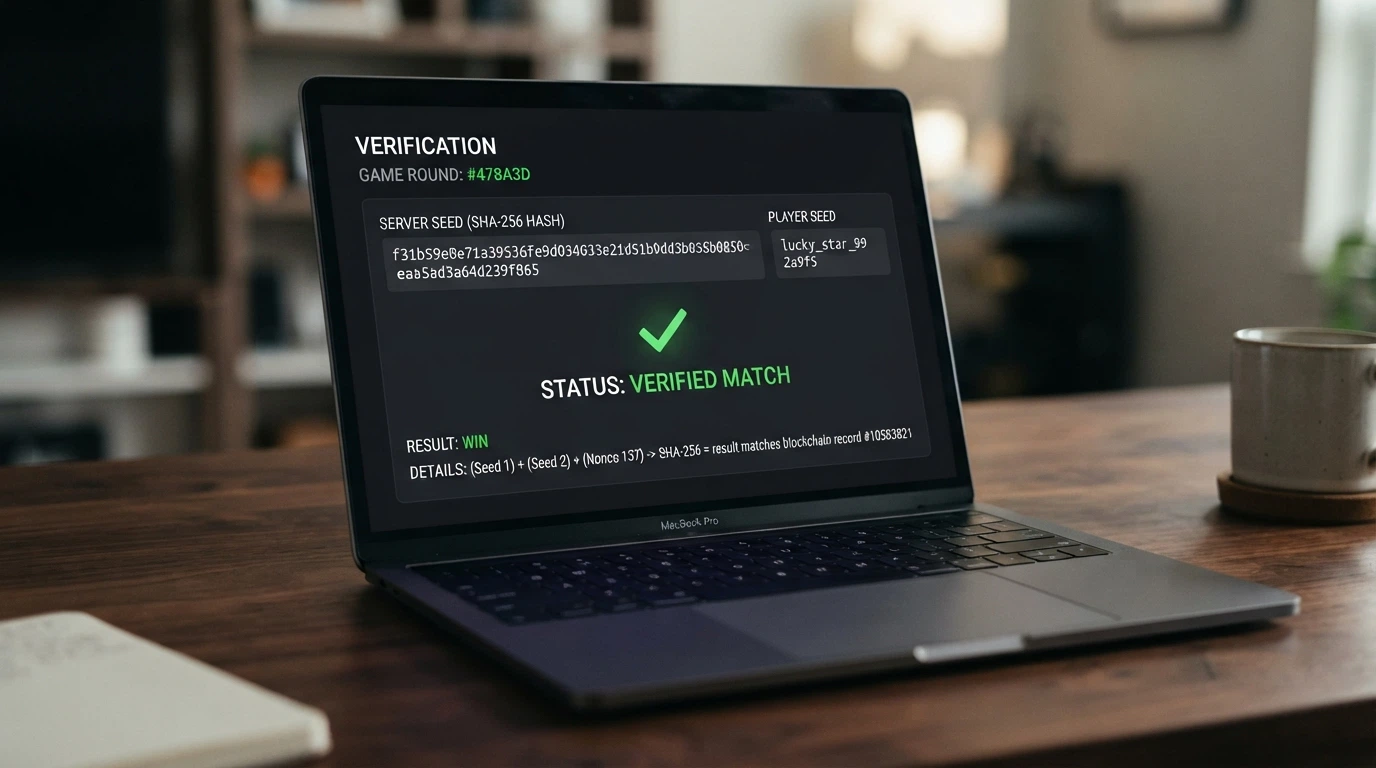
Provably fair gaming is the cryptographic path. The model is a three-seed system: a server seed generated by the casino, a client seed set by the player, and a nonce incremented each round. The casino hashes the server seed and shows the hash before the round starts, so the player can confirm the seed was committed to in advance. After the round, the casino reveals the server seed, and the player runs the three seeds through the game’s algorithm to confirm the result. The verification is independent of the casino — the player does not have to take the operator’s word for the outcome.
The limit of the verification is the limit of what cryptography can prove. Provably fair covers the individual game outcome. It does not cover payout speed. It does not cover whether the operator is solvent. It does not cover whether the operator will process a withdrawal. A provably fair casino can still delay a withdrawal for a week, freeze an account, or close a balance for a T&Cs violation. The cryptographic check is on the result, not on the operator.
The honest reading of the no-KYC and provably-fair pair is that they replace a regulator with cryptography and a wallet address. A player who trusts cryptography more than a regulator is well-served. A player who wants a regulator they can appeal to when a withdrawal is refused is not.
No-KYC Casinos — Playing Without Handing Over Your Identity
No-KYC sign-up at an Ethereum casino means the casino never sees the player’s name, address, date of birth, or any document. The casino sees an email address and a wallet, and on the strength of those alone the player can deposit, play, and withdraw. The signup is measured in seconds, the withdrawal in minutes, and the friction in zero.
The friction that is missing is the friction the Australian framework is built around. The National Consumer Protection Framework’s ten measures include strong identity and age verification, voluntary deposit limits, and monthly activity statements. A licensed Australian wagering operator must verify a customer is 18, must offer deposit limits, and must send monthly statements showing net win or loss. A no-KYC offshore casino does none of that. The player’s age is the player’s word. The deposit limit is whatever the player sets on themselves, with no operator-side check. The activity statement is the player’s own spreadsheet.
The offshore status compounds. A no-KYC casino accepting ETH is doubly outside the Australian framework — outside by product (online casino is prohibited) and outside by payment (crypto is banned for licensed wagering). The provider has no Australian identity to enforce against, which is part of the appeal and part of the risk. A player with a dispute at a no-KYC casino has the casino’s support, the casino’s licensor (if the licence is current and the licensor accepts the complaint), and nothing else. There is no ombudsman. There is no Australian Consumer Law. There is no chargeback, because there is no card to charge back.
Provably Fair Gaming — How Blockchain Verification Works in Practice
A provably fair game generates its outcome from three inputs: a server seed the casino commits to in advance, a client seed the player sets or accepts, and a nonce that increments each round. The casino publishes a hash of the server seed before the round, so the player can confirm the seed was fixed at the start. After the round, the casino reveals the server seed, and the player runs the same algorithm to confirm the result. The verification is mathematical and reproducible, and it does not require trusting the casino.
BC.Game’s BC Originals are the example in the set. The titles — Crash, Dice, Plinko, and others — are proprietary and run on the provably fair model, with the seed data published round by round. A player can take the seeds, run them through a verifier (most operators publish one), and confirm the result was not altered after the bet. The process takes a few seconds per round, and it is the only independent check on game outcomes in the entire category.
What the process does not cover is what the casino does with the player’s money outside the game. Provably fair verifies that the dice roll was fair. It does not verify that the casino will pay out the winning bet. It does not verify that the casino is solvent. It does not verify that the casino will not freeze the account on a bonus-abuse claim. A player who runs the verifier and sees a fair result has confirmed one fact about the operator’s honesty and has learned nothing about the other facts that matter when a withdrawal is requested.
Ethereum Casinos on Your Phone — App, Browser, or Both?
Most Ethereum casinos are browser-based on mobile, not native apps. The reason is the App Store and Google Play policies on real-money gambling apps, which are restrictive in most jurisdictions and which require the operator to hold a licence in the player’s country — a condition the offshore Ethereum casino cannot meet. The result is a mobile-web experience that runs the same HTML5 games as the desktop site, with no install step and no app store friction. The wallet integration is via the mobile browser’s connection to MetaMask Mobile, Trust Wallet, or a similar app — the player copies the deposit address from the casino, opens the wallet, and confirms the transaction.
The mobile-web experience is close to the desktop experience for the slot and live-dealer libraries, because the games are HTML5 and the screen is just a viewport. The experience gap is in the cashier, where the address-copy-paste-confirm flow is more cumbersome on a phone than on a desktop, and in long sessions, where the phone’s battery and the player’s attention are both finite. A player who intends to play a two-hour session is better off at a desktop. A player who wants a quick session between meetings is fine on mobile.
The dedicated-app gap is real, though the marketing hides it. Some Ethereum casinos offer Android APK downloads from their own sites, bypassing the Play Store, and a smaller number offer iOS apps through TestFlight or similar channels. The reliability of those paths varies, and the operator’s own T&Cs are the place to check what is offered for the player’s jurisdiction. A player who wants a native app should not assume one exists.
From Pokies to Live Blackjack — What You Can Actually Play With ETH
The library size at an Ethereum casino is the figure a player sees first, and the figure is large: 4,500+ games at BitStarz, 5,000+ pokies at HellSpin, 6,000+ pokies at Neospin. The library is real. The transparency on the games in it is thinner.
Slots are the bulk of every library, and the providers that matter are the ones an Australian player has heard of. Pragmatic Play and Nolimit City are confirmed at HellSpin, and the presence of those two studios is the meaningful detail — both produce pokies that appear across the Australian-facing offshore casino set, and their games are the ones an Australian player would expect to find. Megaways titles, like the Lady Wolf Moon MEGAWAYS at Vave, are a feature of the same library. A player who wants a specific pokie should check the operator’s lobby for the provider and title before depositing.
Table games and live-dealer tables round out the library. Blackjack, roulette, baccarat and their variants are available at every operator in the set. SkyCrown confirms Evolution Gaming for live casino, and Evolution is the dominant live-dealer studio across the category. A live-dealer player at SkyCrown or any other operator with Evolution gets the same studio’s tables they would find at a fiat casino, with the same games and the same dealers. The casino-side integration is what differs.
The RTP transparency gap is the figure a player should be aware of. No per-title RTP was confirmed in this run’s evidence across any of the ten featured operators, and the published-RTP norm at offshore crypto casinos is weaker than at licensed Australian wagering operators, where monthly activity statements show the player’s net result. A player at an offshore casino has the game’s theoretical RTP (where the provider publishes it) and nothing more — no operator-side breakdown of how the games actually paid out, no audit of the return-to-player figures, no third-party certification visible to the player. The games are the same games. The transparency is not.
Ethereum Pokies and Slots — Thousands of Titles, a Handful of Published RTPs
A pokie library of 5,000+ titles is not a transparency claim. The provider names — Pragmatic Play, Nolimit City, and others — are the transparency claim, because the providers’ games carry published RTPs at the studio level. A Pragmatic Play pokie is published at 96% or so depending on the title, and the player who knows the studio knows the rough return. The operator’s library is the operator’s claim; the provider’s RTP is the provider’s claim; the two together are the only return-to-player information the player has.
The Australian-specific detail is that there is no AU pokie standard. Land-based pokies in Australian clubs and pubs are subject to state-by-state regulation, and the published RTPs are part of that regime. Online pokies at an offshore casino are subject to the provider’s and the operator’s own rules, with no Australian regulator in the chain. A player who compares the offshore pokie RTP to the local pub pokie RTP is comparing two regimes that do not share a standard.
Megaways titles are the special case. Lady Wolf Moon MEGAWAYS at Vave is the example, and the Megaways engine produces a variable reel structure that changes the number of ways to win on every spin. The RTP is published at the provider level, and the volatility is high — a Megaways title is a high-variance game, with the long losing runs that high variance implies. A player drawn to Megaways is choosing high variance, and the choice is worth making knowingly.
Table Games and Live-Dealer Tables — Blackjack, Roulette and Beyond
The table-game floor at an Ethereum casino is the same as at any other online casino. Blackjack, roulette, baccarat, and their variants are available at every operator in the set. The stakes run from pennies to thousands, and the rules are the studio’s standard rules. A blackjack player who knows basic strategy gets the same theoretical return at an offshore casino as at a fiat one.
Live-dealer tables are where the operator matters. SkyCrown confirms Evolution Gaming, and Evolution is the largest live-dealer studio in the category. A player at an Evolution-powered table sees a real dealer on a real table, with the same production quality and the same game flow as a fiat live casino. The difference is the cashier: the bet is placed in ETH, the winnings are paid in ETH, and the withdrawal runs through the on-chain path described above.
The wagering catch is the line a bonus player has to read. Live and table games typically contribute 10% or nothing toward clearing a bonus, which means a A$100 live-dealer bet moves the wagering meter by A$10, or zero. A live-dealer player who has opted in to a bonus has effectively chosen to grind the bonus on slots, because the live games will not move the needle. A player who wants to play live-dealer during the clearing period is choosing to play without the bonus counting. The clearest path is to opt out of the bonus and play live-dealer on the cash balance, where every bet pays out at the game’s real odds.
Try Before You Stake — Free-Play and Demo Modes at ETH Casinos
Most Ethereum casinos run a demo mode on their slot and table games, accessible without a deposit and without an account. The demo runs on play-money credits, with the same game mechanics and the same RTP as the real-money version. A player can test a pokie’s volatility, a blackjack variant’s rules, or a live-dealer table’s interface before sending a single wei to the cashier. The cost is zero. The information is real.
The difference between demo mode and a no-deposit bonus is the difference between playing for nothing and playing for a capped payout. Demo mode pays nothing and costs nothing. A no-deposit bonus pays up to a cap and carries wagering, a cap, and a deposit-before-withdrawal condition. A player who wants to test a casino’s library and a game’s mechanics is better served by demo mode, where the test is honest and the outcome is not monetised. A player who wants to test the casino’s cashier and the withdrawal path is better served by a no-deposit bonus, where the test is the withdrawal, and the capped winnings are the cost of the test.
The two together are the safer way to explore a new operator. Demo mode answers “is this game worth playing?”. A small real-money deposit answers “is this casino worth my bankroll?”. A no-deposit bonus answers “does this casino actually pay out?”. The three questions are different, and a player who asks all three before committing a large bankroll asks them in the right order.
How to Pick an Ethereum Casino You Won’t Regret
Five checks matter more than the bonus size, and each one is a filter that cuts the ten-operator set down to the operators that fit. A player who runs all five checks before depositing is harder to disappoint than a player who runs the first one and picks the largest headline.

The first check is the licence jurisdiction. Curaçao is the standard. Anjouan is the alternative, and BC.Game is the only Anjouan-licensed operator in the set. The licence is not Australian, because no Australian licence exists. What the licence gives the player is a regulator to appeal to, in a jurisdiction that may or may not accept the appeal. SkyCrown’s reported MGA registration, from one affiliate source, is unverified in this run — a player who wants the MGA claim confirmed should check the Malta Gaming Authority register, not the affiliate page.
The second check is the wagering requirement. SkyCrown’s 30x is the floor in the set. The standard is 35x to 40x. The ceiling is 45x on no-deposit free spins. A A$2,000 bonus at 30x is A$60,000 of turnover; at 40x, it is A$80,000. The difference is the size of a small car. The wagering is the figure to anchor on, not the bonus size, because the bonus is multiplied by the wagering before the player sees it.
The third check is the withdrawal path. Operators that support L2 networks (BC.Game with nine, plus LuckyDreams’ published L2 times) are the operators that will pay out fastest and cheapest. Mainnet-only operators are slower and more expensive. The min-ETH deposit threshold — 0.005 ETH on L2s, 0.01 ETH on mainnet — is the practical filter. A player who wants to deposit A$25 needs an L2-supporting operator.
The fourth check is the game contribution table. Slots at 100% and live/table at 10% or zero is the standard. 7BitCasino’s 0% on live games is the most aggressive. A live-dealer player who wants a bonus to clear should pick a different operator or skip the bonus. A slot player does not need to worry about the contribution table, because the standard is 100% on slots.
The fifth check is the KYC posture. BC.Game and Stake are the no-KYC operators in the set. The others trigger KYC at withdrawal, which can delay the payout and can refuse the withdrawal if the documents do not match. A player who wants the no-KYC path needs an operator that confirms it, in writing, on the T&Cs page.
The five checks are not a ranking. They are a filter. The operator that passes all five and fits the player’s preferences is the one to deposit with; the operator that fails one is the one to skip, regardless of the bonus headline.
The Legal Reality — Why Every ETH Casino You Visit Is Offshore
Online casino is prohibited in Australia. The Interactive Gambling Act 2001 makes it an offence to provide online casino games, online pokies and in-play sports betting to a person in Australia, and the ACMA is the body that enforces the prohibition. There is no licence for online casino anywhere in the country — not federally, not in any state or territory. The prohibition is the legal frame every other fact in this guide sits inside, and the prohibition does not change because a player has a wallet app open.
The enforcement is real. Since its first blocking request in November 2019, the ACMA has had 1,564 illegal gambling and affiliate websites blocked by Australian ISPs as of March 2026. More than 225 illegal gambling services have withdrawn from the Australian market since 2017, either because the ACMA’s enforcement was effective or because the operator decided the market was not worth the regulatory heat. The blocked list is the visible shape of the enforcement; the operator withdrawals are the less visible but longer-run effect.
The player is not the target. The IGA targets the provider, not the person placing the bet. An individual Australian who opens an account at an offshore casino commits no offence under Australian law, and is not prosecuted for doing so. The penalty — up to A$247,500 under the credit/crypto payment ban provisions — applies to operators, not players. The player’s legal position is that of an unprosecuted participant in a prohibited market, which is a different shape from “legal” but is also not “criminal”.
What the player gives up, in exchange for the offshore status, is the Australian consumer protection. The National Consumer Protection Framework’s ten measures apply to licensed Australian wagering operators: identity verification, voluntary deposit limits, monthly activity statements, easy account closure, restricted inducements, consistent gambling messaging, staff training, and the National Self-Exclusion Register. An offshore ETH casino is not part of that framework, and the player has none of those measures enforced on their behalf. A dispute with a licensed operator has the ACMA and the state regulator as a backstop. A dispute with an offshore operator has the offshore operator’s own support, the offshore licensor if it accepts the complaint, and nothing else.
What the 2026 Gambling Reform Changes — and What It Doesn’t
The Interactive Gambling Amendment (Gambling Reform) Bill 2026 passed Parliament on 19 August 2026, and its measures commence on 1 January 2027. It is the most material change to the IGA since 2017, and the change that affects the offshore ETH casino market is the payment-provider blocking authority. From 1 January 2027, banks and payment providers gain express authority to block transactions to illegal gambling operators — which means a player’s bank can refuse to process a deposit to an offshore casino, and can refuse to credit a withdrawal from one. The mechanism is not a casino-side block; it is a bank-side block, and the bank’s customer has no recourse against the bank’s refusal to process the transaction.
The other measures in the reform are about the licensed market, not the offshore one. Wagering advertising will be capped at no more than three ads per hour between 6:00 am and 8:30 pm, with a live-sport blackout from 15 minutes before to 5 minutes after a live event. Direct marketing of inducements will be prohibited for 14 days after a customer signs up, for three months after a person deregisters from BetStop, and indefinitely for customers identified as at-risk. Online keno “pocket pokies” and foreign-matched lotteries will be banned. The reform is real, and the reform is large. None of it legalises online casino. None of it changes the offshore status of the operators in this guide. None of it gives an Australian player a licensed alternative to the ETH casino set.
The one trend worth noting is the scale of the advertising being cut back. Online gambling accounts for close to two-thirds — 64% — of all gambling advertising expenditure on free-to-air TV, metro radio and online. The three-ads-per-hour cap and the live-sport blackout will, in time, change the volume of gambling advertising Australians see. The cap does not apply to offshore operators advertising to Australians from outside Australia, which is the gap the law cannot close.
Offshore vs Licensed — What the Differences Actually Mean for Your Money
The licensed Australian wagering operator and the offshore ETH casino are not the same product with different licences. They are different products, with different protections, different obligations, and different recourse when something goes wrong. The comparison below is the one a player should make before deciding which side of the line to bet on.
| Player Protection | Licensed AU Wagering | Offshore ETH Casino |
|---|---|---|
| Identity verification | Required at signup | Optional or absent (no-KYC operators) |
| BetStop self-exclusion | Binding on the operator | Not connected; no effect offshore |
| Voluntary deposit limits | Offered and enforceable | Player-set only; not enforced |
| Monthly activity statements | Mandatory | Absent |
| Australian Consumer Law | Applies | Does not apply |
| Dispute resolution | ACMA and state regulator | Operator’s own support; offshore licensor if any |
| Chargeback recourse | Available via bank | Not available (crypto has no chargeback) |
| Payment method | Fiat only; credit and crypto banned | Crypto only; fiat rare |
| Game RTP audit | Provider- and operator-published | Provider-published; no operator audit visible |
A player who values the left column picks the licensed market. A player who values the right column picks the offshore market. A player who wants both cannot have them, because no operator in Australia offers online casino with crypto, and no offshore operator offers the BetStop binding and the activity statements. The choice is the choice between two products, and the comparison makes the trade plain.
Staying in Control When the Casino Won’t Stop You
Offshore ETH casinos carry no obligation to check on a player. There is no monthly activity statement to send. There is no voluntary deposit limit to enforce. There is no staff training requirement. There is no BetStop binding, and an excluded player can deposit at an offshore casino without the operator knowing or caring. The Australian framework’s ten consumer-protection measures are the safety net, and the safety net does not reach the offshore set. The checking has to come from the player, or it does not come at all.
The harm numbers are the scale. Australians lost A$36.0 billion to gambling in the 12 months to March 2026, up close to A$1.3 billion on the A$34.3 billion lost in the 12 months to March 2025. About 15.1% of Australian adults — an estimated 3.32 million people — are experiencing some form of gambling harm from their own or others’ gambling. Problem gambling rates have risen from 1.9% in 2022–23, to 2.4% in 2023–24, to 2.9% in 2024–25. The trend is up, and the offshore market is not the only place it shows, but the offshore market is the place with the fewest guardrails.
The concrete tools exist, and they are the player’s to use. The National Gambling Helpline — 1800 858 858 — is free, confidential and staffed 24/7, with online chat and counselling through Gambling Help Online. BetStop, the National Self-Exclusion Register, had 59,830 registrations by the end of Q3 FY 2025–2026, with 37,247 active exclusions as of 31 March 2026. BetStop binds every Australian-licensed wagering operator, which means a registered player is excluded from the licensed market, and from the licensed market only. An offshore casino is not bound, and a BetStop-registered player who opens an offshore account is making the registration useless for that account.
The player-side version of the framework is the one a player at an offshore casino actually has. A deposit limit set on a casino account is honoured by that operator, for that account, until the player changes it. A session timer is the player’s own phone alarm. A self-imposed break is a withdrawal request and a pause, not a BetStop deregistration. The tools work, and they are the only tools that work, at an offshore casino.
How We Evaluated These Ethereum Casinos
The ten operators in the ranking are the ten that appeared most often across Australian-market search results for Ethereum-accepting casinos between January and August 2026, checked against the ACMA register and the official Curaçao and Anjouan licensing databases. The list is not exhaustive — the broader offshore market runs to several hundred operators, and the ACMA’s blocked list of 1,564 sites is a small fraction of those. The list is the operators that Australian-facing affiliates and reviewers cite most often in 2026, and the operators most likely to be the one a player is considering.
The ranking weights five factors. Licence status — Curaçao and Anjouan are the jurisdictions in the set, with the Australian non-licence flagged on every row. Bonus terms — the wagering requirement, the validity period, the game contribution, the max-bet cap, and the max cashout, where each was confirmed. Withdrawal speed and network support — operators that support L2 networks are preferred over mainnet-only operators on speed and cost. Game-library breadth — operators with the largest confirmed libraries rank higher on the depth-of-choice factor. What the ranking did not weigh is affiliate commission or paid placement, because the page is a guide and the guide’s interest is the player’s.
The figures on the page are from operator terms pages, from Australian-market affiliate shortlists, and from publicly published reports. Where a figure was not confirmable, the page names the gap rather than papering over it — the em dashes in the comparison table are the most visible example. A player who wants the figure the page does not have can read the operator’s own T&Cs, and a player who reads both will end up with a fuller picture than either source alone.
Your Money, Your Call — What to Actually Do Before You Deposit
Three decisions sit between a player and the cashier, and each one is worth making before the first wei is sent. The first is the deposit amount. The minimum at most AU-accepting crypto casinos is 0.005 ETH (around A$25) on L2 networks, or 0.01 ETH (around A$50) at mainnet-only operators. A player who treats the deposit as an entertainment budget — an amount they are prepared to lose, and an amount they will not top up if it is gone — is a player whose session ends when the budget ends, and that is the right end. A player who deposits “to see what happens” is depositing without a ceiling, and the ceiling is the difference between a session and a problem.
The second decision is the network. An L2-supporting operator — BC.Game, with nine ETH-compatible networks — lets a player choose Arbitrum, Polygon, Base or another L2 for a fraction of the mainnet fee and a fraction of the mainnet wait. The choice is most meaningful for small deposits, where the mainnet fee is a meaningful percentage of the transfer. A player who picks mainnet when L2 is available is paying for the privilege of the slower path.
The third decision is the bonus. The wagering requirements at the set’s standard 35x–40x are the cost of the bonus, and the cost is A$60,000–A$80,000 of turnover on a A$2,000 bonus. A player who wants the bonus is taking the clearing cost. A player who opts out of the bonus is keeping their withdrawal path simple — no wagering meter, no max-bet cap, no game-contribution restriction, no possibility of a bonus-related voiding of winnings. The honest reading of the decision is that a bonus is a marketing offer that costs the player more than it pays, on average, and the only way to come out ahead is to clear the bonus in full, which most players do not. Opting out is the choice that the bonus marketing never recommends, and the choice that most players should at least consider.
Frequently Asked Questions
How do I deposit ETH at an online casino from Australia?
You send ETH from a self-custodial wallet — MetaMask, Trust Wallet, Rabby or another — to the deposit address the casino shows at its cashier. The casino credits your account once the transaction confirms on-chain, which takes two to five minutes on mainnet and seconds on an L2 like Arbitrum or Polygon. The minimum is typically 0.005 ETH (around A$25) on L2-supporting operators, or 0.01 ETH (around A$50) at mainnet-only casinos. No Australian bank is involved, because crypto is banned as a payment method for licensed Australian wagering.
Do I need to verify my identity to play at an Ethereum casino?
It depends on the operator. No-KYC operators like BC.Game and Stake create accounts on an email and a wallet and never ask for an ID document. Other operators trigger KYC at withdrawal and will not pay out until a driver’s licence, passport, or proof of address is supplied. The faster onboarding is at the no-KYC operators, with the trade-off that no Australian consumer protection reaches an anonymous account, and a dispute over a withdrawal has no regulator to escalate to.
What is the minimum ETH deposit at casinos that accept Australian players?
The floor at L2-supporting operators is 0.005 ETH, which is around A$25 at current prices. The floor at mainnet-only operators is 0.01 ETH, around A$50. A deposit below the minimum is bounced, and the network fee the player paid to broadcast the failed transaction is not refunded. The 0.005 figure is the one a player will see at BC.Game, where the operator supports nine ETH-compatible networks and quotes the L2 minimum.
What happens when the ACMA blocks an offshore casino holding my money?
The ACMA’s blocking orders are directed at Australian ISPs, not at the operator’s wallet. A blocked site is harder to reach from an Australian IP address, but the operator’s ETH wallet is still functional, and a player who can reach the site — through a non-Australian IP, a mirror, or any other path — can still attempt a withdrawal. The practical effect is that ACMA blocking complicates access, but it does not freeze balances or force withdrawals. A player whose balance is held at a blocked site has the operator’s support, the operator’s licensor, and no Australian regulator to escalate to.
Does BetStop protect me from Ethereum casino sites?
No. BetStop is the National Self-Exclusion Register, and it binds every Australian-licensed wagering operator. An offshore Ethereum casino is not Australian-licensed, is not connected to the register, and will accept a BetStop-registered player without checking. The exclusion is real for the licensed market, and it has no effect on the offshore set. A player who wants a self-exclusion that covers the offshore market has to commit to it personally — by closing accounts at the offshore operators, by setting deposit limits, and by not opening new ones.