
No-Deposit Free Spins at Australian Online Casinos: What the Welcome Page Doesn’t Tell You
Every “20 free spins, no deposit” banner leads to the same moment: a small number of bonus rounds on a pokie, a wagering requirement stitched to the winnings, and a cashout ceiling that decides what the offer is actually worth. The headline says free. The fine print says something else.

A no-deposit free spin is a promotional credit the casino gives an Australian player without requiring a deposit: a set number of spins, usually on a single nominated game, with a playthrough multiplier and a maximum cashout attached. It is not a gift. It is a marketing spend aimed at players who have not yet committed money, and the casino recovers the cost from the wagering that follows. The Australian-facing market is offshore. No online casino in Australia holds an Australian licence, because no such licence exists: online casino games, online pokies and in-play betting are prohibited under the Interactive Gambling Act 2001 (IGA), strengthened by the Interactive Gambling Amendment Act 2017. The offshore operators that accept Australian players operate outside the Australian regime entirely. A no-deposit free spin at one of them is a transaction with a company that is not regulated by any Australian body, and that fact shapes everything that follows.
This page walks through what the offer actually delivers, what the cashout ceiling and the wagering multiplier cost the player, and which licensed alternatives exist for Australians who decide the offshore route is not for them. It is written from verified operator terms pages, the Australian Communications and Media Authority (ACMA) register and published third-party trackers. The current as-of date for every figure on the page is 18 October 2026, and licence and enforcement figures have been checked against the ACMA’s published register and enforcement reports.
Table of Contents
- Why your 2026 no-deposit free spins are smaller than they look
- Why online casinos let you play pokies for free — and what changes when you deposit
- The 10 offshore casinos offering Australians no-deposit free spins in 2026
- Is online casino legal in Australia? The law, the loophole and the risk
- PayID, crypto and the payments Australia banned in 2026
- Mobile free spins: the bonus travels, the risk travels with it
- Responsible gambling: the safety net offshore casinos remove
- How we selected and ranked these casinos
- What every Australian player should know before claiming a free spin
- Frequently asked questions
Why your 2026 no-deposit free spins are smaller than they look
A no-deposit free spin looks like a free attempt at real money. It is, in the literal sense. What it is not, in the practical sense, is a path to a meaningful payout. Three mechanics sit between the spin and a withdrawal: the activation window, the wagering requirement on whatever the spin wins, and the maximum cashout that caps the result. Each of them shrinks the offer from what the banner claims.
No-deposit free spins: the headline offer
A no-deposit free spin is one spin on a real-money pokie paid for by the house. The casino credits a set number of spins — typically 10, 20 or 50 — on a single game, and any winnings land as bonus funds. The player does not deposit. The casino does not get paid. The arrangement exists to get the player through the door.
SkyCrown’s offer is illustrative: 20 free spins on Aztec Clusters (BGaming), with no deposit required, 25x wagering applied to whatever the spins win, a maximum cashout of €25, a 5-day window to use the spins after activation, and a 7-day window to activate them at all. Royal Reels runs a different shape: an A$10 free chip credited without a deposit, 30x wagering, and an approximate A$100 cashout ceiling. Both are real offers. Both are smaller than they look once the conditions are run through.
The reason offshore casinos give these offers to Australian players is straightforward: the IGA prohibition cuts off the licensed path, so the only way an offshore operator reaches a new player is through a no-deposit hook. The 1,564 illegal gambling and affiliate websites the ACMA has had blocked by Australian ISPs since November 2019 reflects the same dynamic from the other side. The hook works because it asks nothing of the player except a few minutes and a name. What it asks, quietly, is several hours of wagering and a willingness to accept a cashout cap that turns a “free” attempt into a real-money grind.
Free spins on sign-up: the deposit-gated kind
The deposit-gated version trades the no-deposit hook for scale. A first-deposit welcome package hands out a larger free-spin bundle — 50, 100, 200 or 400 — but only after the player has paid in. The economics for the casino are better, and the offer is correspondingly larger.
RocketPlay distributes 100 free spins as 20 per day over 5 days on the Aztec Magic slot, attached to a 100% match up to A$1,000 on the first deposit. SkyCrown’s welcome package runs up to A$8,000 plus 400 free spins across multiple deposits, with 40x wagering on the bonus and 30x on the free-spin winnings, a A$5 maximum bet during wagering, and 14 days to clear it. Royal Reels spreads A$2,500 and 50 free spins across three deposits (100% up to A$500, 75% up to A$750, 100% up to A$1,250), with 35x wagering on the bonus and the same A$5 bet cap.
The shape of the deposit-gated package is also where the daily drip-feed appears. Spins are not credited all at once because the casino wants the player to return for five consecutive days, and a daily login is the cheapest way to keep them. The 5-day window RocketPlay attaches to its bonus is the same mechanic with a deadline bolted on: fail to clear the wagering in five days and both the bonus and any winnings vanish. The deposit-gated package pays better than the no-deposit one. It also asks more.
The turnover multiplier that stands between you and a withdrawal
A wagering requirement is the multiplier applied to bonus funds (or to free-spin winnings) before they convert to withdrawable cash. A 30x multiplier on a A$100 bonus means A$3,000 of real-money bets before the bonus is “cleared” and the remaining balance becomes eligible for withdrawal. The multiplier is the single most important number on any bonus page, and it is the one most likely to be buried.
The split matters. Some operators attach the multiplier to the bonus amount (40x bonus at RocketPlay, A$7.50 maximum bet during wagering). Some attach it to the free-spin winnings (25x on FS winnings at SkyCrown’s no-deposit offer). Some split the two (40x bonus / 30x free-spin winnings at SkyCrown’s welcome package, A$5 max bet). The player cares about two things: what the multiplier is, and what base it is applied to. A 30x multiple on a small base is a tall order. A 30x multiple on a larger base is a taller one.
The low end of the Australian-facing set is FairGo at 30x wagering on pokies with no maximum bet rule reported — described by one tracker as the fairest terms among tested AU-facing casinos. The high end is Rocket Casino, where the requirement escalates to 50x on deposits over A$100, with a A$5 maximum bet. Between those two poles sit the welcome packages of every other operator in the set. The maximum-bet rule is the multiplier’s silent partner: a A$5 or A$7.50 ceiling during wagering means a player who would otherwise burn through the requirement in fewer bets has to play longer, which means more time exposed to variance and more time on the clock before any validity window expires.
The cashout ceiling: why you cannot withdraw the headline number
The maximum cashout cap is the rule that decides what the bonus is actually worth, and it is the one rule that survives the wagering requirement. SkyCrown’s no-deposit offer caps withdrawals at €25 (approximately A$40). RocketPlay’s free-spin winnings cap at A$200 from the bonus spins. Royal Reels’ no-deposit free chip caps at approximately A$100. These caps apply to winnings derived from the bonus — they do not constrain the wagering that the player has to do, only the amount they can walk away with once it is done.
The validity window is the second squeeze. SkyCrown’s no-deposit spins must be used within 5 days of activation, and there is a 7-day window to activate them in the first place. RocketPlay’s bonus is valid for 5 days. SkyCrown’s welcome package is valid for 14 days. Rainbet runs a 7-day window from deposit. A bonus that takes 14 days of regular play to clear has a 14-day deadline. A bonus that takes 5 days of regular play has a 5-day deadline, and the player who treats it casually loses the bonus. The cap and the clock together convert a marketing headline into a small, time-boxed payout that requires sustained play to reach.
The real cost of a “free” offer: a worked example
The Royal Reels A$10 free chip is the clearest worked example in the featured set: no deposit required, 30x wagering on the bonus, an approximate A$100 cashout cap. The required turnover is A$300 (A$10 × 30). If the player runs that turnover at a representative pokie RTP of 95% — Where’s the Gold sits at 95% in the Aristocrat catalogue, a reasonable mid-range assumption — the expected loss on the playthrough is A$15 (A$300 × 5% house edge). The player who clears the requirement walks away with up to A$100 of withdrawable cash, having expected to lose A$15 in the process. The offer is not “free” in the sense of riskless. It is free in the sense that no deposit was required to enter it. The expected loss to a player who completes the playthrough is about A$15, against a maximum possible payout of around A$100. The arithmetic is the casino’s, not the player’s — the house edge works the same direction on a bonus as on a deposit, and the cashout cap is the only thing standing between the player and a larger loss.
That is the cleanest case in the set. The less clean ones — RocketPlay’s A$200 free-spin cap on a 40x bonus playthrough, SkyCrown’s 25x on a €25 cap — all have the same shape: a required turnover, a small expected loss against the house edge, and a maximum payout that the cashout cap enforces regardless of how well the player runs.
Why online casinos let you play pokies for free — and what changes when you deposit
Free-play mode — the demo balance, the spinning reels, the no-registration access — is the most generous thing an online casino gives away. It costs the operator almost nothing. The maths is simple: a player who spends an hour on a demo pokie and never deposits has cost the casino nothing measurable, while the casino has had an hour to put a real-money lobby in front of them. The mode is a sales tool dressed as a courtesy.

Australian players who use the demo mode are, in the majority of cases, using it at offshore sites licensed nowhere in Australia, because no Australian licence for online pokies exists. The experience itself is identical to the real-money version. The reel layout, the bonus triggers, the return-to-player (RTP) percentage and the volatility are the same. The only difference is the currency: a play-money balance that resets itself, rather than a real-money balance that does not.
No-download, no registration: instant free pokies
Browser-based demo play is the default at offshore casinos that target Australian traffic. The pokie loads in the browser window, draws a play-money balance, and lets the player spin without an account. No download. No app. No email address. On desktop and on mobile the experience is the same: an HTML5 pokie running in a tab, with all bonus features intact.
The reason casinos offer this access is that the cost of a demo spin is essentially zero — the random number generator runs the same way regardless of whether the bet is real or virtual, and the casino is not paying out on a demo spin. The player is paying the casino nothing in return, and getting the full game in exchange. It is a remarkably lopsided transaction in the player’s favour, and the casino is happy to make it because the alternative is a player who never visits at all.
Demo mode vs real money: the line that matters
The line between demo and real-money play is not in the game. It is in the wallet. The same pokie, on the same server, with the same RTP and the same volatility, returns the same mathematical result to the player in both modes. The difference is what happens to the result. A demo spin pays a virtual balance that resets. A real-money spin pays a balance the player can withdraw — subject to wagering requirements, cashout caps, KYC verification, and the operator’s own terms. The game does not change at the moment a player switches from demo to real money. Everything around the game does.
The transition is also where the regulatory regime changes. A player spinning in demo mode is making no transaction. The moment they deposit, they enter a payment relationship with an offshore operator that is not connected to BetStop, not subject to Australian consumer protection law, and not bound by the credit card or crypto ban that took effect on 11 June 2024. The line matters because crossing it is irreversible in practice, and the protections on the real-money side are not the protections a player in Australia is used to.
Highest-RTP Aristocrat pokies available to Australian players
Aristocrat’s catalogue is the spine of the Australian pokie market, online and off. The following titles are among the most widely available at Australian-facing offshore casinos, with RTPs and volatility as published. Where a figure is not carried in research, the cell is left blank rather than guessed.
| Pokie Title | Provider | RTP | Volatility | Max Win |
|---|---|---|---|---|
| Big Red | Aristocrat | 97.04% | Medium | 2,500x |
| 5 Dragons | Aristocrat | 97.16% | High | — |
| Lucky 88 | Aristocrat | 97.00% | Medium | 888x |
| Where’s the Gold | Aristocrat | 95% | Medium | 200x |
| Queen of the Nile | Aristocrat | 95.6% | Medium | — |
| Lightning Link | Aristocrat | 95.47% | Medium | 4-tier progressive jackpot |
| Miss Kitty | Aristocrat | 94.84% | High | — |
The cluster of 97%-plus RTPs at the top — Big Red, 5 Dragons, Lucky 88 — is the high end of the Aristocrat range, and the difference between 97% and 95% is the difference between losing A$3 and losing A$5 on every A$100 wagered. None of these figures is high by international standards. They are typical for Aristocrat’s land-based heritage, and they reflect a developer whose market has historically been pubs and clubs, not online operators optimising for the regulatory minimum.
The 10 offshore casinos offering Australians no-deposit free spins in 2026
Every operator reviewed in this section is offshore. None holds an Australian licence because no online casino licence exists. The product they offer — real-money online pokies to a person in Australia — is prohibited under the Interactive Gambling Act 2001. The IGA targets the provider, not the individual player, and using an offshore casino is not a criminal offence for an Australian. The IGA is enforced by the ACMA through civil action against operators, and the agency’s leverage is site blocking at the ISP level. Since its first blocking request in November 2019, the ACMA has had 1,564 illegal gambling and affiliate websites blocked by Australian ISPs. Over 225 illegal services have withdrawn from the Australian market since 2017.

The table below summarises the ten operators reviewed. Columns reflect what research backs; cells without a verified figure use the no-data marker.
| Operator | Licence | Welcome Bonus | Wagering (Bonus) | Max Bet |
|---|---|---|---|---|
| RocketPlay | Curaçao — no AU licence | 100% up to A$1,000 + 100 FS | 40x | A$7.50 |
| SkyCrown | Curaçao — no AU licence | Up to A$8,000 + 400 FS | 40x bonus / 30x FS winnings | A$5 |
| Royal Reels | Offshore — no AU licence | A$2,500 + 50 FS (3 deposits) | 35x | A$5 |
| FairGo | Offshore — no AU licence | Match + spins packs | 30x pokies | — |
| WinSpirit | Offshore — no AU licence | Various | ~40x | — |
| Stake | Curaçao — no AU licence | Rakeback-based (no traditional welcome) | — | — |
| Rainbet | Anjouan — no AU licence | 250% up to $2,100 + 60 FS | 40x | 2% of deposit |
| Scream Casino | Offshore — no AU licence | Not confirmed this run | — | — |
| Bizzo Casino | Offshore — no AU licence | Moderate match | ~40x | — |
| Rocket Casino | Offshore — no AU licence | Various | 50x on deposits over $100 | A$5 |
The wagering column tells most of the story. FairGo’s 30x on pokies, with no maximum bet rule reported, is the friendliest figure in the set. Rocket Casino’s 50x on deposits over A$100 is the steepest. Between them sit the welcome packages of the other eight operators, most clustered around 35x to 40x. The bet caps — A$5 or A$7.50 at the operators that publish one — keep the wagering slow.
RocketPlay
RocketPlay runs a 100% match up to A$1,000 plus 100 free spins on the first deposit, with a 200% match up to A$1,000 on the second. The bonus carries 40x wagering on the bonus amount, an A$7.50 maximum bet during wagering, a 5-day validity window, and an A$200 maximum cashout from the free spins specifically. The 100 spins drop as 20 per day over 5 days, all on the Aztec Magic slot. RocketPlay holds a Curaçao licence. It is not licensed in Australia. The product it offers Australian players is prohibited under the IGA.
The A$200 free-spin cashout cap is the part that matters. A player who runs well on Aztec Magic over the 5-day drip-feed may clear the 40x wagering on a meaningful balance, but the cap forces the result below A$200. The 5-day window is tight against the wagering requirement at 40x, and the A$7.50 bet ceiling lengthens the time needed to clear it. RocketPlay is built for a player who can log in every day for five days and is comfortable with the cap.
SkyCrown
SkyCrown is the only featured operator with a confirmed no-deposit free-spin offer for Australian players: 20 free spins on Aztec Clusters (BGaming), 25x wagering on winnings, a €25 (approximately A$40) maximum cashout, 5 days to use the spins once activated, and 7 days to activate them. Separately, the welcome package runs up to A$8,000 plus 400 free spins across multiple deposits, with 40x on the bonus and 30x on the free-spin winnings, a A$5 max bet during wagering, a 14-day validity, and a A$20 minimum deposit. SkyCrown holds a Curaçao licence and is not licensed in Australia.
The €25 cashout cap on the no-deposit offer is the smallest in the set. A player who runs the 20 spins well and clears the 25x wagering cannot withdraw more than the cap allows, and the 5-day use window is the time available to do it. SkyCrown’s welcome package is a different scale entirely: 400 free spins across multiple deposits gives a player the volume, but the 14-day validity against 40x wagering is a serious time commitment. The A$5 bet cap means a player who would otherwise grind the bonus in fewer hours has to take the time.
Royal Reels
Royal Reels runs two distinct offers. The no-deposit offer is an A$10 free chip with no deposit required, 30x wagering, and an approximate A$100 cashout cap — the lowest-barrier entry in the set, and the cleanest worked example for the cost-of-a-bonus arithmetic. The welcome package is A$2,500 plus 50 free spins across three deposits (100% up to A$500, then 75% up to A$750, then 100% up to A$1,250), with 35x wagering on the bonus and a A$5 max bet. The first-deposit match alone runs 100% up to A$500 plus 50 free spins, with a A$30 minimum deposit, 30x wagering on the bonus, and a contribution split where pokies contribute 100% and table games or live dealer contribute 3%. Royal Reels is offshore and not licensed in Australia.
The 3% contribution rate is the part that catches out players who switch from pokies to a table game mid-wagering. A$100 wagered on a pokie counts as A$100 against the requirement. A$100 wagered on a live-dealer blackjack hand counts as A$3. The bonus is structured for pokies; the 3% rate on other games is effectively a wall.
FairGo
FairGo’s standout feature is its 30x wagering on pokies with no maximum bet rule reported — the lowest figure in the featured set and the one described by third-party trackers as the fairest terms among tested AU-facing casinos. FairGo runs on the RealTime Gaming (RTG) platform, with welcome packages structured as match-plus-spins packs and validity windows ranging from 3 to 14 days depending on the promotion. FairGo is offshore and not licensed in Australia.
The absence of a maximum bet rule does most of the work. A player who can afford larger wagers can clear the 30x requirement in fewer spins, which compresses the time exposed to variance and shrinks the validity window as a constraint. The RTG catalogue is narrower than what a Pragmatic Play or BGaming site offers, but for a player who wants the cleanest terms in the set, FairGo is the closer match.
WinSpirit
WinSpirit markets speed: crypto and certain e-wallet corridors can move inside a few hours after approval, and minimum deposits start near A$20. A A$20 free chip has been reported, with a A$100 cap and 40x wagering. The welcome package and ongoing promotions sit around 40x on bonus offers. WinSpirit is offshore and not licensed in Australia.
The speed story is the differentiator, and the speed story depends on the payment corridor. A player funding with crypto or an e-wallet and withdrawing to the same corridor sees the fast path. A player funding with a card or bank transfer sees the slow path. WinSpirit is a reasonable fit for a player who is already set up in crypto and who values withdrawal speed above bonus size.
Stake
Stake runs on a different model. There is no traditional welcome bonus, no deposit match, no free spins. The structure is rakeback: a percentage of the house edge returned to the player over time, calculated on play volume rather than on a single deposit event. The game catalogue is wide — Pragmatic Play, Hacksaw, Nolimit City, Evolution for live dealer — and the platform is built for a player who plays regularly and at volume. Stake holds a Curaçao licence and is not licensed in Australia.
The rakeback model is the point. A player who would chase welcome bonuses across five sites and run the wagering on each can, at Stake, sit on a single platform and collect a percentage back over the long run. The math favours a high-volume player and is unfavourable to a casual one. The absence of a welcome bonus is not a deficiency in the model; it is the model.
Rainbet
Rainbet runs a 250% match up to A$2,100 plus 60 free spins across three deposits, with 40x wagering, a 7-day window from deposit, a A$30 minimum deposit per stage, and a maximum bet during wagering set at 2% of the deposited amount. The 7-day window is the shortest in the set, and the 2%-of-deposit bet ceiling is a moving target that scales with the deposit. Rainbet holds an Anjouan licence and is not licensed in Australia.
The 250% multiplier is the largest in the set. The 7-day window is the shortest. A player who deposits the A$30 minimum per stage is betting at 2% of A$30 — a fraction of a cent at most pokies — which means the wagering has to be cleared in many small bets. A player who deposits more has a larger bet ceiling but the same 7-day deadline. Rainbet is built for a player who can run a heavy wagering requirement on a tight clock.
Scream Casino
Scream Casino is the operator in the set for which confirmed bonus terms were not available at the time of review. The licence is offshore — no Australian licence — and the game library is drawn from a mix of providers. The offer structure is the part a player has to verify themselves at the cashier page, because this page does not carry terms it cannot source.
A review that does not have verified bonus terms is a review that has to say so. Scream Casino is included in the ranking because it appears in the Australian-facing market, but the absence of a confirmed welcome offer, wagering multiplier, and validity window means the player has to do the verification work before claiming. The page notes the absence rather than filling it in.
Bizzo Casino
Bizzo’s profile is accessibility: deposits can open at A$10 to A$20 depending on the method, and cashouts run in the 24 to 72-hour band after approval. The welcome bonus is described as moderate, with wagering around 40x. Bizzo is offshore and not licensed in Australia.
The A$10 to A$20 deposit floor is the lowest in the set and is the part that suits a player who wants to test the cashier with the smallest possible commitment. The 24 to 72-hour cashout band is mid-range — not the same-day speed of a crypto-first operator, but faster than the bank-transfer standard. Bizzo is unspectacular across the board, and unspectacular is sometimes the right answer.
Rocket Casino
Rocket Casino’s wagering escalates. The published figure is 45x with a A$5 maximum bet, and as of September 2026, the requirement rises to 50x on all deposits over A$100. The 50x is the steepest wagering in the featured set. Rocket Casino is offshore and not licensed in Australia.
The escalation rule is the part that catches out a player who assumes a flat multiplier. A A$99 deposit runs 45x. A A$101 deposit runs 50x. The two are close in dollar terms and very far apart in wagering required, and the player who tips over the A$100 threshold by accident has accepted a steeper playthrough than they meant to. Rocket Casino is the warning case: read the terms by deposit size, not just by headline multiplier.
Is online casino legal in Australia? The law, the loophole and the risk
Online casino games, online pokies and in-play sports betting are prohibited in Australia under the Interactive Gambling Act 2001 (IGA). The IGA makes it an offence to provide these services to a person in Australia, and the Interactive Gambling Amendment Act 2017 closed the loopholes offshore operators had used and gave the ACMA enforcement and blocking powers. The individual player is not prosecuted: the Act targets the provider, not the customer. The IGA does not make it a crime for an Australian to use an offshore casino. It does, however, make it the case that the offshore casino is operating outside Australian law to take the bet.
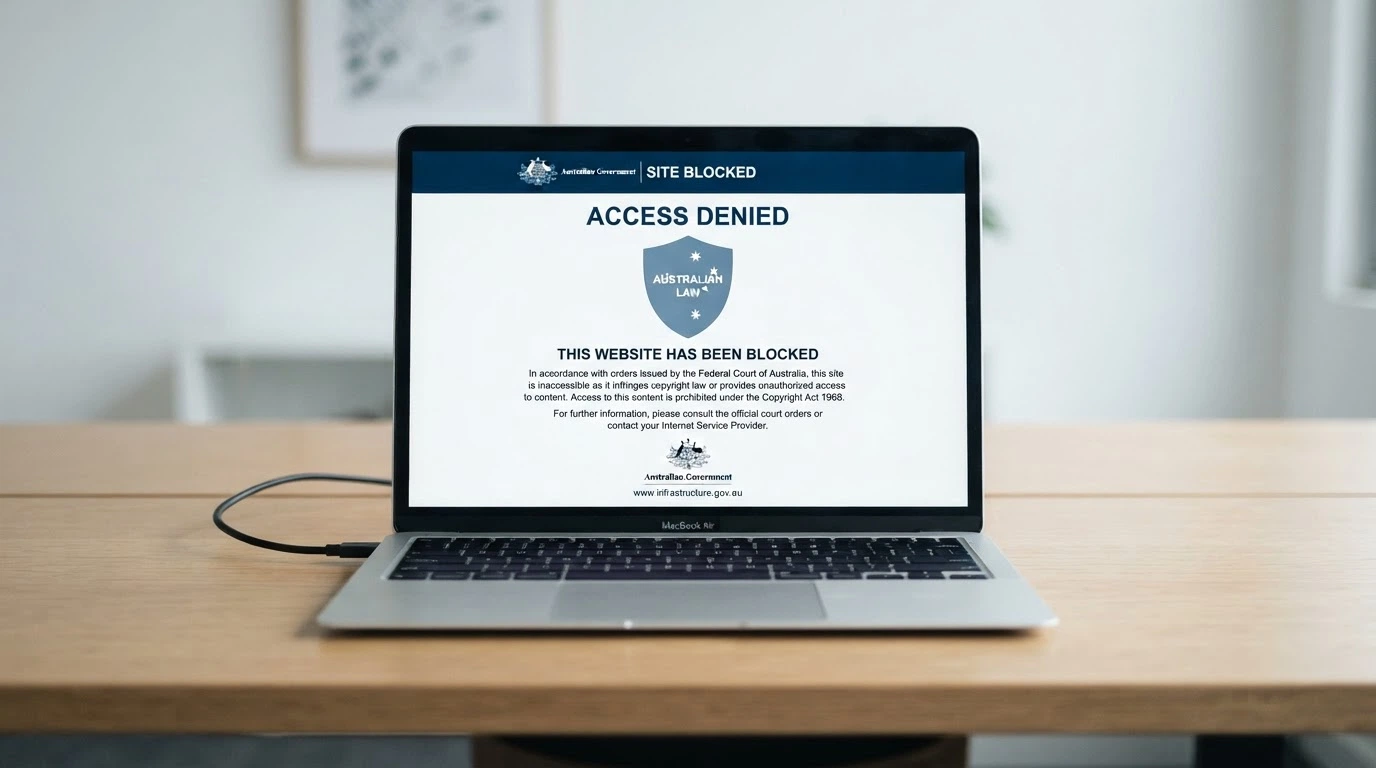
The ACMA is the regulator. It investigates complaints, issues formal warnings, directs Australian ISPs to block illegal sites, and pursues civil penalty proceedings against operators. In the fourth quarter of 2025 alone, the ACMA investigated 45 gambling sites, found 69 breaches of the IGA, issued 10 formal warnings, and referred 133 websites to ISPs for blocking. Of the 69 breaches, 38 were for providing a prohibited interactive gambling service, 26 for providing an unlicensed regulated interactive gambling service, and 5 for advertising a prohibited or unlicensed service. The agency’s most recent public statement on the subject is direct: “The Interactive Gambling Act 2001 makes it illegal for gambling providers to offer some online services to people in Australia.” And on the player side: “Even if a service looks legitimate, it’s unlikely to have important customer protections. This means Australians who use illegal gambling services risk losing their money.”
The Interactive Gambling Amendment (Gambling Reform) Bill 2026 passed Parliament on 19 August 2026. Its measures commence on 1 January 2027. On a page dated in 2026, this is law with a future start date — not yet binding, not speculative. The reform strengthens advertising restrictions, BetStop operations, bank and payment-provider blocking powers, and inducement marketing rules.
Licensed vs offshore: two worlds, one screen
What is licensed in Australia is wagering on races and sport placed before the event begins, lotteries, and keno. These are licensed by a state or territory regulator, with the Northern Territory Racing and Wagering Commission (NTRWC) and Licensing NT acting as the de facto national licensor for online wagering operators (Sportsbet, bet365, Ladbrokes, and others hold NT licences). NT licences run for terms of up to 20 years. The minimum age is 18.
What is not licensed is online casino, online pokies, and in-play sports betting. The licensed product list and the offshore product list do not overlap. A punter at Sportsbet can bet on a horse race before the jump. A punter at the same operator cannot bet on the same race after the jump. A punter at an offshore casino can play a pokie, but cannot get a complaint heard by an Australian body if the operator refuses to pay.
The gap is the part the offshore operator does not advertise. BetStop, the National Self-Exclusion Register launched on 21 August 2023, covers approximately 150 licensed Australian wagering providers. As of 31 December 2025, 54,859 people had registered with BetStop, of whom 35,135 had active exclusions. BetStop does not cover offshore casinos. A self-excluded Australian can still access an offshore site and lose money there. The same ACMA enforcement that targets the operator also cannot, on the player’s side, offer the consumer protection it offers at a licensed wagering operator.
What the player loses: no complaints body, no BetStop, no recourse
Using an offshore casino means giving up:
- No Australian complaints body. There is no AU ombudsman or dispute resolution service for offshore casino complaints. The Curaçao and Anjouan licensing regimes the offshore operators sit under have their own complaint processes, which require the player to pursue the dispute in the operator’s jurisdiction.
- No BetStop coverage. A self-exclusion from BetStop applies to licensed wagering operators. An offshore casino is not connected, and a self-excluded person can still open an account, deposit, and play.
- Balance at risk on a blocked site. The ACMA can direct Australian ISPs to block an offshore site at any time. A player with a balance on a site that is blocked mid-session has no Australian-side recourse to recover it.
- No legal recourse if the operator refuses a withdrawal or voids a win. The player is dealing with a company in a foreign jurisdiction under a licence the player cannot enforce in Australian courts.
These are not hypotheticals. They are the structural condition of the offshore market. The ACMA’s own framing — “risk of losing money” with “no customer protections” — is the regulator’s plain statement of the same point.
The 2026 reform: what changes on 1 January 2027
The reform passed on 19 August 2026 and commences on 1 January 2027. The headline changes that affect a player considering an offshore casino:
- Banks and payment providers gain express authority to block transactions to illegal gambling operators. A deposit attempt from an Australian bank account to an offshore casino can be declined at the payment rail rather than at the casino’s cashier.
- Direct marketing of inducements is banned for 14 days after a customer signs up with a licensed wagering operator, for 3 months after a person deregisters from BetStop, and indefinitely for customers identified as at risk of gambling-related harm.
- Advertising restrictions tighten: no more than 3 wagering ads per hour between 6 am and 8:30 pm; live-sport blackout from 15 minutes before to 5 minutes after live events; radio ads barred during school drop-off and pick-up; broadcasting odds banned; online ads only to logged-in, confirmed-over-18 users with opt-out; no ads in sports venues or on player uniforms; athletes, celebrities and influencers barred from promoting wagering.
The reform is law but not yet operative. The bank-blocking power, the inducement ban, and the advertising restrictions all take effect on 1 January 2027. Between the law’s passage and its commencement, the offshore operators continue to take Australian players under the existing rules.
PayID, crypto and the payments Australia banned in 2026
Credit cards, credit-related products, and digital currency (crypto) are banned as payment for online wagering in Australia, effective 11 June 2024, under the Interactive Gambling Amendment (Credit and Other Measures) Act 2023. An operator that fails to enforce the ban faces penalties of up to A$247,500. The licensed wagering operators in Australia — Sportsbet, bet365, Ladbrokes and the rest — do not accept credit cards or crypto. PayID and Osko, BPAY, debit cards, and bank transfers are the legal deposit routes. KYC verification is required.
The payment method is the tell. If a casino checkout offers a credit card or a crypto option to an Australian player, the operator is not part of the Australian regime. It is an offshore operator running an Australian-facing cashier, and the deposit attempt is crossing a payment line the Australian rules have closed.
Crypto casinos and the Australian player
Bitcoin, Ethereum, and stablecoin casino free spins exist. They are offered by offshore operators — Stake and Rainbet, both in the featured set, accept crypto. The offers are real, the games are real, the wagering requirements are real, and the cashout caps are real. The deposit method, for an Australian player funding from Australia, is the part the offer does not mention.
Crypto has been banned as a payment method for online wagering in Australia since 11 June 2024. An Australian player depositing crypto at an offshore casino is using a payment method the Australian rules prohibit, and the casino accepting the deposit is the entity on the wrong side of the prohibition, not the player. The IGA targets the provider. The individual player is not prosecuted. The transaction is, however, one the Australian regime does not support, and the protections that attach to a PayID or BPAY deposit at a licensed operator do not attach to a crypto deposit at an offshore one.
The regulatory mismatch explains why crypto casinos continue to target Australian players despite the ban. The Australian player is a real customer with a real bankroll, and the offshore operator has a payment corridor the Australian banks cannot easily reach. The IGA is enforced by civil action against operators, not by blocking individual player transactions — that power arrives on 1 January 2027, when the bank and payment-provider blocking provisions in the 2026 reform take effect. Until then, the transaction is in a gap the law has not yet closed.
PayID and instant deposits: what the law allows
PayID and Osko are the legal Australian payment rails for online wagering. They are real-time bank transfers that move funds in seconds between Australian bank accounts, and they are accepted at every licensed wagering operator in the country. The transaction is fast, the deposit is auditable, and the operator is bound by the Australian KYC and responsible-gambling requirements that come with holding a licence.
An offshore casino may offer PayID as a deposit option. The presence of PayID at the cashier does not make the operator licensed. PayID is a payment rail, not a licence, and the operator accepting a PayID deposit from an Australian player is still an offshore operator offering a prohibited product. The deposit method is a less reliable signal of regulatory status than it looks, because both licensed and offshore operators can use it. The reliable signal is the licence itself — and the licence does not exist in Australia for online casino.
The cashout side runs the same way. Licensed operators pay out to Australian bank accounts through the same rails. Offshore operators pay out through the same rails when they choose to, and through crypto, e-wallets, or wire transfers when they choose to. The withdrawal corridor is the player’s protection when the operator is licensed, and a courtesy the operator extends when it is not. A player who has a complaint about a delayed withdrawal at a licensed operator can take it to the state or territory regulator. A player who has the same complaint at an offshore operator takes it to Curaçao, or to Anjouan, or nowhere.
Mobile free spins: the bonus travels, the risk travels with it
A free-spin offer at an offshore casino is the same offer on a phone as on a desktop. The bonus is credited to the same account. The wagering is tracked on the same balance. The cashout is paid to the same withdrawal method. The mobile experience is functionally identical to the desktop one, with one important difference: the offshore casino’s app is not in the Australian App Store or Google Play store, because Apple and Google do not distribute real-money gambling apps in Australia. Australian players who want mobile access use the mobile browser, the same way they would at a licensed operator.

The browser-based mobile experience is the same HTML5 pokie that runs on the desktop browser, scaled to the phone’s screen. No download is required. The deposit and the withdrawal are made through the mobile browser’s cashier. The KYC document upload happens in the same browser. There is no technical difference between the desktop and the mobile experience, and there is no regulatory difference either: the offshore operator is offshore on both screens, and the offshore protections — or the absence of them — travel with the login, not the screen size.
Real-money free spins on your phone
The transition from demo to real money on a phone is the same line as on a desktop: the same game, the same RTP, the same volatility, with a real-money balance that does not reset. The mobile cashier supports the same payment methods — crypto, e-wallets, cards, and in some cases PayID — and runs the same KYC verification when a withdrawal is requested. The bonus claim flow is the same: register, activate the bonus, play through the wagering, request a withdrawal. The screen size does not change the bonus terms. The phone does not change the cashout cap. The offshore operator is offshore regardless of whether the player is at a desk or on a bus.
The convenience is real. The risk is the same risk as the desktop. The two are not in conflict, but the convenience can make the risk easier to overlook, and the page notes the overlap because the player should be the one to weigh it.
Responsible gambling: the safety net offshore casinos remove
The Australian responsible-gambling infrastructure is built around licensed wagering operators. BetStop — the National Self-Exclusion Register, live since 21 August 2023 — covers approximately 150 licensed wagering providers. As of 31 December 2025, 54,859 Australians had registered with BetStop to self-exclude from all licensed Australian online and phone wagering services; 35,135 of those exclusions were active. Self-exclusion can be set for a minimum of 3 months and up to a lifetime. The National Gambling Helpline — 1800 858 858 — is free, confidential, and available 24 hours a day, with online chat and counselling through Gambling Help Online at gamblinghelponline.org.au. The Australian Institute of Health and Welfare put problem gambling at about 2.1% of Australian adults — roughly 430,000 people — and high-risk gambling at 1.8% in its 2022 reporting.
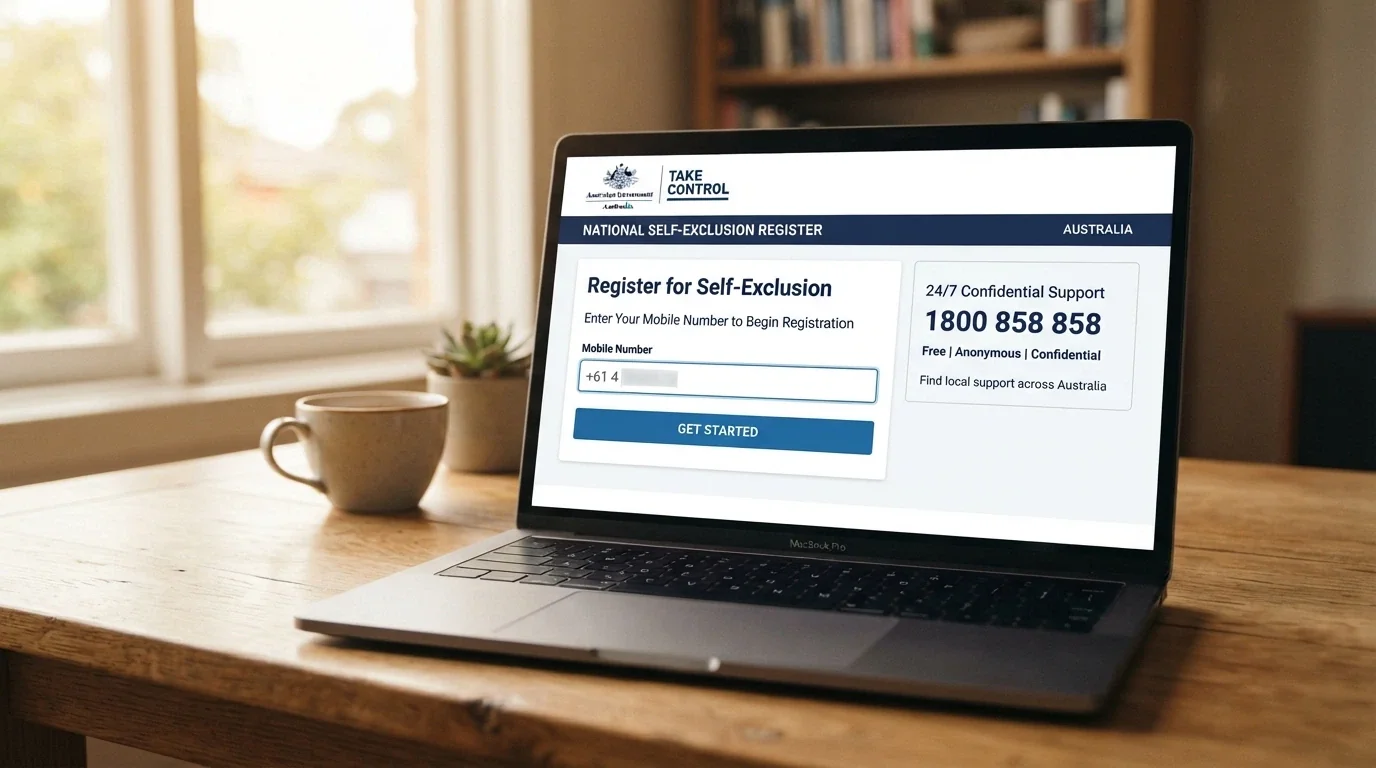
None of this infrastructure reaches an offshore casino. A BetStop self-exclusion does not stop a self-excluded Australian from opening an account at an offshore operator, depositing, and playing. The offshore operator has no obligation to check BetStop, and most do not. The self-excluded punter who wants to keep playing offshore can do so. The Australian helpline is reachable from anywhere — a phone is a phone — but the offshore operator has no obligation to act on a call.
The safety net is real, and it is real only for the operators it covers. The offshore route removes it.
Setting limits and seeking help: what actually works
For an Australian playing at any operator — licensed or offshore — the practical steps that work are the same:
For an Australian playing at any operator — licensed or offshore — there are several practical steps that work. First, set a deposit limit before the first session, not after; licensed wagering operators offer customer-set deposit limits and activity statements under their state or territory conditions, though conditions differ by jurisdiction, and an offshore operator may or may not offer or enforce the same tools. Second, use a take-a-break tool if the operator offers one. Third, register with BetStop at betstop.gov.au if self-exclusion is the right answer, noting that while BetStop covers licensed wagering providers, it does not cover offshore casinos. Fourth, call the National Gambling Helpline on 1800 858 858 at any time for free, confidential, 24/7 support, or use the online chat and email counselling through Gambling Help Online at gamblinghelponline.org.au. Finally, talk to a financial counsellor if gambling is affecting household finances; the National Debt Helpline on 1800 007 007 offers free, independent advice.
The licensed alternative is the wagering product. Sports betting before the event starts, racing, lotteries, keno — these are licensed in Australia, covered by BetStop, and bound by the consumer protection regime that comes with holding a licence. The product set is narrower than the offshore product set. The protection set is wider.
How we selected and ranked these casinos
The ten operators in this ranking are the offshore casinos that appear in the Australian-facing market with a real-money product for Australian players, sourced from affiliate trackers and operator terms pages — CasinoAlpha, BonusManiac, WatchMyNumbers.com, and the operators’ own bonus terms pages. Each operator was checked against the ACMA register of illegal gambling services and against its own published terms. The ranking is ordered by fit to the page’s subject — operators with confirmed no-deposit free-spin offers or strong welcome packages with free spins rank higher; operators with no confirmed bonus data or with rakeback-only structures rank lower. Market position in the ranking reflects fit to the topic, not licensing status, and licensing status is the same for every operator: offshore, no Australian licence, product prohibited under the IGA.

What the ranking does not include: a numerical weighting of bonus value, a calculated “best offer” score, or a percentage score by category. The terms across the operators vary too much in structure — a no-deposit free chip with a 30x playthrough is not directly comparable to a 400-free-spin welcome package with a 40x bonus and 30x FS multiplier — to score on a single axis without inventing figures the page does not have.
What the ranking does include: a verification of each operator’s licence status, a transcription of the wagering requirements, bet caps, validity windows, and cashout caps from the operators’ own terms, and a qualitative note on what the offer is worth to which player. Where research carries a figure, the figure is on the page. Where research does not, the cell is blank or the section is qualitative. The page is descriptive of the operators, not promotional.
What every Australian player should know before claiming a free spin
The no-deposit free spin is real. The wagering requirement is real. The cashout cap is real. The offshore licence is real. The absence of Australian consumer protection is real. Every one of those facts is on the page above, and the decision belongs to the player who has read them.
The licensed path is the wagering, lottery and keno product, available through operators licensed in a state or territory — typically the Northern Territory for online wagering. The product is narrower than the offshore product. The protection set is wider: BetStop coverage, an Australian complaints body, a licensed regulator, and a payment rail (PayID, BPAY, debit card) that does not cross a line the Australian rules have closed. The offshore path is real-money pokies, live dealer, and a bonus market that is constantly offering something. The protection set is the absence of every one of those things, plus the structural risk that the site can be ACMA-blocked at any time with a balance still on it.
The individual player is not prosecuted under the IGA. The Act targets the provider. The statement is accurate and it is incomplete: a player who uses an offshore casino has no Australian complaints body to take a dispute to, no BetStop coverage, no recourse if the operator refuses a withdrawal or voids a win, and a balance that can be stranded by an ISP-level block. The ACMA’s own framing is the cleanest: “risk of losing money” with “no customer protections.” Both are true, both apply, and both are the player’s own to weigh.
The page is not a recommendation. It is a description of what the offer is, what it costs, and what it requires the player to accept. The choice is the player’s.
Frequently asked questions
Can I win real money with no deposit free spins?
Yes — in the literal sense. A no-deposit free spin pays real money when it lands a winning combination, but the winnings land as bonus funds subject to a wagering requirement (typically 25x to 40x) and a maximum cashout cap. The cap is the binding number: at SkyCrown the cap is €25, at Royal Reels it is approximately A$100, and at RocketPlay the free-spin-specific cap is A$200. The expected loss from clearing a A$10 free chip at 30x wagering on a 95% RTP pokie is about A$15, against a maximum possible payout of A$100.
What are wagering requirements and how do they work?
A wagering requirement is the multiplier applied to bonus funds (or to free-spin winnings) before the balance becomes eligible for withdrawal. A 30x multiplier on a A$100 bonus means A$3,000 of real-money bets before the bonus clears. The base matters: some operators apply the multiplier to the bonus amount, others to the free-spin winnings, and a few split the two. The maximum bet rule (A$5 or A$7.50 at most featured operators) keeps the player from clearing the requirement in a few large bets. Validity windows — 5 to 14 days at the featured operators — set the clock.
Which pokies have the highest RTP in Australia?
Among the Aristocrat titles most widely available at Australian-facing offshore casinos, the top of the RTP range is 5 Dragons at 97.16%, Big Red at 97.04%, and Lucky 88 at 97.00%. Where’s the Gold sits at 95%, Queen of the Nile at 95.6%, and Lightning Link at 95.47%. Miss Kitty is at 94.84%. None of these figures is high by international online-casino standards — the 96% to 97% band is typical for Aristocrat’s land-based heritage. The game with the highest RTP in the set is the one whose house edge is smallest, and the difference between 97% and 95% is the difference between losing A$3 and losing A$5 on every A$100 wagered.
What happens if an offshore casino refuses to pay my winnings?
The player has no Australian complaints body to take the dispute to. The Curaçao and Anjouan licensing regimes have their own complaint processes, which require the player to pursue the dispute in the operator’s jurisdiction under the operator’s rules. An Australian court cannot enforce a Curaçao or Anjouan ruling against an operator that refuses to comply. The licensed alternative — a state or territory-licensed wagering operator — is bound by Australian consumer protection law, and a dispute can be taken to the state regulator. The structural difference is the entire reason the ACMA’s framing is “risk of losing money” with “no customer protections.”
What is the difference between pokies and slots?
“Pokies” is Australian English for what the rest of the English-speaking world calls slot machines, derived from “poker machines.” “Slots” is the imported international term used by software developers and operators whose catalogues were written for a global audience. The word on a casino’s website is a small tell about who the site expects to read it. Both terms refer to the same games. The RTP, volatility, and bonus mechanics are the same in both vocabularies.
How do I self-exclude from an online casino?
The answer depends on which casino. BetStop, the National Self-Exclusion Register at betstop.gov.au, covers approximately 150 licensed Australian wagering providers, and self-exclusion can be set for a minimum of 3 months and up to a lifetime. As of 31 December 2025, 54,859 people had registered with BetStop, with 35,135 active exclusions. BetStop does not cover offshore casinos — a self-excluded person can still open an account and play at an offshore operator. For self-exclusion at an offshore casino, the player has to use the operator’s own self-exclusion tool (if it offers one) and accept that the tool is enforced only by the operator that offers it. The National Gambling Helpline on 1800 858 858 is free, confidential, and available 24/7.
The great Australian naming debate: pokies or slots?
The word “pokies” is Australian English for what the rest of the English-speaking world calls slot machines. It derives from “poker machines,” the original term for the mechanical devices that took poker hands as their reels, and it has been the dominant Australian term since at least the mid-twentieth century. “Slots” is the imported American term, used by international operators and software developers whose catalogues were written for a global audience.
The choice of word on a casino’s website is a small tell. An Australian-facing site that calls them pokies is targeting the local market. An Australian-facing site that calls them slots is running translated or templated copy, often from a Curaçao-licensed operator that has added Australian payment corridors to an offshore product. Neither tells the player anything about the licence status, which is offshore in both cases. Both tell the player something about who the site expects to read it.