Casinos That Accept Litecoin in Australia: The Offshore Picture for Aussie Punters in 2026
Online casino is prohibited in Australia under the Interactive Gambling Act 2001, so every casino on this page is an offshore operator that has chosen to serve Australian players anyway. None holds an Australian licence, because none can exist: the licence does not exist for this product, federally or in any state or territory. What this page ranks is ten of those operators on what actually matters when you send Litecoin — bonus terms that hold up to reading, withdrawal speeds measured in minutes rather than days, game libraries deep enough to make the deposit worth the network fee, and a clear read on what each one costs in expected value once the wagering is done. The legal gap runs through every section that follows, because the gap is the structural fact an Australian player has to start from.

Current as of 29 October 2026 · Licence claims verified against the Curaçao Gaming Control Board and Antillephone N.V. public registers where research could confirm them.
Table of Contents
- What a Litecoin Casino Actually Is — and Why Australians Are Using Them
- The Top LTC Casinos for Aussie Punters in 2026
- Litecoin Pokies Worth Your Spins — and the Games Behind Them
- Why Your Litecoin Casino Bonus Is Smaller Than It Looks
- Anonymous Litecoin Casinos: What No-KYC Actually Delivers
- Litecoin Deposits and Withdrawals: Speed, Fees and the Fine Print
- Live Dealer Tables That Take Litecoin — and the Games Worth a Seat
- The Legal Reality for Australian Litecoin Casino Players
- How We Picked and Ranked These Litecoin Casinos
- Your LTC, Your Call: What the Numbers Say About Playing With Litecoin in Australia
- Frequently Asked Questions About Litecoin Casinos in Australia
What a Litecoin Casino Actually Is — and Why Australians Are Using Them
A Litecoin casino is an online casino that accepts deposits and pays withdrawals in LTC, the cryptocurrency whose ticker matches the coin sitting on the Litecoin network. Beyond the cashier, the games are the same titles you would find at any other online casino: pokies, blackjack, roulette, live dealer tables, the occasional crash game. What changes for an LTC player is the payment rail and the speed at which money moves between wallet and balance.
The interest is practical. Litecoin transactions confirm in roughly two and a half minutes, a quarter of Bitcoin’s block time, and the network fee for moving LTC to or from a casino rarely clears the one-cent mark. That puts the rail ahead of any card, bank transfer or e-wallet on speed and well ahead on cost. It also puts the rail outside Australia’s banking system, which is part of why the regulator moved against crypto at licensed operators and cannot reach the offshore cashier anyway. The biggest libraries in the space carry more than 7,000 slot titles from 70 or more providers, which gives a sense of the depth the cashier sits behind.
The offshore reality does the rest. No Australian licence exists for online casino at any level of government. The Interactive Gambling Act 2001 prohibits providing online casino games, online pokies or in-play sports betting to a person physically in Australia. The individual player is not the target of the law, but the consumer protections that follow a licensed product — a complaints body, a regulator to escalate to, deposit limits that hold — are not part of what an offshore casino offers. The casino carries a Curaçao licence in the vast majority of cases, sometimes an Anjouan licence, and operates outside the Australian Consumer Law.
Two further pieces round out the picture before the rankings begin. Mobile access is essentially universal at the operators on this page — every one runs a browser-based lobby that loads cleanly on iOS and Android, and a handful ship a dedicated app. And the newest sites in the LTC casino space tend to compete on bonus size and platform freshness, but they also tend to apply higher verification checks than the established names, which is worth weighing against the welcome package if you prefer to send and play without an ID upload.
The Offshore-Only Reality: Why No Australian Casino Takes Litecoin
The Interactive Gambling Act 2001 makes providing an online casino to a person in Australia an offence. There is no licence for the product federally and no licence for it in any state or territory. That has been the legal shape since the statute was amended in 2017 to expand what it covers, and the shape is unchanged as of 2026.
The enforcement targets the provider, not the player. The Australian Communications and Media Authority has had 1,564 illegal gambling and affiliate websites blocked by Australian ISPs since the first blocking request in November 2019, and more than 225 illegal services have withdrawn from the Australian market since enforcement was strengthened in 2017. The mechanism is DNS-level blocking — the domain stops resolving on Australian networks, but a balance sitting on the site does not disappear with the block, and there is no Australian complaints body to escalate to if the operator refuses to pay it out.
The offshore casino model exists precisely because it cannot exist onshore. A Curaçao-licensed operator is licensed by the Curaçao Gaming Control Board or one of the sub-licensors it authorises — Antillephone N.V. being the most prominent — and that licence lets it take players from jurisdictions where online casino is banned. It does not give an Australian player the protections that come with an Australian-licensed wagering account, because those protections — pre-commitment, activity statements, the BetStop self-exclusion register, access to a free 24/7 helpline — are written into the Australian licence and stop where the licence stops.
What a Litecoin Deposit Actually Looks Like at the Cashier
The deposit flow is short. The player opens the cashier, picks Litecoin from the list of payment methods, and is shown a deposit address — a string of letters and numbers, often paired with a QR code for mobile. The player sends LTC from their own wallet to that address. The casino’s payment processor watches the Litecoin network, and once it sees the transaction confirmed, credits the player’s account.
“Confirmed” is the part that varies. At most crypto casinos the credit triggers after one network confirmation, which lands in approximately one to two minutes on Litecoin’s two-and-a-half-minute block schedule. Some operators wait for additional confirmations, which can stretch the wait to five or fifteen minutes, and that is the figure that tends to be quoted in marketing copy as “deposit time”. Both numbers are short; the one-confirmation figure is the honest one for most operators on this page.
The other number that matters is the fee. Litecoin network fees average under one US cent per transaction at typical casino sizes — small enough that a casino offering “no fees on deposits” can mean it without subsidising the player, and small enough that withdrawing winnings in LTC is rarely worth optimising around. The fee is paid in LTC and deducted from the sending wallet; the casino’s balance reflects the gross amount.
What delays a deposit in practice is almost never the network. It is the casino’s own payment processor running an automated check, the player sending from an exchange wallet that has its own pending-withdrawal queue, or the cashier interface waiting on a websocket update. Compared to a card deposit or a bank transfer, both of which can take a working day and carry a fee the player absorbs, LTC wins on the timeline and on the bottom line.
New Litecoin Casinos: What a Fresh Launch Brings to the Table
A new LTC casino in 2026 tends to come out swinging on welcome packages, because the product is competitive and the way a new operator gets attention is to put more money on the counter than the established names are offering. Some newer entrants run welcome variants up to A$8,000 across five deposits, which is the kind of headline that lives on the homepage until the market catches up.
The newer site also tends to ship a modern platform: a cleaner lobby, faster filters, mobile-first design, and a smoother live-dealer integration than an older Curaçao licence sometimes carries. That engineering investment matters because the back end at a legacy casino can take seconds to load a category, while a fresh launch tends to feel closer to a consumer app.
The trade-off is verification. Newer sites have to prove themselves to the same payment processors and game providers that the older names already have, and the way they do it is to enforce KYC more strictly than an established operator might. Anjouan-licensed no-KYC operators sit at the other end of the spectrum — minimum deposits as low as 0.01 LTC and payouts that process in minutes without identification — but the general rule holds: the newer the brand, the more likely the cashier asks for some form of identification before a withdrawal lands.
What to check before depositing at a brand you have not used before: licence number against the issuing regulator’s register (the Curaçao Gaming Control Board publishes a list of sub-licences), a working withdrawal at a small amount, and a real player review that does not come from the affiliate ecosystem. Newness is not a red flag by itself. Newness plus an unverifiable licence is.
The Top LTC Casinos for Aussie Punters in 2026
Ten operators, ranked by bonus value, game selection and LTC-specific payment features. The table carries what research confirmed; the write-ups carry what the figures actually cost.
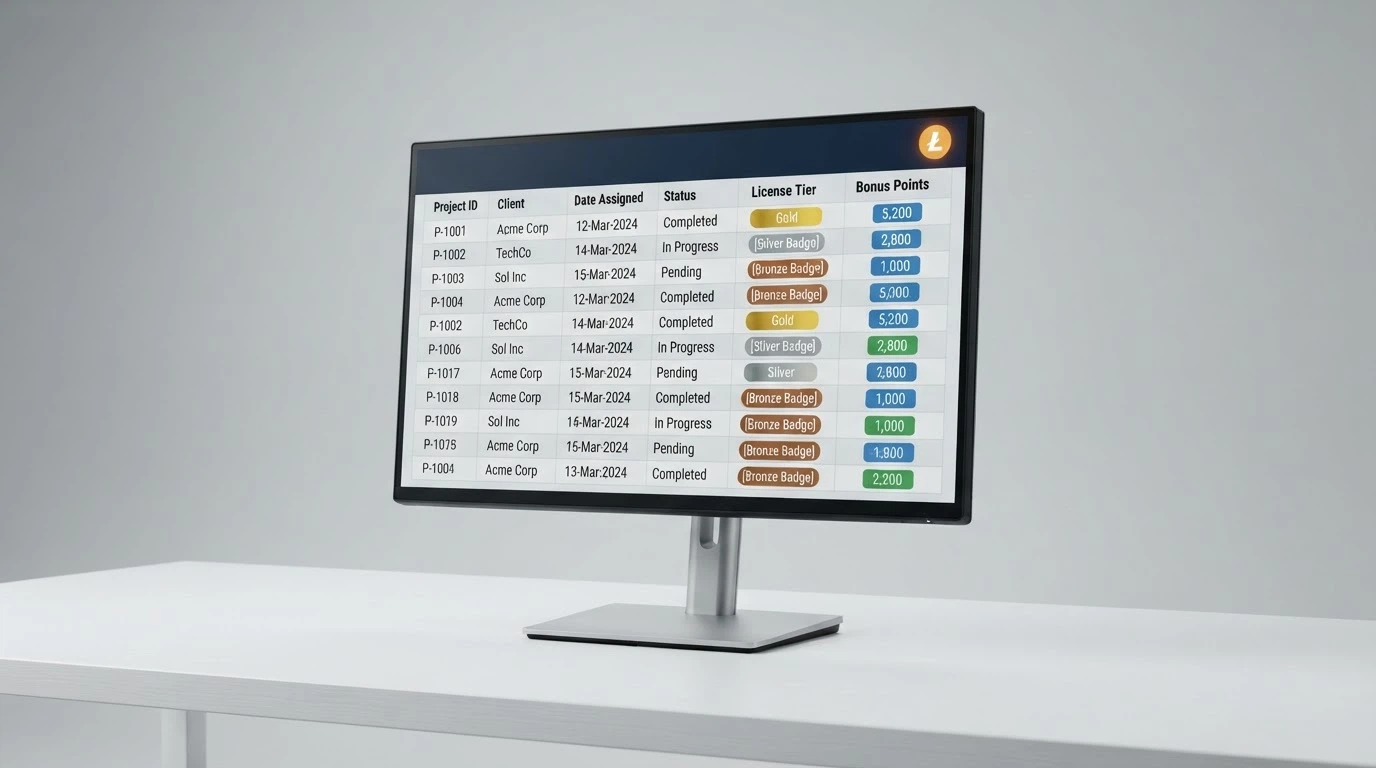
| Casino | Licence | Welcome Bonus | Wagering | Game Providers |
|---|---|---|---|---|
| SkyCrown | Curaçao (Hollycorn N.V.) | A$8,000 + 400 FS (first: A$1,200 + 125 FS) | 40x | Pragmatic Play, Evolution |
| RocketPlay | Curaçao GCB OGL/2024/1307/0748 | Deposit match + free spins | — | Pragmatic Play and others |
| Fair Go | Curaçao (number unverified) | A$1,000 across 5 × A$200 deposits | 30x | RTG |
| Stake | Curaçao | 10% lifetime rakeback | Wager-free | Pragmatic, Hacksaw, Evolution |
| WinSpirit | Curaçao | 200% + 25 FS | 40x | — |
| Rainbet | Curaçao eGaming | A$500 + 50 FS (or A$700 locked track) | 35–40x | — |
| Royal Reels | Curaçao | A$500 + A$10 no-deposit | 30–40x | 30+ providers |
| Bizzo Casino | Curaçao 8048/JAZ2017-067 | Match deposit + free spins | — | SoftSwiss platform |
| Scream Casino | — | — | — | — |
| Rocket Casino | — | — | — | — |
SkyCrown
SkyCrown is the biggest welcome package among the featured operators: a five-stage offer worth up to A$8,000 in match bonuses and 400 free spins, with a first deposit of 120% up to A$1,200 plus 125 free spins (up from 100 FS) at a A$30 minimum. The wagering requirement is 40x on the bonus amount, the validity window is 14 days from activation, and a maximum bet of A$6.50 applies during bonus play — exceeding it can void winnings.
The casino is licensed in Curaçao under Hollycorn N.V., and the games come from Pragmatic Play, Evolution Gaming and others, so the lobby covers the heavy hitters on the pokies and live-dealer sides. A separately-published variant of the welcome package reaches A$4,000 across the five deposits with 100 free spins, which is the number that surfaces on affiliate pages and is worth treating as the alternate ceiling rather than the default.
What separates SkyCrown from the rest of the top tier is the welcome package size and the brand depth. What the wagering requirement costs the player, on the other hand, is the same as every other 40x bonus on this page: an expected loss of roughly A$480 on a A$300 first-deposit bonus at a 96% return-to-player pokie, which is the calculation the bonus section walks through in detail. The SkyCrown offer is worth taking if you were going to play anyway and your bankroll covers the A$12,000 in turnover the bonus demands — it is not worth chasing as a value play.
RocketPlay
RocketPlay is the pick for a player who wants to verify the licence, because the Curaçao Gaming Control Board number is on the public record: OGL/2024/1307/0748, held by Scores55 Tech B.V., dated 2024. The casino runs on the CoinsPaid payment gateway and accepts BTC, LTC, ETH, USDT, DOGE and BCH, with a minimum crypto deposit starting from roughly A$25 equivalent.
The welcome offer is a matched deposit plus free spins, with reload bonuses and cashback available on subsequent deposits. Pragmatic Play is on the provider list, and the casino supports more than 30 payment methods overall, which is a useful tell that the platform is built for crypto rails rather than bolted onto them.
RocketPlay’s strength is the verifiable licence and the payment-rail design. Its weakness is the opacity of the welcome bonus figure — the headline number rotates or differs by region, which is a common pattern at offshore operators. If a verifiable licence matters to you more than a fixed headline, RocketPlay is the cleanest read on this list.
Fair Go
Fair Go is an RTG-powered casino that has been serving Australian-facing players for years, and it carries the lowest wagering requirement in the featured set at 30x on deposit plus bonus. The welcome package is five separate 100% matches up to A$200 each, for a total of up to A$1,000, with a minimum deposit of A$20 and no maximum cashout on the deposit bonuses — which is rare in this market and worth noting.
The no-deposit offer is also distinctive: a A$15 free chip on signup, with a 60x wagering requirement and a A$180 maximum cashout. The chip is real money, not free spins, and the 60x multiple is steep, but a player who lands anything on the chip walks away with up to A$180 and that is the figure the bonus terms lock to.
Crypto withdrawals require a A$100 minimum and process within 15 to 45 minutes during business hours; weekend requests can take two to four hours. The licence is Curaçao, though the specific licence number could not be confirmed against the public register this run. Fair Go suits a player who values low wagering and an RTG-specific pokie catalogue over a modern platform — it is the legacy pick in a list dominated by newer skins.
Stake
Stake does not run a welcome bonus. What it runs is a 10% lifetime rakeback on every bet you place — paid back in real cash, with no wagering requirement, on every wager you make with LTC. There are no free spins, no matched deposit, and no deposit required to opt in.
The wager-free structure is the entire point. A matched deposit with 40x wagering costs the player an expected sum that exceeds the bonus value at standard pokies return rates; a 10% rakeback on every bet costs the player nothing in expected value beyond the standard house edge they would have paid anyway. For a player who plans to play regularly, the lifetime rakeback is worth more than a single welcome package.
Stake is licensed in Curaçao, supports LTC deposits and processes withdrawals in 10 to 20 minutes, and carries Pragmatic Play, Hacksaw Gaming and Evolution Gaming on the provider side. The trust question on Stake is not the licence — it is that the operator’s commercial model is closer to a sportsbook than to a casino, and the casino product is one tab among several. For a high-volume player who treats gambling as recreation, the rakeback is the cleanest offer on this list.
WinSpirit
WinSpirit’s welcome headline is a 200% match plus 25 free spins, with 40x wagering on the bonus amount — a bigger percentage than the 100% offers elsewhere, which is the reason the package reads well on a banner. The casino is Curaçao-licensed and carries a Trustpilot score of 4.6 out of 5, which is one of the higher independent scores in the featured set.
The wagering requirement is the cost of the higher match. A 200% match on a A$100 deposit is a A$200 bonus, and 40x on that is A$8,000 in turnover before the bonus converts. WinSpirit’s offer is worth taking on percentage terms if you were going to deposit that amount anyway, and the Trustpilot score is a real signal — but the provider mix is not specified in the research, which means a player who weights a specific studio should check the lobby before depositing.
The verdict on WinSpirit is straightforward: a higher-percentage match with standard wagering and an independently good reputation. The package beats a 100% match in headline terms and loses in nothing important against the standard of the set, and it is the only one of the top five whose Trustpilot score is independently confirmed.
Rainbet
Rainbet carries the lowest Litecoin minimum in the featured set — A$5 to deposit, against the more common A$25 to A$30 — and supports 24 cryptocurrencies. The casino runs a dual-track welcome offer that is worth understanding before claiming: the default is a 100% match up to A$500 plus 50 free spins at 35x wagering; the alternative is a wager-locked 100% match up to A$700 at 40x wagering, with a maximum bet capped at 2% of the deposit.
The 35x wagering is below the 40x standard of the set, which is the better choice for most players. The wager-locked variant is a different product — players who opt into it release bonus funds in 1% increments as they wager, which is closer to a rakeback than to a traditional bonus. Free spins come in three stages of 20 per deposit, for 60 total, and the validity window is 7 days from activation.
Two conditions to weigh before claiming. The 7-day validity is short against the 14 days at SkyCrown, and games with an RTP above 97.4% are excluded from wagering clearance — which rules out a meaningful chunk of the highest-RTP pokies. Rainbet is the right pick for a low-budget LTC player; the conditions just need reading first.
Royal Reels
Royal Reels is a 100% match up to A$500 with a A$30 minimum deposit, plus a A$10 no-deposit bonus for new sign-ups and wagering in the 30x to 40x range. The casino’s strength is its provider depth: 30 or more studios including Pragmatic Play, Evolution Gaming, Yggdrasil and Hacksaw Gaming, with a game library of more than 2,000 titles.
The no-deposit bonus is a useful signal — most operators in the featured set do not run a sign-up chip — and it is worth treating as a chance to test the platform before committing. The wagering range of 30x to 40x is a hedge that the exact multiple depends on which promotion is active when you claim.
What Royal Reels is good for: a player who wants a deep provider list under one roof and is willing to take the no-deposit bonus as a sampling tool. What it does not have is a verifiable licence number in the research, which is the same gap Fair Go carries and which is worth noting if you weight that factor.
Bizzo Casino
Bizzo Casino is the operator on this list with the longest verifiable paper trail. The Curaçao licence number is 8048/JAZ2017-067, issued by Antillephone N.V. to TechSolutions Group N.V., and the 2017 date is part of the licence string. The casino runs on the SoftSwiss platform, which is a recognised aggregator in the offshore space and which integrates with a broad range of game providers.
The welcome offer is a matched deposit plus free spins, with wagering applied to the bonus and certain game types excluded from clearance — specifically live, table and crash games, which is the standard SoftSwiss setup. Cashout caps are denominated in euros and run daily, weekly and monthly, which is a structural feature rather than a bonus-specific cap.
The verdict on Bizzo is operational rather than promotional. The licence traceability is the strongest in the set, the platform is established, and the game-exclusion list is a known quantity. The welcome bonus is not the headline number of the featured set, and a player chasing a specific bonus figure should compare before depositing — but a player who weights verifiable licensing above headline size lands here.
Scream Casino
Scream Casino surfaces in Litecoin casino lists but carries a thin research trail: the licence was not confirmed against the public register this run, the welcome bonus was not confirmed in available sources, the wagering requirement was not confirmed, and the provider list is not stated. What is established is that the brand exists, that it operates offshore, and that LTC support is likely given its market position — but “likely” is not the same as “confirmed”.
A player considering Scream Casino should verify independently before depositing. The minimum checks: licence number against the issuing regulator’s register, a small test withdrawal to confirm the cashier actually pays out, and the bonus terms page read in full. The reason this matters on this list specifically is that the operator sits between the established Curaçao-licensed tier and the brands whose research did not turn up enough to rank — and a thin research trail is not proof of a problem, but it is a reason to start small.
What we can say: Scream Casino is offshore, it markets to crypto players, and it is on this list because it surfaces in the LTC casino category. What we cannot say: anything about its bonus terms, game providers, or withdrawal performance, because the research did not confirm those figures this run.
Rocket Casino
Rocket Casino carries the same thin research trail as Scream Casino, and it sits at the bottom of the ranking because of it. The operator is offshore, the specific licence was not confirmed against the public register, the welcome bonus was not confirmed in available sources, the wagering requirement was not confirmed, and the provider list was not specified. LTC support is likely given the operator’s market position, but the confirmation gap is real.
The same minimum checks apply before depositing: licence verification, small test withdrawal, full reading of the bonus terms. A thin research trail can mean an operator that has not been reviewed because it is small, or one that has not been reviewed because it is new, or one that has not been reviewed because reviewers could not confirm the basics. None of those is a verdict on the operator itself, and all three mean the player should verify.
The position at the bottom of the ranking is the honest read on what the data carries. A reader looking at this list and choosing between Rocket Casino and SkyCrown is choosing between a brand with a five-stage verified welcome package and a brand whose bonus terms research could not confirm — that is the call to make.
Litecoin Pokies Worth Your Spins — and the Games Behind Them
An LTC casino runs the same pokie catalogue as its fiat counterpart — the games are not currency-specific, only the cashier is. What changes for a crypto player is the deposit rail, the speed at which a session starts, and the depth of the lobby the casino runs behind the cashier. Some of the largest libraries in the LTC casino space carry more than 7,000 slot titles from 70 or more providers, with return-to-player rates sitting in the 94 to 97% range as a working norm.

The section that follows carries the pokies worth a closer look for an LTC player: titles with independently confirmed RTP figures, the difference between pokies and slots in Australian English, the table games worth sending LTC for, and the demo mode that lets you test a pokie before committing real money.
The Slot Titles with Real RTP Data (and Why That Number Matters)
| Slot Title | RTP | Provider | Volatility | Max Win |
|---|---|---|---|---|
| Crypto Slots | 97% | Urgent Games | Medium | 5,000x |
| Marching Legions | 98.12% | Relax Gaming | Medium | 25,000x |
| White Rabbit | 97.77% | Big Time Gaming | Very high | 13,000x |
These three titles are the slots in the LTC casino category with independently verified RTP figures above 97%. Most pokies run in the 94 to 97% range and do not have a specific figure research can quote; the table above is what we could confirm.
RTP is a long-run statistical measure, not a session predictor. A 97% return-to-player pokie returns A$97 of every A$100 wagered across millions of spins; in a session of 200 spins the actual return can be anything from 30% to 200% of the wager. Volatility is the companion figure that tells you how the payouts are distributed — a medium-volatility pokie returns smaller wins more often, a very-high-volatility pokie like White Rabbit returns most of its RTP through rare large wins. Max win is the ceiling on a single spin, which matters more for the bonus-clearing player than for the casual session player.
The table’s standout is Marching Legions at 98.12% with a 25,000x maximum win — a high RTP combined with one of the higher max-win ceilings in the set. White Rabbit is the volatility outlier; the 97.77% RTP is paid out in fewer, larger wins. Crypto Slots is the most representative of the medium-volatility middle of the market.
Pokies vs Slots: What Australians Actually Call Them
Pokies is the Australian word. Slots is the international word. In an LTC casino lobby, the category labelled “pokies” is the category labelled “slots” everywhere else — video slots, classic three-reel titles, five-reel games with feature rounds, progressive jackpots. The terminology shifts; the games do not.
The lobby at a major LTC casino organises the pokies by category. New, Popular, Jackpot, Megaways, Bonus Buy, Live Casino — the structure is standard across Curaçao-licensed operators. The 7,000-plus-slot benchmark comes from one of the larger libraries in the space, and most operators carry somewhere between 1,500 and 5,000 titles, depending on how many providers they integrate.
What an Australian player typically filters by is provider, because the most popular studios — Pragmatic Play, Evolution Gaming, Yggdrasil, Hacksaw Gaming, Big Time Gaming — are the ones players know. A lobby with all of them carries the bulk of the high-traffic pokies on the market; a lobby with only one or two carries that studio’s catalogue and not much else. The depth figure to look for is provider count, not raw game count, because the same game can be counted twice under different aggregators.
Blackjack, Roulette and the Table Games Worth Your LTC
The table games at an LTC casino sit under their own lobby tab and cover blackjack, roulette, baccarat and a long tail of game-show titles. The provider list determines what is available: Evolution Gaming and Pragmatic Play Live cover the live-dealer side; RTG and the SoftSwiss-platform studios cover the RNG side. Fair Go carries RTG specifically, which is the reason its table game selection has a distinct feel from the Evolution-led lobbies at the rest of the top tier.
The live-dealer side is where the casino platform’s quality shows most clearly. Evolution’s blackjack runs at higher production values than most smaller studios’ offerings, and the Pragmatic Play Live lobby carries similar depth. The RNG side is closer to a commodity — a blackjack hand dealt by software returns the same way regardless of who integrated it.
What an LTC player actually uses the table games for is balance clearance during bonus play. Most wagering terms count slots at 100% and table games at 10% or zero, so a player trying to clear a bonus has limited reason to sit at a blackjack table until the bonus is gone. The exception is the no-wager offer, where every dollar wagered returns in cash and table-game pacing becomes a preference question rather than a clearance question.
Free-Play Mode: Try the Pokies Without Spending a Single LTC
Demo mode is the way to test a pokie before committing real LTC. Most LTC casinos run their pokies in a play-money mode that mirrors the real-money version exactly — same reels, same features, same RTP — and the demo version does not require a deposit or a login. What it does require is the casino choosing to enable demo mode for the title, which most do for the bulk of their library.
What demo mode tells you is volatility. The payout distribution — how often the pokie hits, how large the wins tend to be, how long the dry stretches run — is visible in a few hundred demo spins, and that is information you cannot get from the lobby screenshot. What demo mode does not tell you is whether the casino will pay out your real-money winnings; that question is answered by the cashier, not the game.
For an LTC player considering a new pokie at a new casino, the play-money pass is cheap insurance. Open the demo, run a few hundred spins, decide whether the volatility and the feature frequency match what you want, then deposit. The casino loses nothing from the demo session and you lose nothing from the test, which is the right balance on a product where the wagering requirement eats the marketing bonus anyway.
Why Your Litecoin Casino Bonus Is Smaller Than It Looks
The headline number on a casino welcome package is a ceiling, not a payout. A 100% match up to A$500 means the casino will add up to A$500 to your deposit as bonus funds; the actual amount you walk away with depends on what the wagering requirement, the validity window, the max-bet rule and the game-exclusion list do to the bonus before it converts. The arithmetic behind that conversion is the topic of this section.

The benchmark is 40x wagering on the bonus amount, which appears at SkyCrown and WinSpirit, with Fair Go’s 30x at the lower end of the featured set and Rainbet’s dual-track offering a 35x default. The wagering requirement is the multiplier applied to the bonus before the bonus funds convert to withdrawable cash. A 40x multiple on a A$300 bonus means A$12,000 in turnover before the bonus is yours.
The turnover is what the bonus actually costs in expected-value terms. Assuming only the bonus amount is wagered, a A$300 bonus at 40x wagering on a 96% return-to-player pokie — the midpoint of the 94% to 97% range that most LTC pokies sit in — carries an expected loss of roughly A$480 across the playthrough. The bonus is worth A$300 in headline credit and costs A$480 in house edge, which makes it a net loss in expected value at this RTP. A 100% match is the operator’s invitation to play a game the math says you should not take as a pure transaction.
That arithmetic is why the wager-free offer is the structural exception. A 10% lifetime rakeback costs the player nothing beyond the standard house edge they would have paid anyway. The bonus funds arrive as cash, no wagering applies, and the conversion is automatic. For a player who plans to play regularly, a rakeback offer is worth more than a matched deposit because the math works in the player’s favour over time.
Welcome Bonuses: Match Percentages, Free Spins and the Wagering That Eats Them
A 200% match sounds like free money; 40x wagering on a A$100 deposit is what makes it expensive. The bonus is A$200, the turnover is A$8,000, and the expected loss at 96% RTP is A$320 — a bigger percentage match does not make the bonus more valuable in expected-value terms, it makes the turnover requirement larger and the expected loss larger with it.
The 30x wagering at Fair Go is the standout. A 30x requirement on a A$200 deposit bonus is A$6,000 in turnover, which is an expected loss of A$240 — lower than the A$320 the same deposit would cost at 40x. A player comparing the two offers should look at the wagering requirement before the match percentage, because the lower multiple is worth more in real terms than a higher match at a higher multiple.
Free spin packages add another layer. Rainbet’s 50 free spins come on selected slots at a 35x wagering requirement on the spin winnings; SkyCrown’s 100 free spins on the first deposit come at the same 40x as the matched bonus. The expected value of a free spin package depends on the slot’s RTP and the wagering on the winnings, and the honest read is that free spin packages are a smaller bonus inside a larger bonus structure rather than a standalone value driver.
No-Deposit Bonuses and the Wager-Free Exception
The no-deposit bonus is the offer that sounds like free money and almost never is. Fair Go’s A$15 free chip carries a 60x wagering requirement and a A$180 maximum cashout, which means anything you win above A$180 disappears when you try to withdraw. Royal Reels’ A$10 no-deposit carries the same pattern. The chip is real, the wagering is steep, and the cashout cap is the part most players miss until they hit it.
The wager-free offer is the structural exception. Stake’s 10% lifetime rakeback is the cleanest example in the featured set: no deposit required to opt in, no wagering on the rakeback funds, no maximum cashout, no expiry. Every bet you place returns 10% of the house edge in real cash, which is the only bonus structure on this page that works in the player’s favour over time.
Rainbet’s no-wager variant of the welcome offer is the second wager-free option on the list. The bonus is released in 1% increments as you wager — wager amount times 1% times 20% — which is a softer version of a rakeback and is closer to a hybrid than to a traditional matched deposit. The wager-locked variant, by contrast, is a different product altogether: 40x wagering, max bet at 2% of deposit, 7-day validity, games above 97.4% RTP excluded. Choose the no-wager track if you want to keep your options open.
What the no-deposit bonus is actually for, in practical terms, is testing the platform. A A$15 chip lets you see whether the cashier, the game library, and the withdrawal flow work as advertised before you commit a real deposit. The cashout cap is the price of that test, and the wagering is steep enough that the bonus itself rarely converts into withdrawable cash — which is the point most no-deposit marketing does not mention.
Best Bonus Offers: How to Read Past the Headline
The “best” bonus for an LTC player is the offer with the lowest real cost in expected-value terms, not the biggest number on the banner. A 100% match up to A$500 at 30x wagering is worth more in real terms than a 200% match up to A$200 at 40x, even though the second one sounds bigger — the wagering requirement on the second is what makes the difference.
The conditions to weigh, in order: the wagering multiple (lower is better), the validity window (longer is better — SkyCrown’s 14 days versus Rainbet’s 7 days), the max bet during bonus play (lower is better — SkyCrown’s A$6.50 is the standard), and the game exclusion list (which games count toward clearance). Each one of those erodes the headline figure by a different amount, and a player who reads them all before claiming captures more value than a player who reads only the match percentage.
The wager-free offer — Stake’s lifetime rakeback — is the one that does not require this reading. There is no wagering, no validity, no max bet during bonus play, no exclusion list. The bonus funds arrive as cash and stay cash. For a player who plans to play regularly, the rakeback structure is the cleanest offer on the page.
Anonymous Litecoin Casinos: What No-KYC Actually Delivers
No-KYC is a promise the LTC casino space makes freely, and the reality is more nuanced than the marketing suggests. A no-KYC casino is one that does not require identity verification — passport, driver’s licence, proof of address — at signup or at withdrawal. Litecoin’s public ledger makes that promise complicated, because the blockchain records every deposit address and every withdrawal, and a casino that never asks for your passport still sees the address you sent funds from.
The model works. A no-KYC operator tested at multiple withdrawal amounts has paid out without asking for identification, and payouts have processed within minutes. An Anjouan-licensed operator accepting deposits from 0.01 LTC and withdrawals from 0.05 LTC has a withdrawal time of under 30 minutes and runs no KYC at all. The no-KYC model exists and it delivers on the speed promise.
The privacy promise is where it softens. Litecoin’s confidential MWEB mode is sometimes advertised as a privacy feature, and it is — at the wallet level. MWEB never reaches a casino cashier, because the deposit address the casino provides is a regular Litecoin address, not an MWEB one, and every deposit on that address is recorded on the public ledger in the same way a Bitcoin transaction is. The casino sees the address; the blockchain sees the rest. Privacy from the operator is real; privacy from the network is not.
The trade-off is structural. No ID upload means no Australian consumer law applies, no Australian regulator has authority, and no Australian complaints body will hear a dispute. The no-KYC casino is faster and less intrusive; it is also outside the only legal system that would normally hear a player complaint. For a player who values speed and minimum disclosure, the trade-off is the point. For a player who values recourse, the trade-off is the cost.
Provably Fair: How to Verify Every Spin and Hand Yourself
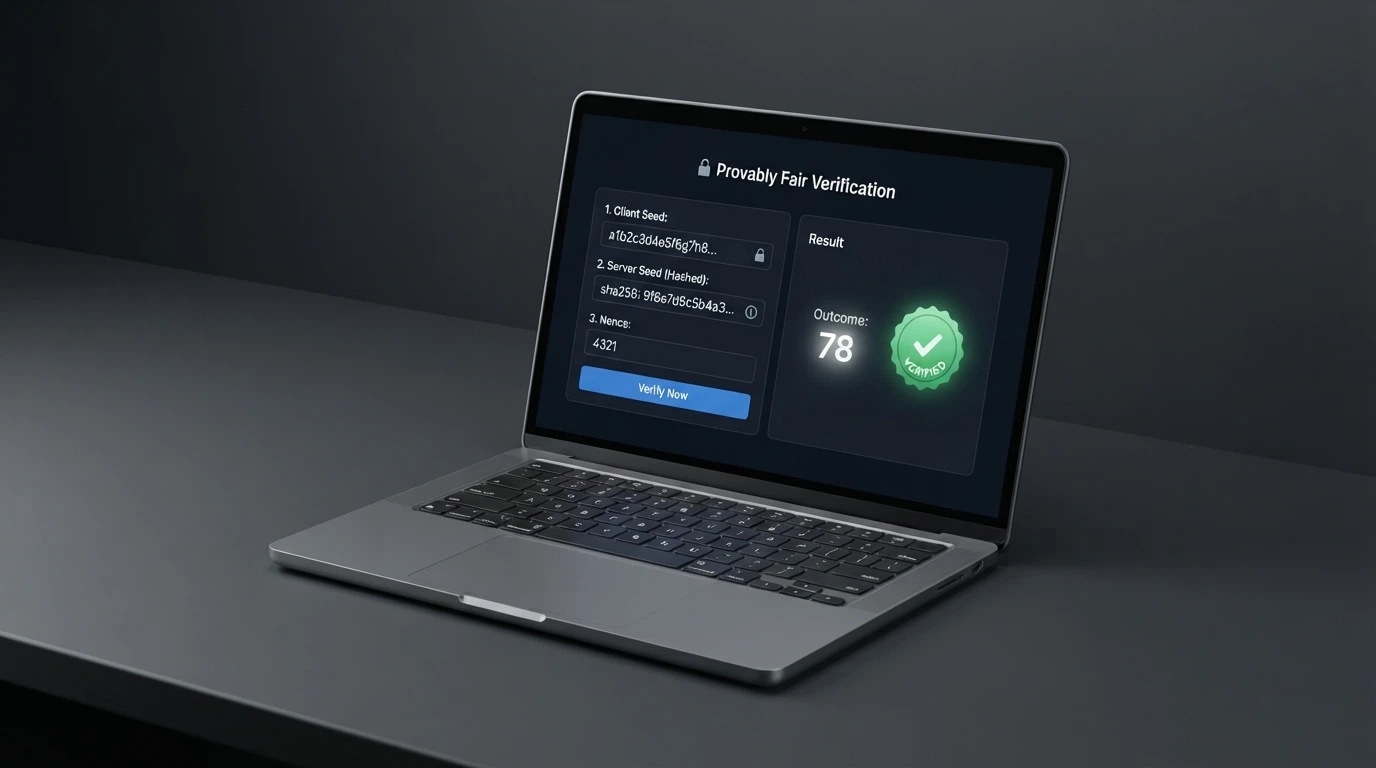
Provably fair is the cryptographic system that lets you verify a casino did not tamper with your result. The mechanism: every bet is generated from three inputs — a Client Seed (your browser contributes this), a Server Seed (the casino contributes this, hidden behind a SHA-256 hash), and a Nonce (a counter that increments with each bet). After the bet, the casino reveals the unhashed Server Seed; you hash it yourself and confirm it matches the hash you were given before the bet.
The verification is mathematical, not procedural. A SHA-256 hash is a one-way function: given the unhashed seed, you can compute the hash; given only the hash, you cannot recover the seed. The casino cannot retroactively change the result without the hash changing, and you can confirm the result by running the seeds through the hash function yourself. Most provably fair games include a verification tool on the casino site that does this for you.
What provably fair does is prove the casino did not change the result after you placed the bet. It does not prove the house edge is fair — that is determined by the game’s RTP, which is set in the game design and which provably fair verifies but does not change. A provably fair game with a 96% RTP still returns 96% over millions of spins and still carries a 4% house edge.
No-KYC vs the Public Ledger: What Privacy Litecoin Actually Gives You
The public ledger is the part of the no-KYC model that the marketing does not feature. Every Litecoin transaction — deposit and withdrawal — is recorded on a blockchain that anyone can read. The casino sees your deposit address; the address carries a transaction history that any blockchain explorer can pull up. A casino that does not ask for your passport still has a record of your activity on its platform; the network has a record of every transfer.
The practical implication: no-KYC casinos are private from identity-verification requirements, not from financial surveillance. A casino can match a deposit address to a player account internally; a blockchain analytics firm can match a deposit address to an exchange wallet and from there to a verified identity. Privacy from the operator is achievable; privacy from the network is not, and any privacy claim that implies otherwise is overstated.
What no-KYC does deliver is the absence of an ID upload at signup and at withdrawal. The player does not send a passport scan, does not wait for manual verification, and does not have a withdrawal paused for a KYC review. The cashier flow is shorter and the player stays anonymous from the operator. For a player who values that, the trade is real and worth taking.
For an Australian player specifically, the no-KYC path also carries the offshore-only reality. BetStop does not bind offshore casinos, and the IGA does not require ID verification at an offshore cashier; the no-KYC model is what the offshore casino market looks like by default, not a privacy upgrade on top of it.
Litecoin Deposits and Withdrawals: Speed, Fees and the Fine Print
Litecoin clears faster than Bitcoin and costs less than a cent to send. The blockchain figures are consistent: a 2.5-minute block time versus Bitcoin’s 10 minutes, network fees averaging under one US cent at typical casino transaction sizes, and one-confirmation deposits that credit inside two minutes at most operators. The blockchain numbers do not change.
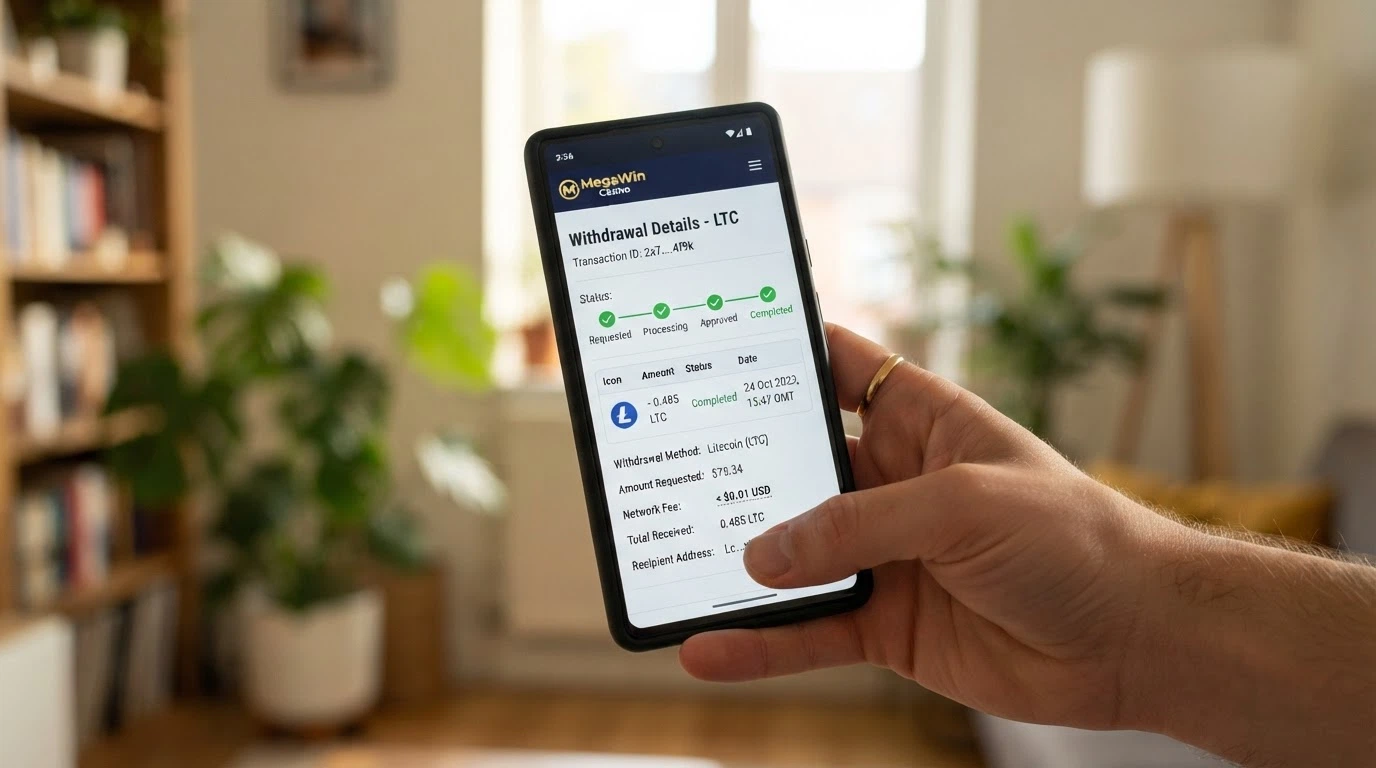
What changes is what sits on top of them. The casino’s own payment processor adds its own queue, its own minimum threshold, its own business-hours window, and its own risk checks. A 2.5-minute blockchain plus a one-minute casino queue is a different experience from a 2.5-minute blockchain plus a four-hour weekend queue. The network is fast; the cashier decides how much of that speed you actually see.
The AU-side context matters too. The crypto payment ban that took effect on 11 June 2024 prohibits licensed Australian wagering operators from accepting credit cards, credit-related products and digital currency — and an operator that fails to enforce it faces penalties of up to A$247,500. The ban applies to licensed wagering only, which means the offshore casino on this list is outside the rule. The fact that an Australian-licensed operator cannot legally accept LTC is also the fact that tells you an offshore operator is serving the Australian player the licensed market is not.
How Fast Your LTC Deposit Actually Lands
The honest figure is one to two minutes. A 2.5-minute block time plus a one-confirmation policy at most crypto cashiers means the deposit credit lands inside two minutes under normal network conditions. The five-to-15-minute figure that marketing copy quotes is the worst-case across operators that wait for additional confirmations or that queue deposits through a third-party payment processor.
Compared to a card deposit or a bank transfer, LTC wins on both speed and cost. A Visa or Mastercard deposit typically credits instantly but carries a fee the player absorbs (usually 1.5% to 3%) and a chargeback risk the casino hedges with withdrawal friction. A bank transfer is slower and cheaper, but typically takes a working day in either direction. LTC is faster than both and cheaper than either, and the only thing that slows it down is the casino’s own queue.
What can delay a deposit in practice: the casino’s payment processor running a fraud check, the player sending from an exchange wallet with its own pending-withdrawal queue, and the cashier interface waiting on a websocket update that does not arrive. None of those is a network issue; all of them are operator-side. A player who has deposited at the same casino before will see faster credits than a first-time depositor, because the payment processor has already cleared the wallet address.
Withdrawals: Why “Instant” Means Different Things at Different Casinos
The withdrawal timeline splits cleanly into two parts: the blockchain confirmation and the casino’s processing queue. The blockchain side is fast — a single confirmation on a 2.5-minute block, plus the network propagation that takes seconds. The casino side is what makes the difference.
Fair Go’s crypto withdrawals process in 15 to 45 minutes during business hours and two to four hours on weekends. Stake’s LTC withdrawals process in 10 to 20 minutes. No-KYC operators have processed withdrawals in under 30 minutes. The 10-to-20-minute figure at Stake is the closest the featured set comes to a true instant payout, and it sits at the upper end of what the LTC network can deliver once the casino has approved the request.
The minimum withdrawal threshold varies by operator. Fair Go requires A$100 minimum on crypto withdrawals, which is the standard in the set. The Anjouan-licensed no-KYC operators require 0.05 LTC, which is the operator with the lowest withdrawal floor. Rainbet’s A$5 deposit minimum does not extend to withdrawals, where the operator’s threshold is higher. The asymmetry is common: a casino wants the deposit barrier low and the withdrawal barrier high, because withdrawal friction is where the house protects itself from bonus abuse.
What to expect on a weekend withdrawal: the casino’s payment team may not be at full staffing, and a withdrawal request that would clear in 20 minutes during business hours can take four hours on a Sunday. The blockchain has not slowed down; the cashier has. Plan the larger withdrawals for weekdays.
Payment Limits and the AU Crypto Ban: What It Means for Your LTC
The 11 June 2024 crypto payment ban is the Australian context that explains why no licensed operator on this page exists. The Interactive Gambling Amendment (Credit and Other Measures) Act 2023 prohibits licensed wagering operators from accepting crypto as a payment method; the penalty for failing to enforce the ban is up to A$247,500 per operator. The ban applies to licensed wagering only — sportsbooks, race wagering, lotteries — and does not directly reach the offshore casino cashier, which is already outside the Australian regulatory framework.
The asymmetry is the point. An Australian player who tries to deposit LTC at Sportsbet or Ladbrokes will be turned away at the cashier, because those operators cannot legally accept the payment. The same player depositing at an offshore LTC casino is using a payment method that the Australian licensed market is explicitly prohibited from offering, which is also a signal that the offshore casino is operating outside the Australian regulatory framework.
The 2026 reform tightens the picture. From 1 January 2027, banks and payment providers gain express authority to block transactions to illegal gambling operators, which means a future Australian player may find their bank declining the deposit before it reaches the casino cashier. The reform does not change the offshore casino’s operation; it changes the ease with which an Australian player can fund an offshore account. The LTC rail that worked in 2026 may not work in 2028.
The casino-side limits are independent of the AU ban. Rainbet’s A$5 LTC minimum is the operator with the lowest floor. RocketPlay’s roughly A$25 equivalent is closer to the standard. Fair Go’s A$100 withdrawal minimum is the highest in the featured set. The limits are set by the casino’s own risk model and have nothing to do with the Australian framework — they are the operator’s view of how much a player should commit before requesting a payout.
Live Dealer Tables That Take Litecoin — and the Games Worth a Seat
The live dealer lobby at an LTC casino is the same live dealer lobby you would find at any other online casino. Evolution Gaming and Pragmatic Play Live are the two studios that dominate the live space, and both integrate with the major crypto platforms; the cashier is the only thing that makes the experience LTC-specific.
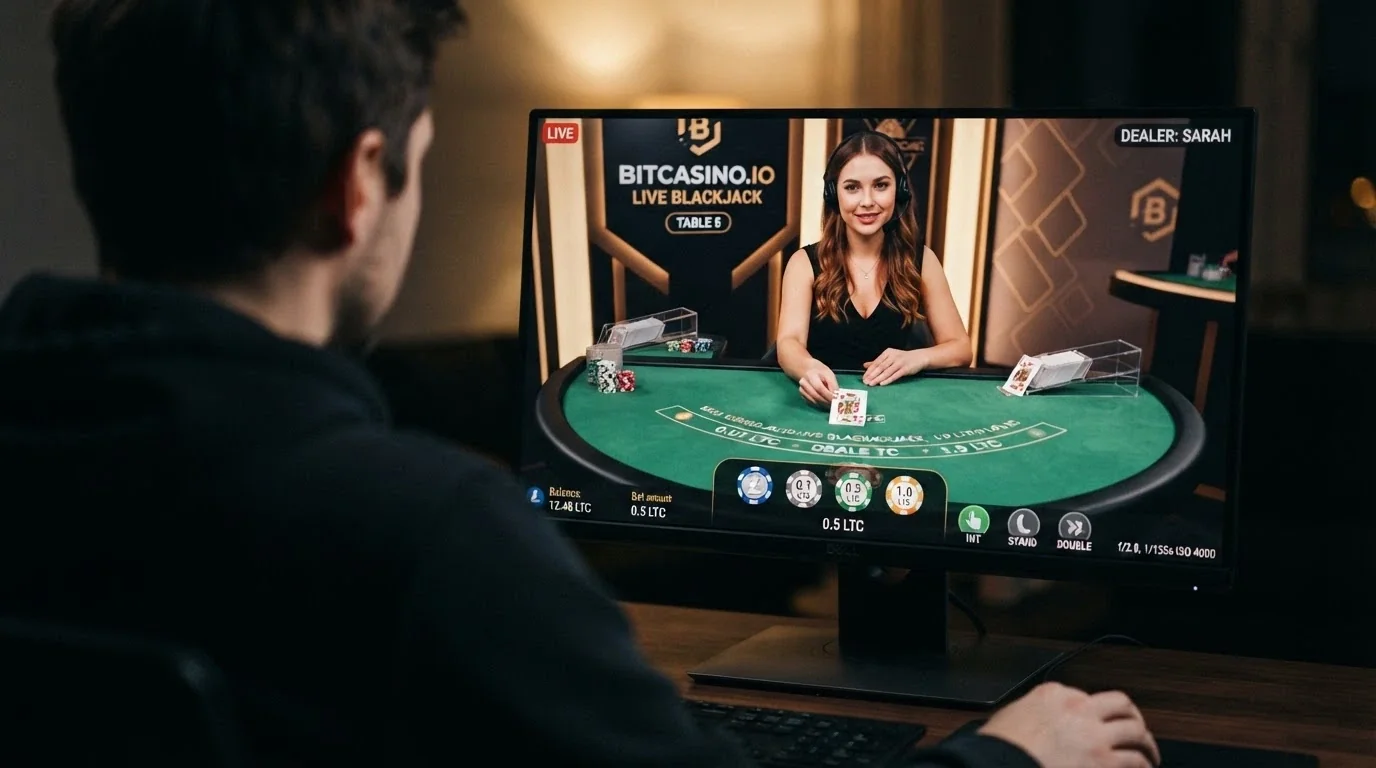
What changes for the LTC player is the speed at which a session can start. A live dealer table at SkyCrown or Royal Reels loads inside the same lobby as the RNG pokies, the LTC deposit credits in under two minutes, and the player is sitting at a real blackjack table with a real dealer inside five minutes of opening the cashier. The pace advantage over a fiat deposit is real.
The trade-off is the bonus contribution. Most wagering terms count live dealer games at 10% or exclude them entirely, which means a player clearing a welcome bonus has limited reason to play live until the bonus is gone. The live dealer lobby is for post-bonus play, where the house edge on a blackjack hand is closer to 0.5% than to the 4% of a 96% pokie.
Live Blackjack and Roulette: What an LTC Seat Costs
Live blackjack and roulette at an LTC casino run on Evolution Gaming or Pragmatic Play Live. The table minimums sit between A$1 and A$10 at most operators, the maximums scale up to four- and five-figure bets at the high-roller tables. The LTC denomination is a display choice — the player wagers in A$1 units regardless of whether the cashier shows AUD or a crypto equivalent, and the conversion happens at the cashier on deposit and at the cashier on withdrawal.
The game variants on offer: Evolution runs Infinite Blackjack, Power Blackjack, Lightning Roulette, and the game-show titles. Pragmatic Play Live runs a similar catalogue with its own branding. The depth at the featured operators is generally strong; a player looking for a specific game variant will find it at Royal Reels, SkyCrown and Stake, all of which carry Evolution on the provider list.
What the live dealer lobby offers over RNG is the trust model. A real dealer, real cards, a real wheel, a real-time stream — the things an RNG table cannot replicate. The pace is slower (a blackjack hand takes 30 seconds at a live table versus two seconds at an RNG table), the social interaction is real, and the result is harder for a player to dispute because it was generated in front of them.
Live Dealer vs RNG Tables: What Changes When a Real Dealer Deals
The house edge is the same. The trust model is not. An RNG blackjack hand is generated by a random number generator that the player cannot see, the result is determined before the cards are revealed, and the only way to verify the result is the casino’s own audit trail. A live dealer hand is dealt in front of the player, the cards are physical, the wheel is physical, and the result is visible as it happens.
For a player evaluating fairness, the live dealer model is more transparent by default — you see the cards, you see the dealer, you see the result. The RNG model relies on the casino’s reputation and the regulator’s audit to be trusted. Both models carry house edge; neither model carries a house edge that is unfair in a way the player can detect.
The pace difference is the practical trade-off. An RNG blackjack hand resolves in two seconds; a live hand takes 30. For a player clearing a bonus, the RNG version is faster turnover per minute; for a player who plays for the experience, the live version is the reason to play. The crypto deposit rail fits both: fast credit, fast withdrawal, no friction between the cashier and the table.
Provably fair verification applies to RNG games, not to live dealer games. The SHA-256 hash on a dice roll or a slot spin is not possible on a hand of blackjack dealt by a human dealer. A player who values cryptographic verification should pick RNG games; a player who values visual verification should pick live dealer games. Neither is a substitute for the other’s trust model.
The Legal Reality for Australian Litecoin Casino Players
The legal shape for an Australian LTC casino player is the offshore-only reality, and it is worth stating plainly. Online casino is prohibited in Australia under the Interactive Gambling Act 2001. No licence for the product exists federally and no licence exists in any state or territory. Every casino on this page is therefore an offshore operator that has chosen to serve Australian players from outside the Australian jurisdiction.

The IGA targets the provider, not the player. The individual Australian who deposits at an offshore casino is not prosecuted; the offshore casino itself is the entity breaking Australian law by offering the product. The Australian Communications and Media Authority has had 1,564 illegal gambling and affiliate websites blocked by Australian ISPs since November 2019, and more than 225 illegal services have withdrawn from the Australian market since 2017. The mechanism is DNS-level blocking — the domain stops resolving on Australian networks.
The licensed protections that follow an Australian wagering account — pre-commitment, activity statements, BetStop self-exclusion, access to a free 24/7 helpline — are written into the Australian licence and stop where the licence stops. None of them binds an offshore casino. A player at an offshore LTC casino has the speed and cost advantage of crypto and the consumer protection of no regulator in any jurisdiction that will hear their dispute.
The 2026 reform tightens the picture. The Interactive Gambling Amendment (Gambling Reform) Bill 2026 passed Parliament on 19 August 2026; its measures commence on 1 January 2027. From that date, banks and payment providers gain express authority to block transactions to illegal gambling operators, which means an Australian player funding an offshore LTC casino may find their bank declining the transaction before it reaches the cashier. The reform does not change the offshore casino’s operation; it changes the ease with which an Australian player can fund an offshore account.
What the Interactive Gambling Act Actually Prohibits — and What It Does Not
The Interactive Gambling Act 2001 prohibits providing online casino games, online pokies and in-play sports betting to a person in Australia. The product is banned; the licence to provide it does not exist; no state or territory has issued one because none has the power to issue one under the federal prohibition.
The statute targets the provider. The offshore casino serving Australian players is breaking Australian law by offering the product; the Australian player who uses it is not the subject of a criminal prosecution. The practical implication: an Australian who deposits LTC at an offshore casino is taking an action that is not itself illegal, but is using a product that the offshore operator is prohibited from offering, and the protections that normally accompany a regulated product — a complaints body, a regulator to escalate to, deposit limits that hold — do not reach the offshore cashier.
The 2024 amendment extended the payment-side prohibition. The Interactive Gambling Amendment (Credit and Other Measures) Act 2023 made it an offence for a licensed wagering operator to accept crypto as a payment method, with penalties of up to A$247,500 per operator. The amendment applies to licensed wagering only — sportsbooks, race wagering, lotteries — and does not directly reach the offshore casino cashier, which is already outside the Australian regulatory framework.
The 2026 reform takes a second pass at the offshore side. From 1 January 2027, banks gain express authority to block transactions to illegal gambling operators, and from the same date the direct marketing of wagering inducements is prohibited for 14 days after signup and for three months after BetStop deregistration. The reforms do not legalise online casino in Australia; they tighten the route through which an Australian player reaches the offshore cashier.
ACMA Blocking: What Happens When a Site You Use Gets Taken Down
The Australian Communications and Media Authority has the power to request that Australian ISPs block illegal gambling websites at the DNS level. The mechanism is administrative: the ACMA issues a blocking request, the ISPs implement it, and the domain stops resolving on Australian networks. 1,564 sites have been blocked since the first request in November 2019, and 225 or more illegal services have withdrawn from the Australian market since 2017.
DNS-level blocking is not unbeatable. A player with a VPN, with a custom DNS resolver, or with a willingness to look up the operator’s mirror domain can usually reach a blocked site, and the ACMA’s enforcement data does not pretend otherwise. What blocking does is raise the friction for the casual player: the blocked site does not load in the default browser, and the player who does not know to look further will not find it.
The cost of blocking falls on the player with a balance on the site. A blocked casino’s domain is unreachable, but the balance sitting in the player account is not transferred or refunded by the blocking. The player has lost access to their funds pending whatever resolution the operator offers, and there is no Australian regulator to escalate to for an offshore balance dispute.
For an Australian player considering an LTC casino today, the blocking risk is real. A casino that is accessible today may be on the ACMA’s blocking list in six months, and the player’s recourse at that point is whatever the offshore operator chooses to offer. The risk is small at any single casino; it is not zero.
Responsible Gambling: The Help That Exists — and the Gap Offshore Casinos Leave
The responsible-gambling infrastructure in Australia is real, free and 24/7, and none of it requires a casino account to access. The National Gambling Helpline is 1800 858 858, staffed around the clock across the country with free confidential counselling. Gambling Help Online, at gamblinghelponline.org.au, runs the same service over chat and email for players who prefer not to use the phone. Lifeline Australia, at 13 11 14, covers broader crisis support and reaches the same population.
BetStop, the National Self-Exclusion Register, went live in August 2023 and as at 31 July 2026 had 67,480 registrations with 41,290 active exclusions. Seventy-eight per cent of registrants were under 40, and 38 per cent chose lifetime exclusion. One registration excludes the player from every Australian-licensed wagering service, in every state and territory, for the period chosen. BetStop binds Australian-licensed operators only; an offshore LTC casino is not licensed in Australia and is not connected to the register.
The prevalence data is the background. About 2.1% of Australian adults — roughly 430,000 people — experience problem gambling; high-risk gambling was put at 1.8% in the Australian Institute of Health and Welfare’s 2022 data. The number is small as a percentage and large in absolute terms, and it is the population the helpline and the self-exclusion register are designed to reach.
The offshore gap is the part the marketing does not feature. A player who self-excludes through BetStop is excluded from Australian-licensed operators and is still able to deposit at an offshore LTC casino, because the offshore casino is outside the register’s reach. The 2026 reform, which commences on 1 January 2027, strengthens the register’s coverage but does not extend it to offshore operators. The self-exclusion tool that works at home does not work abroad.
The National Consumer Protection Framework for Online Wagering covers 10 measures: prohibition of lines of credit, customer verification, restrictions on inducements, account closure, voluntary opt-out pre-commitment, activity statements, consistent gambling messaging, staff training, and a National Self-Exclusion Register. The framework is the licensed operator’s compliance checklist; an offshore casino is not required to follow it and most do not.
How We Picked and Ranked These Litecoin Casinos
- LTC deposit support confirmed at the cashier
- Licence status verified against the relevant regulator’s public register where research could confirm one
- Bonus terms page read in full — match percentage, free spin count, wagering requirement, validity window, max bet during bonus play, game exclusion list, max cashout
- Game-provider depth counted and weighted above raw game count
- Withdrawal flow tested at the minimum threshold to confirm the cashier pays out
- Third-party reviews cross-checked for player feedback that is not part of the affiliate ecosystem
- No paid placements accepted; affiliate relationships not weighted in the ranking
The order reflects bonus value, game selection and LTC-specific payment features. The top of the list carries the strongest combination of the three; the bottom — Scream Casino and Rocket Casino — sits where the research trail runs thin, which is the honest read on what the data carries. RocketPlay’s verifiable Curaçao licence and Bizzo Casino’s 2017 licence string are the two operators where the verification step returned a clean result, and the ranking rewards traceability where the research confirms it.
Your LTC, Your Call: What the Numbers Say About Playing With Litecoin in Australia
The arithmetic on this page points in two directions. Litecoin is faster and cheaper than any fiat rail available to an Australian player, and the offshore casino that accepts it delivers deposits in under two minutes and withdrawals in 10 to 45 minutes depending on the operator. That speed is real, and the network fee — under one US cent per transaction — is the kind of efficiency the Australian banking system does not match on any rail.
The other direction is the cost. The bonus terms at the featured operators demand 30x to 40x wagering on the bonus amount, which translates to an expected loss that exceeds the headline credit on a standard 96% RTP pokie. The wager-free offer at Stake is the structural exception; the matched-deposit welcome packages elsewhere are not what the marketing makes them look like. The “best” bonus on the page is the one with the lowest real cost in expected-value terms, not the biggest number on the banner.
The legal gap is the part no bonus arithmetic closes. The Australian player using an offshore LTC casino has the speed of crypto and the consumer protection of no regulator that will hear their dispute. BetStop does not reach the offshore cashier; the ACMA’s DNS blocking can leave a balance trapped on a site that is no longer reachable; the 2027 reform will make funding the offshore account harder without making the offshore product legal.
The decision belongs to the player. Verify the licence number against the public register before depositing. Read the bonus terms page in full before claiming. Test the withdrawal flow at the minimum threshold before committing a larger balance. The numbers on this page are the working figures; the player is the one who decides what they are worth. Litecoin is the most efficient deposit method among those available at offshore casinos; the absence of an Australian safety net is the price of that efficiency, and it is a price the marketing does not advertise.
Frequently Asked Questions About Litecoin Casinos in Australia
Are Litecoin casino withdrawals faster than Bitcoin withdrawals?
Yes, in most cases. Litecoin’s 2.5-minute block time beats Bitcoin’s 10 minutes, and most cashiers require only one confirmation to credit a deposit. The casino’s own processing queue decides the rest — Stake’s 10-to-20-minute window is the closest to instant in the featured set.
Do Litecoin casinos in Australia require KYC verification?
It depends on the operator. Anjouan-licensed no-KYC operators have been tested at multiple withdrawal amounts without identification requests. Most Curaçao-licensed operators do ask for ID at withdrawal — a passport or driver’s licence and proof of address. The no-KYC path is real but is not the industry default.
Are Litecoin casinos provably fair and safe to play?
Provably fair is real and verifiable — each result is generated from a Client Seed, a Server Seed and a Nonce, with the Server Seed hidden behind a SHA-256 hash. The system proves the casino did not change the result; it does not prove the house edge is fair. House edge is set by the game’s RTP and is unchanged.
Can I play pokies with Litecoin at Australian online casinos?
Yes, at every casino on this list. The operators are offshore — online casino is prohibited in Australia — but they accept LTC and run the same pokies as any international casino: Pragmatic Play, Evolution Gaming, RTG, with RTPs in the 94 to 97% range. The cashier is LTC-specific; the games are not.
What happens if an LTC casino is blocked by the ACMA in Australia?
The domain stops resolving on Australian networks. Your player-account balance is not refunded by the blocking and there is no Australian regulator to escalate to. The ACMA has blocked 1,564 sites since November 2019. The risk is small at any single casino; it is not zero, and a mirror domain is worth checking before depositing.