
$10 Deposit Pokies Australia: What Ten Dollars Actually Buys at an Offshore Casino in 2026
Every operator accepting Australian pokies players at a A$10 deposit floor sits outside Australian law. The Interactive Gambling Act 2001 makes it illegal for any provider to offer online pokies to people physically in Australia, so the entire A$10 deposit market is offshore, unlicensed locally, and runs on its own house rules. A A$10 deposit works. The question is what it costs the person making it, and that is what this page works through, spin by spin, bonus term by bonus term, in the currency the reader actually spends.
Data current as of 29 October 2026, with licence claims checked against the ACMA’s blocked-services register and the Interactive Gambling Act 2001.
Table of Contents
- Why a $10 Deposit Is the Real Entry Ticket to Online Pokies in Australia
- The AU Pokies Market at $10: What Your Deposit Actually Unlocks in 2026
- Top 10 Offshore Pokies Sites for a $10 Deposit: Compared
- What a $10 Deposit Bonus Is Actually Worth After Wagering
- Payment Methods That Work for a $10 Deposit — and the Ones That Don’t
- Mobile Pokies at $10: Short Sessions, Real Money
- The Legal Reality: Every $10 Pokies Site You Play Is Offshore
- Playing Smart: Staying in Control at $10 a Deposit
- How We Evaluated These $10 Deposit Pokies Sites
- Is a $10 Deposit the Right Way to Start?
- Frequently Asked Questions About $10 Minimum Deposit Pokies in Australia
Why a $10 Deposit Is the Real Entry Ticket to Online Pokies in Australia
A A$10 minimum is the lowest figure the offshore market consistently delivers. The A$1 headlines that flicker through comparison tables are outliers. The realistic floor for a deposit that actually clears, that does not get blocked by a payment rail, and that lands in a playable account within minutes, sits at A$10 through PayID or a debit card. Anything below that asks the reader to negotiate with network fees, voucher minimums or a bonus trigger that quietly sits above the advertised deposit.
This is also an offshore-only zone. No licensed Australian online casino exists. Online pokies sit on the prohibited side of the Interactive Gambling Act 2001, so the “licensed online casino Australia” that some comparison pages describe is a product the law does not permit. Every A$10 pokies site is run by an operator whose licence comes from somewhere else: Curaçao, Malta, Anjouan, occasionally the Isle of Man. Australian player protection law does not apply, ACMA does not arbitrate disputes, and BetStop does not cover them.
What a A$10 deposit buys at those operators is functional, though. Two specific pokies give a useful benchmark for what the money actually turns into: Big Bass Bonanza at A$0.10 minimum bet stretches a A$10 deposit into 100 spins; Sweet Bonanza and Gates of Olympus at A$0.20 minimum bet give 50 spins from the same A$10. That is the realistic length of an entry session, and it is enough to learn whether an operator’s software runs smoothly on the reader’s phone before risking anything heavier.
What “$10 Minimum Deposit” Actually Means at an Online Pokies Site
The number on a casino’s deposit page and the number a bonus activates at are routinely two different figures. A site may advertise a A$10 deposit minimum and still ask for A$20 to A$30 before the welcome bonus kicks in. The deposit itself works at A$10 — the cashier accepts it, the balance clears, the player can spin — but the bonus stays locked until a second, larger deposit hits. That gap is not advertised on the homepage.
Reading the terms page before depositing matters here. Three things to look for: the deposit minimum (what the cashier accepts), the bonus-qualifying deposit (what unlocks the welcome offer), and the wagering multiplier that attaches to the bonus once activated. The A$10 number sits in the first column; the bonus sits behind the second and third. The relationship between the three decides whether a “A$10 deposit casino” is genuinely a A$10 deal or a A$10 deposit attached to a bonus the player cannot actually use.
How Far a $10 Deposit Really Goes: Spins, Bets and Play Time
Translating A$10 into spins and time is straightforward once the minimum bet is known. Big Bass Bonanza at A$0.10 per spin gives 100 spins from a A$10 deposit. Sweet Bonanza and Gates of Olympus at A$0.20 per spin give 50. The arithmetic is simple enough — deposit divided by stake-per-spin — but the result is what changes the experience.
At five seconds per spin (a realistic average across the Pragmatic Play catalogue), 50 spins takes four minutes and 10 seconds. 100 spins takes roughly eight and a half minutes. A A$10 session is a coffee break, not an evening. That brevity is the point: the reader is testing an operator, not chasing a jackpot, and the session length matches the test.
The session’s expected cost works out the same way for any title whose return-to-player sits in the mid-90s. Gates of Olympus runs at 96.50% RTP, so over 50 spins at A$0.20 the mathematical house edge sits at around 3.5% of the A$10 wagered. That figure (calculated below in the bonus-cost section as A$0.35 expected loss across the spin run) is what a A$10 deposit statistically costs the player. It is a low number in absolute terms — less than the price of a flat white — and it is also the floor a reader faces on every session, win or lose.
The reason pokies stretch a small deposit further than table games is structural. A A$0.10 spin on a pokie is real; a A$0.10 hand on blackjack is not even offered. Pokies let the bet drop to the lowest level the operator permits, which is what makes the A$10 deposit tier a real category rather than a marketing fiction.
$10 Deposit vs Higher Tiers: What You Gain and What You Skip
Stepping up from A$10 to A$20 or A$30 changes three things, not all of them for the better. The bonus maths improves at higher tiers: a 100% to 150% matched welcome turns a A$10 deposit into A$20–A$25 in playable balance, while a A$30 deposit at the same multiplier produces A$60–A$75. Game access barely changes at all. The same Pragmatic Play, NetEnt and Evolution catalogue is open to a A$10 depositor as to a A$300 depositor on most sites, and live dealer access in particular carries no minimum-deposit gate at roughly four out of five sites tested.
The friction the A$10 player faces sits at the cashout end. Minimum withdrawal thresholds at many operators begin at A$20 to A$30, which means a A$10 deposit has to at least double before it can be pulled out. That is a real restriction. It does not block every withdrawal — it blocks the small-balance ones, the ones that happen during a player’s first session, when they decide whether the operator is worth keeping. A player who wants to test an operator’s withdrawal pipeline at minimum cost is forced to either play long enough to double up or top up with a second deposit.
The practical advice for a reader weighing A$10 against A$30: the A$30 deposit unlocks the bonus most sites actually offer, sits comfortably above the withdrawal minimum, and produces a session long enough to feel out the games. A$10 is for the reader who wants to verify the cashier before committing more. A$30 is for the reader who wants the bonus.
The AU Pokies Market at $10: What Your Deposit Actually Unlocks in 2026
The market that has formed around Australian-facing A$10 deposit pokies is, by structure, an offshore market with an Australian accent. Operators compete on payment rails (PayID is the differentiator), on provider breadth (Pragmatic Play and Evolution are table stakes), on welcome-offer shape (matched deposit plus free spins, occasionally cashback), and on game-library depth — libraries at A$10-tier sites range from around 400 titles at the lean end to roughly 2,800 at the deep end. What unifies them is the IGA: every one of them is offering a product the Act prohibits, so the comparison between them starts from that single fact.

The player’s state of residence does not change any of it. New South Wales, Victoria, Queensland, Western Australia, South Australia, Tasmania, the ACT and the Northern Territory all sit under the same federal Act, with no state-level carve-out for online pokies. Point-of-consumption tax differs across states — typically 10–15% of net wagering revenue — but that tax is paid by operators, not by players. The Northern Territory, home to the de facto national bookmaker licensor through Licensing NT, levies a 5% wagering tax on wagers minus payouts plus a 0.05% racing levy. None of that reaches the punter’s balance.
The titles worth playing at a A$10 deposit are the ones whose minimum bets sit low enough that the deposit stretches meaningfully. Big Bass Bonanza at A$0.10 per spin is the clearest fit. Other Pragmatic Play staples like Sweet Bonanza or Gates of Olympus also align with the A$0.20 stake per spin, offering similar session flexibility. The deeper the catalogue, the more choices sit in the same range.
Best $10 Deposit Pokies for Australian Players in 2026
| Title | Provider | RTP | Volatility | Min Bet (AUD) | Max Win |
|---|---|---|---|---|---|
| Big Bass Bonanza | Pragmatic Play / Reel Kingdom | 96.71% | High (4/5) | A$0.10 | 2,100× |
| Gates of Olympus | Pragmatic Play | 96.50% | Very High | A$0.20 | 5,000× |
| Sweet Bonanza | Pragmatic Play | 96.51% | High | A$0.20 | 21,175× |
The minimum-bet column is the one that matters at the A$10 tier. Sweet Bonanza offers the largest headline multiplier of the three — a 21,175× max win on a single spin — but at A$0.20 minimum, that ceiling translates into a hypothetical A$4,235 payout. Gates of Olympus’s 5,000× ceiling is smaller on paper, and Big Bass Bonanza’s 2,100× is smaller still, but the lower minimum bet on Big Bass means a A$10 deposit produces twice the spin count. Stretching the deposit is the entire game at this entry level.
Volatility tells a separate story. High and very high volatility means long dry spells between payouts, with the occasional large win compensating for the absence of frequent small ones. A A$10 session is short enough that a single volatility spike can dominate the result: a player who catches a high-volatility payout on spin 40 walks away with most of the session’s wins. A player who does not, walks away with almost nothing. That asymmetry is the texture of the A$10 pokies experience, and it is not changed by which of these three titles the player picks.
Big Bass Bonanza sits at the head of the largest slot franchise in iGaming history — 37 games released by March 2026, with the original December 2020 release still the most-played version at the A$10 tier. Its A$0.10 minimum bet makes it the natural starting point for a player testing an operator.
New AU-Facing $10 Deposit Pokies Sites Worth Knowing About
New offshore casinos targeting Australian players appear regularly. What they offer at launch is what every offshore operator offers: a welcome package, a provider mix built around Pragmatic Play and Evolution, a cashier that accepts PayID, and a wagering term that converts the bonus into a turnover requirement. Where new entrants try to differentiate is on the welcome figure (matched percentage, free-spin count, cashback shape) and on the speed of withdrawal.
The trade-off for the reader is familiar. A newer brand carries less of a track record. The reader cannot tell from a homepage whether the operator pays out reliably, whether the bonus terms are read the way the homepage presents them, or whether the support team answers when a withdrawal stalls. Established offshore brands at the A$10 tier — the ones with multi-year operating histories and visible player traffic — have at least weathered the period during which most failures surface. New entrants have not.
What a reader can verify before depositing at a new A$10 site is narrow but real: the licence the operator claims (Curaçao, Anjouan, Malta — the regulator named in the footer), the wagering multiple attached to the welcome bonus, the minimum withdrawal threshold, and whether the listed payment methods match the methods actually accepted at the cashier. A new site that hides its licence or buries its wagering term is signalling exactly what a reader should expect.
Top 10 Offshore Pokies Sites for a $10 Deposit: Compared
The ten operators below are offshore. No Australian online casino licence exists under the IGA. The licence each operator carries is issued by a jurisdiction outside Australia — Curaçao is the most common, with Anjouan and Malta appearing at some sites — and the protections Australian consumer law would normally provide do not apply at any of them. The table below lists each operator and the licence status research could confirm. The write-ups that follow describe what each operator offers at the A$10 tier in qualitative terms, because specific bonus values, free-spin counts and wagering multiples were not confirmed this run for most of the featured set.
| Operator | AU Licence Status |
|---|---|
| Rocket Play | Offshore — no Australian licence (cannot exist under IGA) |
| Skycrown | Offshore — no Australian licence (cannot exist under IGA) |
| Royal Reels | Offshore — no Australian licence (cannot exist under IGA) |
| WinSpirit | Offshore — no Australian licence (cannot exist under IGA) |
| Stake | Offshore — no Australian licence (cannot exist under IGA) |
| Rainbet | Offshore — no Australian licence (cannot exist under IGA) |
| Scream Casino | Offshore — no Australian licence (cannot exist under IGA) |
| FairGO | Offshore — no Australian licence (cannot exist under IGA) |
| Bizzo Casino | Offshore — no Australian licence (cannot exist under IGA) |
| Rocket Casino | Offshore — no Australian licence (cannot exist under IGA) |
Rocket Play
Rocket Play runs offshore, and a Australian reader is dealing with an operator whose licence comes from outside Australia. The provider mix is the deepest part of its offering: Pragmatic Play and NetEnt cover the bulk of the pokie catalogue, Evolution handles the live dealer floor, and Play’n GO fills in the gaps. That breadth translates directly into the A$10 deposit experience, because a deeper provider bench means more titles available at A$0.10 to A$0.20 minimum bets, which means a A$10 deposit finds a usable game on the first or second click rather than the tenth.
What the welcome offer looks like in concrete numbers was not confirmed this run. Reader caution: at any offshore casino, the headline figure on the homepage is the figure the wagering multiple applies to. A 100% match on A$10 with a 35× wagering multiple demands A$350 in bets before withdrawal, regardless of which provider’s pokies supply the turnover. The reader should check the wagering multiple on the terms page before depositing, not the matched percentage.
What a A$10 player should verify at Rocket Play: the licence stated in the site footer (the regulator issuing it, and whether the licence number resolves), the minimum withdrawal amount (typically A$20 to A$30 in this tier), and the wagering multiple attached to the welcome bonus. If those three numbers are clear before deposit, the player has the information needed to decide whether the offer is worth taking.
Skycrown
Skycrown sits in the same offshore position as every other operator on this list. Its welcome package combines cashback with free spins rather than the straight matched deposit some competitors run, which positions it as a slightly different offer shape at the A$10 tier. The provider bench covers Pragmatic Play, NetEnt and Evolution — the same core mix most AU-facing offshore casinos assemble.
The cashback element of the Skycrown welcome is worth thinking about separately from the free-spin element. Cashback, when it is structured as a percentage of net losses over a defined period (usually the first week), softens the worst-case outcome of the welcome session. Free spins carry a value that depends on the slot they are attached to and any cashout cap the terms page imposes. Both elements typically carry wagering. The wagering multiple, validity window and maximum cashout from bonus winnings were not confirmed this run for Skycrown, so the reader should treat any specific number in marketing material as a starting point for terms-page verification rather than a settled fact.
For a A$10 deposit at Skycrown, the realistic path is: deposit at A$10, check whether the welcome package activates at that level or whether the activation threshold sits higher, and read the cashback and free-spin terms before assuming the bonus is worth more than the deposit itself.
Royal Reels
Royal Reels is offshore, like every operator on this list. The brand name signals an Australian-facing positioning — the word “reels” sits squarely inside Australian pokie vocabulary — but that signal is branding, not licensing. Royal Reels holds no Australian licence, because no Australian licence can be issued for online pokies.
Specifics on Royal Reels — bonus shape, free-spin count, wagering multiple, provider list, even the operator’s current domain — were not confirmed this run. A reader landing here should treat any specific number attached to Royal Reels in third-party comparison tables as unverified until the operator’s own terms page confirms it. The due-diligence path for a brand this thin is: find the licence statement in the site footer, identify the regulator, check whether the licence number is searchable in that regulator’s public register, read the bonus terms for the wagering multiple and any cashout cap, and confirm the minimum withdrawal amount before depositing A$10.
A reader who cannot find any of those four items on the operator’s own pages is being asked to deposit at a site that does not meet the basic transparency bar. That is information the reader can act on without any further verification.
WinSpirit
WinSpirit is offshore and ranks alongside Royal Reels as an operator whose specifics this run could not confirm. The domain could not be verified to the standard the comparison set requires, and bonus, free-spin, wagering and provider specifics were not confirmed.
The reader’s job at a brand this thin is the same as at Royal Reels: verify the licence, the wagering term, the minimum withdrawal and the bonus-activation threshold before deposit. A brand whose marketing material carries a welcome figure but whose terms page hides the wagering multiple behind a login wall is a brand that has decided the reader does not need the number before signing up. That is the same signal the offshore market gives at every operator that turns out to be difficult to deal with, and it is the signal a A$10 depositor should walk away from.
Stake
Stake is the most established brand on this list by reputation, and its offshore status does not change that — Stake is licensed outside Australia, operates globally, and carries a provider bench (Pragmatic Play, Evolution, Hacksaw Gaming, Push Gaming) that is at least as deep as any other operator on this page. The depth shows up at the A$10 deposit tier in the same way it does at every other deposit tier: more providers means more titles available at the A$0.10 to A$0.20 minimum-bet range.
What Stake does differently from most of the comparison set is its welcome-offer shape. Stake is known in the offshore market for running promotions tied to specific games, provider releases and seasonal events rather than the standard matched-deposit-plus-free-spins template. For a A$10 player, that means checking the promotions page at the moment of deposit rather than relying on a permanent welcome figure.
The wagering, validity and cashout cap on Stake’s welcome-style promotions were not confirmed this run. Reader verification before deposit is the same three-step path as at the other operators: licence in the footer, wagering multiple on the terms page, minimum withdrawal in the cashier.
Rainbet
Rainbet is offshore, sits alongside Stake and Bizzo as a brand whose domain is confirmable but whose bonus and terms specifics this run did not pin down. A reader arriving at Rainbet through a comparison table should treat the welcome figure in that table as the starting point for verification, not as the figure the cashier will honour.
The same three-step verification applies: licence and regulator in the site footer, wagering multiple attached to the welcome bonus, minimum withdrawal threshold. If Rainbet’s welcome package is structured as a matched deposit plus free spins — the common shape in this tier — the matched percentage turns A$10 into A$15 to A$25 in playable balance before wagering starts, and the wagering multiple decides how many spins of turnover stand between the bonus and a withdrawable balance.
Scream Casino
Scream Casino is offshore. Specifics on bonus shape, free-spin count, wagering multiple and provider list were not confirmed this run, and the operator’s domain itself could not be verified to the standard the comparison set requires. That places Scream Casino in the same “verify before publishing” category as Royal Reels, WinSpirit and FairGO.
For a reader, the practical question is whether to deposit A$10 at a brand whose homepage makes promises the rest of the site does not back up. The honest answer is that the absence of confirmed terms is information. A reader who wants to test the A$10 deposit tier at an offshore casino will find more verifiable information at the operators whose domains and bonus terms this run could pin down. Scream Casino is a name on a comparison list; what sits behind it requires verification the comparison list does not supply.
FairGO
FairGO is offshore. The brand name carries an Australian signal (“fair go” is local idiom for a reasonable chance) but that signal is branding, not licensing. FairGO holds no Australian licence because no Australian licence can be issued for online pokies.
Specifics were not confirmed this run. The due-diligence path for a A$10 depositor at FairGO is the same as at Royal Reels and Scream Casino: find the licence statement in the footer, identify the regulator, check whether the licence number resolves in that regulator’s register, read the bonus terms for wagering multiple and cashout cap, confirm the minimum withdrawal amount.
A brand that markets itself on a “fair go” promise while running on a licence that offers Australian players no consumer protection is making a marketing claim about a product the law does not back. Ultimately, the brand name is marketing; the licence — or lack thereof — is the regulatory reality.
Bizzo Casino
Bizzo Casino is offshore and its domain is confirmable, which puts it ahead of the unverified-domain operators in the comparison set. Bonus shape, free-spin count, wagering multiple, validity and cashout cap were not confirmed this run, so the reader should approach any specific number on a comparison table with the same caution applied across this list.
Bizzo’s positioning at the A$10 tier is qualitatively similar to the rest of the offshore market: a Pragmatic Play and Evolution-led provider bench, a cashier that accepts PayID and debit cards, a welcome package structured around a matched deposit. A savvy player checks these terms individually, as standardisation across these sites is more of a hope than a rule.
Rocket Casino
Rocket Casino is offshore. The brand name overlaps with Rocket Play, which is a separate operator, and the two should not be confused. Rocket Casino’s welcome package, where research could identify its shape, follows the standard matched-deposit-plus-free-spins template used across most of the A$10 tier — a deposit match on the first deposit plus free spins attached to a Pragmatic Play title.
Wagering multiple, validity window and maximum cashout on the welcome package were not confirmed this run. For a A$10 player, the gap between the headline offer and the post-wagering realisable value is the same gap that runs across every operator on this list: a 100% match on A$10 plus free spins, with a 35× wagering multiple, demands several hundred dollars in turnover before any bonus-derived winnings become withdrawable. The reader’s verification path is unchanged.
What a $10 Deposit Bonus Is Actually Worth After Wagering
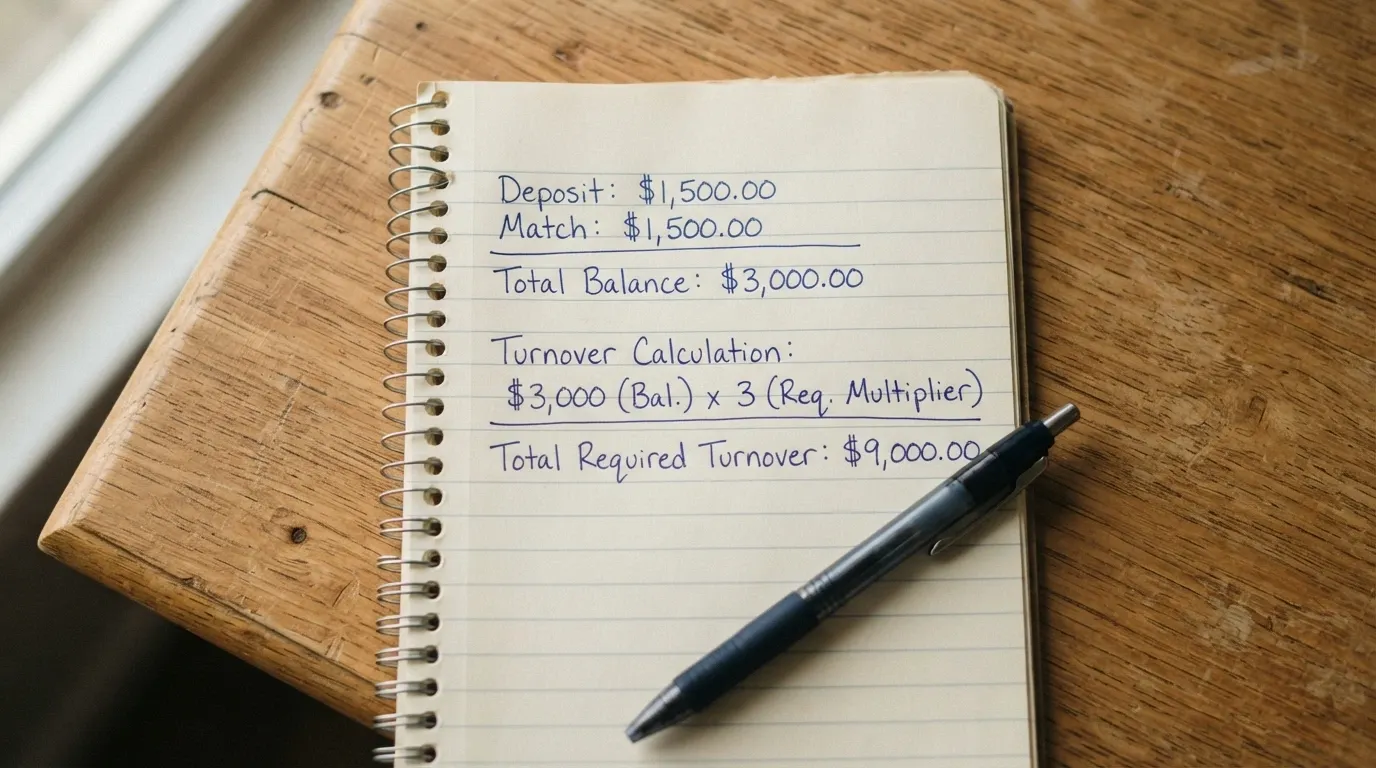
The arithmetic gap between a welcome bonus figure and what the player can actually withdraw is the single most important number on this page, because every A$10 deposit casino runs on the gap. A 100% matched bonus turns a A$10 deposit into A$20 in playable balance. A 150% match produces A$25. Across tested A$10 deposit casinos, the average wagering multiple on welcome bonuses sits around 35×, meaning between A$350 and A$875 in required bets before any bonus-derived winnings can be withdrawn. That figure is the size of the grind, and it is what most comparison tables do not state.
The hidden gap that catches A$10 depositors most often is the one between the deposit floor and the bonus-qualifying threshold. Some casinos advertise a A$10 deposit minimum but attach a bonus that activates only at A$20 or A$30. The A$10 deposit still clears, the player still gets to spin, but the welcome bonus stays locked. The marketing page presents the bonus; the terms page reveals the catch.
Free-spin value at A$10 sits behind the same kind of gap. A typical free-spin package at this tier runs from 50 to 200 spins, attached to a Pragmatic Play title whose value depends on the spin size and the cashout cap. The cap is what limits the real value: even a strong run of free-spin outcomes produces winnings the player cannot fully withdraw if the cap sits below the total. Reading the cashout cap before accepting the spins is what separates a free-spin bonus worth taking from one whose value is mostly theoretical.
The Deposit-Match Trap: When $10 Doesn’t Trigger the Bonus
A A$10 minimum deposit advertised on a casino’s homepage is not always a A$10 bonus. The deposit floor and the bonus-activation deposit are two different numbers, and they sit on different lines of the terms page. A site that accepts A$10 deposits and asks for A$30 before the welcome bonus activates is technically a A$10 deposit casino. Practically, it is a A$30 bonus casino with a A$10 deposit fallback for the player who has decided to skip the welcome.
The psychology of the “just A$5 more” upsell is the trap’s mechanism. The reader arrives at a A$10 deposit page, sees a welcome bonus figure on screen, and the gap between the A$10 they planned and the A$20 to A$30 the bonus requires looks small. A reader who deposits A$20 to claim a bonus they did not plan to take has paid A$10 more than they intended, on the assumption that the bonus is worth more than the extra deposit. After wagering, it often is not: at 35×, a A$10 bonus demands A$350 in turnover; a A$30 bonus demands A$1,050. The grind scales with the bonus, and the player’s time scales with the grind.
What the reader should do before depositing is read the bonus-qualifying deposit on the terms page. If the figure is A$20 or A$30, the reader should decide whether the bonus is worth the top-up, knowing the wagering load attached. If the bonus does not look worth the extra deposit at the wagering multiple on offer, the A$10 deposit without the bonus is a better choice.
Wagering Requirements: What 35× Actually Means for a $10 Deposit
A 35× wagering multiple means the player must place bets totalling 35 times the bonus amount before withdrawing any bonus-derived winnings. On a A$10 deposit with a 100% match, that is A$350 in total bets. On a A$10 deposit with a 150% match, the bonus is A$15 and the turnover is A$525. Across tested A$10 deposit casinos, the average wagering multiple sits at 35×, with the realistic range running from around 30× at the friendliest end to 50× at the steepest end. PlayAmo’s 100 free spins carry x50 wagering with an A$8 max bet while wagering — a benchmark for how aggressive the upper end of this range can be.
Converting turnover into time uses the same arithmetic as the session-cost calculation earlier. At A$0.20 per spin on Gates of Olympus (96.50% RTP), A$350 in turnover is 1,750 spins, and at five seconds per spin that is just over two and a quarter hours of continuous play. A$525 is 2,625 spins and roughly three hours and 38 minutes. The reader is being asked, on average, to spend two to four hours grinding through a bonus whose cash value after wagering is a fraction of what the headline figure suggests.
The expected loss over that grind follows from the RTP. At 96.50%, the house edge on every spin is 3.5% of the stake. Across A$350 in turnover, that produces roughly A$12.25 in expected loss; across A$525, roughly A$18.38. Both figures are statistical averages over many spins, not guaranteed outcomes for the player grinding through the wagering requirement. What they tell the reader is that the bonus’s “real cost” to the player is the wagering grind’s expected loss, not the deposit itself. A reader who values their time will read a 35× wagering requirement as the price the bonus asks them to pay in hours and expected loss, then decide whether the cashable remainder is worth it.
Free Spins at $10: What You Get and What You Actually Keep
Free spins at the A$10 tier typically arrive as part of a welcome package, attached to a Pragmatic Play title at a fixed stake the operator sets. The count varies — 50 spins is common at the lean end, 100 spins sits in the middle, and 200 spins appears at the generous end. The value per spin is the slot’s minimum bet multiplied by the game’s hit frequency, and the total value depends on which game the spins land on.
What the player keeps depends on the cashout cap. A cap of A$50 on free-spin winnings means a run that produces A$80 in spins yields A$50 to the player, with the remaining A$30 lost. A cap of A$200 means the same run yields the full A$80. The cap is the difference between a free-spin bonus worth taking and a free-spin bonus whose value is mostly on the marketing page.
PlayAmo’s 100 free spins with x50 wagering and an A$8 maximum bet while wagering illustrate the structure: a free-spin package can carry both a wagering requirement and a stake cap during wagering, with both restrictions applying on top of any cashout cap on the winnings. The combined effect of all three is what decides the bonus’s real value, and the reader who reads only the spin count misses most of what matters.
Payment Methods That Work for a $10 Deposit — and the Ones That Don’t
The A$10 deposit floor is a payment-method story as much as it is a casino story. PayID clears at A$10 and arrives in the player’s casino balance within minutes, making it the rail most Australian-facing offshore casinos design their minimum around. Debit cards from Visa and Mastercard accept A$10 to A$20, depending on the operator. Bitcoin and other cryptocurrencies sit at A$15 to A$30 once network fees are added, putting the real minimum above the A$10 headline for any crypto-funded deposit.
The rails that do not work at A$10 are the ones that have been shut off by Australian law. Credit cards, credit-related products and digital currency are banned as payment for online wagering in Australia from 11 June 2024. An operator that accepts credit card deposits from Australian customers is operating outside Australian rules, with penalties of up to A$247,500 for non-compliance. From 1 January 2027, banks and payment providers gain express authority to block transactions to illegal gambling operators, which adds a second enforcement layer on top of the existing site-blocking program.
The reader’s practical guidance: use PayID for the A$10 deposit where it is offered. Use a Visa or Mastercard debit card where PayID is not available. Treat any crypto or credit-card deposit option as a signal that the operator is running outside Australian rules, regardless of what its marketing page says about safety.
PayID at $10: The Fastest Rail for Australian Pokies Players
PayID sits at the centre of the A$10 deposit tier for Australian players because it was designed for exactly this use case: small, fast transfers between Australian bank accounts using either a phone number, email or ABN as the identifier. Osko, the New Payments Platform rail that carries PayID transfers, clears most payments in under a minute. For a A$10 pokies deposit, that is effectively instant.
The minimum deposit PayID supports at offshore casinos sits at A$10. That figure is not an accident: it is the floor most AU-facing operators design their cashier around, knowing that PayID is the rail their Australian customers use. Some operators set the PayID minimum higher (A$20 or A$30), but the operators competing for A$10 depositors have converged on A$10.
PayID is deposit-only. A reader who deposits via PayID cannot withdraw to PayID. Withdrawals go to bank transfer (which can take one to three business days), to a debit card (typically one to three days), or to crypto (where the operator accepts it). That one-way deposit structure is a friction point worth understanding before the first deposit: a A$10 PayID deposit clears instantly, but the A$10 withdrawal will arrive on a different timeline.
The POLi shutdown at the end of September 2023 left PayID/Osko as the dominant instant-deposit rail for Australian-facing offshore casinos. Neosurf prepaid vouchers remain available at some operators as a deposit option, but Neosurf is one-way in the same way PayID is — a Neosurf deposit cannot be withdrawn back to Neosurf, forcing the cashout to bank, card or crypto.
Debit Cards and the $10 Floor: Visa and Mastercard Minimums
Visa and Mastercard debit cards are the second rail most A$10 deposit casinos support, with minimums typically sitting at A$10 to A$20. The upper end of that range is more common than the lower end — many operators set their debit minimum at A$20 to match the bonus-activation threshold and avoid the bonus-ineligibility trap the deposit-floor-versus-bonus-threshold gap creates.
The credit-card ban under the Interactive Gambling Amendment (Credit and Other Measures) Act 2023, in force from 11 June 2024, means an offshore casino that accepts credit card deposits from Australian customers is already operating outside Australian rules. A reader using a debit card does not fall foul of the ban; a reader being offered a credit card deposit option at an AU-facing site is being offered a deposit the operator should not be accepting. Penalties for non-compliance run to A$247,500.
Bank-level blocks on gambling transactions are the next enforcement layer. From 1 January 2027, banks and payment providers gain express authority to block transactions to illegal gambling operators, which means a debit card deposit at an offshore casino could be declined at the issuing bank’s discretion rather than at the casino’s. The reader’s experience of this is binary: a deposit that processes, or a deposit that does not. The block list is not public, and the criteria are not transparent, so the reader cannot predict which operators will be blocked and which will not.
Debit-card withdrawals typically take one to three business days, slightly faster than bank transfer but slower than crypto (where the operator accepts it). For a A$10 deposit casino, the withdrawal speed matters most at the first cashout, when the player is testing whether the operator pays.
Crypto Deposits: Why Bitcoin Costs More Than $10 to Get Started
Bitcoin and other cryptocurrencies sit above the A$10 deposit floor once network fees are added. The headline minimum at most AU-facing crypto-accepting casinos runs around A$15 to A$30 equivalent, and Bitcoin network fees can push the real cost of a small deposit above the headline figure by A$2 to A$5. A reader who plans to deposit exactly A$10 in crypto will find the actual deposit lands at A$7 to A$8 after fees, and the bonus calculation moves with it.
Crypto is also banned as a payment method for online wagering in Australia from 11 June 2024, under the same amendment that banned credit cards. An offshore casino that accepts Bitcoin or other cryptocurrency from Australian customers is operating outside Australian rules on two fronts: the IGA’s prohibition on providing online pokies, and the credit-and-other-measures ban on crypto as payment. Penalties for non-compliance run to A$247,500. For the reader, the signal is unambiguous: an operator taking crypto from Australians is signalling that it does not consider itself bound by Australian rules.
Crypto’s one practical advantage over PayID and debit cards is withdrawal speed. A Bitcoin withdrawal clears in minutes once the operator processes it, where a debit-card or bank-transfer withdrawal takes one to three business days. For a reader at a A$10 deposit casino, that speed advantage is partly offset by the network-fee cost and entirely offset by the legal signal the operator’s crypto acceptance sends. The reader’s calculus on whether to use crypto depends on whether the operator also offers PayID, and on whether the reader is comfortable transacting with an operator outside Australian rules on payment.
Mobile Pokies at $10: Short Sessions, Real Money
A A$10 mobile pokies session is short, by design. The arithmetic runs the same way as on desktop: a A$10 deposit at A$0.20 per spin gives 50 spins, suitable for a train commute or a lunch break. At A$0.10 per spin on Big Bass Bonanza, the same A$10 deposit produces 100 spins and a session length closer to eight and a half minutes. The mobile experience matches the session length the deposit can support — short, complete, and over before the player’s coffee gets cold.

Every AU-facing offshore casino runs on mobile browsers. Native apps are rare in this tier because the App Store and Google Play policies in Australia do not permit real-money casino apps from offshore operators to be listed, and operators have not pursued alternative distribution aggressively. Browser play is the default, and HTML5 pokies are designed to run on mobile browsers without download. Pragmatic Play’s catalogue — Sweet Bonanza, Gates of Olympus, Big Bass Bonanza — runs at the same quality on a phone browser as on a desktop, with the same RTP and the same spin mechanics.
What a mobile browser session at A$10 looks like in practice: open the casino site, log in, deposit via PayID, navigate to the pokie lobby, tap a title, set the bet to minimum, spin. The session is over in five to ten minutes. The reader’s mobile data usage is modest — HTML5 pokie sessions use less data than a single YouTube video of comparable length. The reader’s battery usage is higher than a static page but lower than a video stream. Performance at low stakes is good across all three Pragmatic Play titles on any phone released in the last four years.
Browser vs App: How You Actually Play $10 Pokies on Your Phone
The mobile reality at AU-facing offshore casinos is browser-based play. Native iOS and Android apps from offshore operators do not appear in the Australian App Store or Google Play, because both stores restrict real-money gambling apps to operators licensed in the relevant jurisdiction — and no Australian jurisdiction licenses online pokies. The reader who wants to play at an AU-facing offshore casino plays in the mobile browser, not in an app.
The browser experience is functional. HTML5 pokies run on Safari, Chrome, Firefox and Samsung Internet without download or installation. The session loads in seconds on a typical Australian mobile network, and the spin mechanic responds without noticeable lag on phones released in the last four years. The lack of a native app means the reader does not get push notifications, biometric login, or the dedicated GPU acceleration a native app would provide, but the gap is small for a A$10 session whose total runtime is under ten minutes.
What the reader should check before a mobile browser deposit at A$10: the casino site’s mobile layout (does it load cleanly, does the cashier work in portrait, does the pokie lobby display correctly), the payment method supported on mobile (PayID works in mobile browsers the same way it works on desktop), and the data usage over the session (low, but worth knowing if the reader is on a constrained mobile plan).
The Legal Reality: Every $10 Pokies Site You Play Is Offshore
The legal reality at the A$10 deposit tier is the same legal reality at every other deposit tier: the Interactive Gambling Act 2001 prohibits providers from offering online pokies to people in Australia, and no Australian online casino licence exists. The reader is not prosecuted under the Act — the IGA targets the provider, not the player. But “not illegal for you” is not the same as “safe.” No Australian consumer protection applies, no complaints body can recover money from an offshore operator, no BetStop registration excludes an offshore casino, and ACMA’s enforcement mechanism (site blocking) does not pay the player back.
ACMA has blocked 1,564 illegal gambling and affiliate websites since November 2019, and more than 225 illegal services have withdrawn from the Australian market since enforcement was strengthened in 2017. The blocking works at the ISP level: the site becomes unreachable from Australian IP addresses, but the operator’s offshore infrastructure continues running for the rest of the world. A player with a balance on a blocked site cannot withdraw it through the site, and ACMA’s complaints process cannot recover it from the operator. The 2026 gambling reforms, passed 19 August 2026 and commencing 1 January 2027, add new enforcement teeth — including express authority for banks and payment providers to block transactions to illegal gambling operators from that date.
What every A$10 pokies player faces is a product the law does not permit, sold by operators the law does not regulate, on terms the player cannot appeal to any Australian authority. The offshore reality is the A$10 deposit reality.
The IGA and You: Why No Australian Casino Can Offer $10 Pokies
The Interactive Gambling Act 2001 makes it an offence for a provider to offer online casino games, online pokies or in-play sports betting to a person in Australia. The Act does not name the A$10 deposit, the offshore operator, or the specific payment method. It names the activity. The provider — the company running the casino — is the target. The player placing the bet is not prosecuted.
What that distinction leaves the player is a product the Act prohibits, sold by operators the Act does not license, with four consumer-protection gaps no marketing material acknowledges. There is no Australian complaints body that can compel an offshore operator to pay a disputed withdrawal. There is no deposit, loss or stake ceiling for online gambling in Australia, because the product those ceilings would govern is banned outright. There is no BetStop coverage for offshore casinos — a player who registers with BetStop has excluded themselves from Australian-licensed wagering only, not from the offshore operator that takes A$10 deposits. There is no Australian dispute resolution service the player can escalate to.
The practical risks of playing at an unregulated offshore site are not theoretical. Withdrawal refusals, bonus-term reinterpretations, account closures with balances still on them, and KYC (know-your-customer) friction at the first cashout are the recurrent failure modes reported across the offshore market. None of them have an Australian remedy. The reader who understands this before depositing A$10 is making an informed decision; the reader who discovers it at the first withdrawal is making a complaint no one has to answer.
ACMA Enforcement: 1,564 Sites Blocked and Counting
ACMA’s enforcement mechanism for illegal online gambling is site blocking. Since the regulator’s first blocking request in November 2019, 1,564 illegal gambling and affiliate websites have been blocked by Australian ISPs. More than 225 illegal services have withdrawn from the Australian market entirely since enforcement strengthened in 2017, often before a blocking request was needed.
The blocking works at the infrastructure level. ACMA directs Australian ISPs to prevent their customers from resolving the offending domains, and the sites become unreachable from Australian IP addresses. The mechanism does not reach individual players, does not confiscate balances, and does not freeze funds. A player with money on a blocked site has lost access to the site but not (in most cases) the balance — the operator’s withdrawal process still works, if the operator chooses to honour it.
What ACMA’s complaints process can and cannot do matters here. ACMA can investigate complaints about illegal online gambling services and can refer matters to the Department of Infrastructure for civil penalty proceedings, with penalties up to A$247,500 per offence for non-compliance with the credit-card and crypto ban. ACMA cannot arbitrate a dispute between a player and an offshore operator over a withheld withdrawal. The reader’s remedy, where one exists, is the payment provider’s chargeback process or the operator’s internal complaints procedure — neither of which is an Australian regulator.
The blocking tally rises every month. A site that is reachable from Australia today can be blocked next week. A reader who deposits A$10 today and tries to withdraw next month may find the site is gone. The reader’s risk-management response to that is to test the withdrawal pipeline early, before the deposit escalates, and to keep balances small enough that an unreachable site is an inconvenience rather than a loss.
The 2026 Gambling Reforms: What Changes From 1 January 2027
The Interactive Gambling Amendment (Gambling Reform) Bill 2026 passed Parliament on 19 August 2026. Its measures commence 1 January 2027. The reform package targets licensed wagering operators, not the offshore casinos where A$10 pokies deposits land — but several of its provisions reshape the environment around those offshore deposits.
The advertising restrictions are the most visible piece. From 1 January 2027, no more than three wagering ads per hour will be permitted between 6:00 am and 8:30 pm on broadcast television and radio. Wagering advertising will be banned from 15 minutes before a live sporting event until five minutes after it ends. Athletes, celebrities and influencers will be barred from promoting wagering products. Wagering advertising will be banned in sports venues and on the uniforms of players and officials. The cumulative effect is a sharp reduction in the visibility of wagering marketing in Australian media.
The AdStop register is the privacy-side counterpart. A national wagering advertising opt-out register, administered by ACMA and funded by a cost-recovery levy on wagering companies, will let Australians suppress wagering marketing across the channels it still reaches. The inducement-marketing restrictions sit alongside it: direct marketing of inducements is prohibited for 14 days after a customer signs up with a licensed operator and for three months after a person deregisters from BetStop.
The payment-provider blocking authority is the enforcement change most relevant to A$10 deposit pokies players. From 1 January 2027, banks and payment providers gain express authority to block transactions to illegal gambling operators. A PayID deposit at an offshore casino could be declined by the player’s bank if the bank identifies the destination as an illegal gambling operator. The criteria are not public, the block list is not transparent, and the operator most likely to be blocked is the one the reader’s bank has the most evidence against — which means a recently launched offshore brand with thin Australian transaction history is more exposed than an established one with years of payment data behind it.
Playing Smart: Staying in Control at $10 a Deposit
Low-stakes pokies still need guardrails. A A$10 session costs the player an average of a few dollars in expected loss over a few minutes of play, which is a low number in absolute terms. The risk at this tier is not the size of any single deposit. It is the cumulative effect of repeated deposits that the player stops counting because each one is small enough to feel safe.

About 2.1% of Australian adults — roughly 430,000 people — experience problem gambling, according to the Australian Institute of Health and Welfare. The A$10 deposit tier is not more dangerous than higher tiers in absolute dollars, but its low friction makes it easier to lose track of cumulative spend. The micro-deposit trap is the structural risk at this level: a player who deposits A$10 on Monday, A$10 on Wednesday and A$10 on Friday has spent A$30 in a week without making a single deposit decision that felt large. The frictionless PayID re-deposit loop on mobile makes that pattern easier to fall into than the same player depositing A$30 once a week.
BetStop — the National Self-Exclusion Register — has recorded 67,480 registrations since going live in August 2023, with 41,290 exclusions still active as at 31 July 2026. 78% of registrants were under 40, and 38% chose lifetime exclusion. BetStop binds Australian-licensed wagering services in a single step, with a minimum exclusion period of three months and a lifetime option available. What BetStop does not bind is offshore casinos — an offshore operator is not connected to the register and will continue accepting a self-excluded person’s money.
The help infrastructure every Australian A$10 player should have saved: the National Gambling Helpline at 1800 858 858 (free, confidential, 24/7, the same number in every state), Gambling Help Online at gamblinghelponline.org.au (free online counselling with live chat, email and self-help tools), BetStop at betstop.gov.au, and third-party blocking tools like Gamban for readers who want device-level restriction.
The Micro-Deposit Trap: Why Ten-Dollar Sessions Add Up
The A$10 deposit is psychologically easier than the A$100 deposit because the per-transaction loss is small enough to feel safe. A player who would never deposit A$100 without thinking twice will deposit A$10 four times in a week and never notice the cumulative figure has crossed A$100. The pattern is frictionless: PayID clears in under a minute, the casino balance updates instantly, and the next session is one tap away.
The friction that should exist but does not is at the withdrawal end. Minimum withdrawal thresholds at many operators sit at A$20 to A$30, which means a player who finishes a A$10 session with A$12 in their balance cannot cash out without a further top-up. That withdrawal-floor friction is not a feature designed to protect the player. It is a friction point that keeps small balances in the re-deposit cycle, where the next session is paid for out of the next deposit rather than the previous winnings.
Bankroll-tracking strategies for micro-deposit players start with a single number: the player’s weekly ceiling, not the player’s per-deposit ceiling. A player who decides to spend A$30 a week has decided to make three A$10 deposits or one A$30 deposit, and either path lands at the same total. A player who decides per-deposit rather than weekly will find the A$10-per-deposit figure multiplying into a weekly total they did not intend.
The session budget that treats A$10 as the unit — not the ceiling — is the one that protects the player from the cumulative-spend pattern. A A$10 session is a unit of play. The number of units per week is the budget.
Where to Get Help: BetStop, Gambling Helpline and Support Services
The National Gambling Helpline is 1800 858 858. It is free, confidential, available 24/7, and the same number in every state and territory. It is the single most useful phone number a reader at the A$10 deposit tier can save.
Gambling Help Online at gamblinghelponline.org.au provides free online counselling, including live chat, email support and self-help resources. It is the digital counterpart to the phone line, available to readers who prefer text-based support or who are playing at hours when a phone call feels like too much.
BetStop at betstop.gov.au is the National Self-Exclusion Register. Registration excludes a person from every Australian-licensed online and phone wagering service in a single step. The minimum exclusion period is three months; longer periods and a lifetime option are available. As at 31 July 2026, 41,290 BetStop exclusions were still active, of 67,480 total registrations since August 2023. What BetStop does not cover is offshore casinos, which is the entire A$10 deposit tier this page addresses. A reader registering with BetStop has excluded themselves from Australian-licensed wagering only.
Third-party blocking tools like Gamban provide device-level restriction on gambling sites and apps. Gamban is the most widely used option in Australia and works across desktop and mobile. It does not require a self-exclusion commitment and can be installed and removed by the user.
State-based services complement the national infrastructure: GambleAware NSW, the Victorian Responsible Gambling Foundation, Gambling Help in Queensland, and the equivalent services in other states. A reader who wants face-to-face counselling or group support has state-specific options.
How We Evaluated These $10 Deposit Pokies Sites
The ten operators above are the comparison set this page ranks. They were sourced from competitor reporting across multiple AU-facing casino review sites, cross-referenced against the ACMA blocked-services register, and verified for licence claims and domain reachability. The set is not the entire offshore market — it is the ten operators that appear most frequently in current comparison material and whose details could be confirmed or flagged for verification.
The benchmark for licence-status checking was the Interactive Gambling Act 2001 and the ACMA’s published enforcement record. Every operator in the set is offshore, because no Australian online casino licence exists under the Act. The licence each operator carries is issued by a jurisdiction outside Australia — Curaçao, Anjouan, Malta, occasionally others — and the protection that jurisdiction provides varies. A reader treating each operator as an offshore, unlicensed provider is treating them accurately.
The evaluation criteria that ordered the ranking were deposit floor, bonus terms where confirmed, payment-method availability, provider mix and game-library depth. None of those criteria were weighted against each other formally — the ordering reflects editorial judgement across the set rather than a scored comparison. Operators whose specifics this run could not confirm (bonus terms, free-spin counts, wagering multiples) are flagged in their write-ups rather than carried forward as confirmed numbers.
What this evaluation did not do: it did not test deposits and withdrawals at any operator, it did not run real-money sessions on any game, it did not measure support response times, and it did not verify the payout reliability of any brand beyond the public record. The reader’s due diligence is the layer that sits on top of this page.
Is a $10 Deposit the Right Way to Start?
A A$10 deposit is the right way to test an offshore operator before committing more, and it is the wrong way to try to extract value from a welcome bonus. The two uses point in opposite directions, and the reader needs to decide which one they are depositing for.
As a test, a A$10 deposit through PayID clears instantly, lets the reader try one or two pokies from the Pragmatic Play catalogue at minimum bet, and lets the reader attempt a small withdrawal to confirm the operator’s cashier works. The test takes a few minutes. The cost is the expected loss on the spins played — a fraction of a dollar at minimum bet on a 96.5% RTP game. If the withdrawal works, the reader has confirmed the operator’s basic plumbing. If it does not, the reader has lost A$10 rather than A$300.
As a path to bonus value, a A$10 deposit is harder to justify. The bonus-qualifying deposit on many sites sits at A$20 to A$30, so the A$10 deposit may not even activate the welcome offer. If it does, the matched balance is small (A$20 to A$25 at a 100% to 150% match), the wagering multiple at the average 35× produces a turnover grind of A$350 to A$875, and the cashable remainder after wagering is a fraction of the headline figure. A reader who plans to play through the wagering requirement is better off depositing the bonus-qualifying amount on a single deposit, not adding the A$10 tier on top of multiple smaller ones.
The player profile a A$10 deposit suits best is the first-time tester, the casual-session player who wants to verify an operator before going further, and the reader who wants to feel out a pokie catalogue without committing significant money. The player profile a A$30 deposit suits better is the reader who wants the welcome bonus, who wants to clear the withdrawal-threshold friction on the first cashout, and who has the time to grind through the wagering requirement the bonus carries.
The one thing every A$10 depositor should do before hitting the deposit button: read the bonus terms. The three numbers that decide whether a A$10 deposit is worth taking are the bonus-qualifying deposit, the wagering multiple, and the minimum withdrawal threshold. If those three numbers work for the reader, the deposit is worth making. If they do not, the A$10 deposit is still useful as a test, just not as a path to bonus value.
The closing context the rest of this page has built toward: every A$10 pokies site is offshore, no Australian consumer protection applies, no BetStop registration covers them, no ACMA complaint recovers a withheld withdrawal, and the site can be blocked at any time. A A$10 deposit is a low-cost entry point into a high-risk environment, and the reader’s risk-management job is to keep the cost of any single deposit low enough that the environment’s risks do not compound.
Frequently Asked Questions About $10 Minimum Deposit Pokies in Australia
Can I actually start playing pokies online with just ten dollars?
Yes. PayID deposits at most AU-facing offshore casinos clear at A$10, and the minimum bet on Pragmatic Play pokies like Big Bass Bonanza is A$0.10 per spin, which gives a A$10 deposit 100 spins. Sweet Bonanza and Gates of Olympus at A$0.20 minimum give 50 spins from the same A$10. The session is short — under ten minutes at five seconds per spin — and the player has access to the operator’s full pokie catalogue at the A$10 deposit level on most sites.
Do $10 deposits qualify for welcome offers at Australian-facing casinos?
Not always. Some casinos advertise a A$10 deposit minimum but attach a welcome bonus that activates only at A$20 or A$30. The A$10 deposit still clears and the player can still spin, but the welcome bonus stays locked until a second, qualifying deposit is made. Read the bonus-qualifying deposit on the terms page before depositing, because the deposit floor and the bonus activation floor are routinely two different figures.
Why does a site advertise a $10 minimum but ask for $20 to unlock the bonus?
The deposit floor and the bonus-qualifying threshold are set independently. A casino accepts A$10 deposits because the cashier is designed around PayID’s natural minimum and the operator wants to appear in low-deposit comparison tables. The bonus activation threshold sits higher because the operator wants to ensure the welcome bonus is large enough to justify the wagering grind that comes with it. The two figures are both real — the deposit works at A$10, the bonus does not activate until A$20 or A$30 — and the gap between them is the trap readers fall into when they read only the deposit page.
Does BetStop cover online pokies sites that accept Australian players?
No. BetStop — the National Self-Exclusion Register — binds Australian-licensed wagering services only. Offshore casinos are not connected to the register, and a self-excluded person can still deposit and play at any AU-facing offshore site. As at 31 July 2026, 41,290 BetStop exclusions were active, but those exclusions cover licensed Australian wagering services (sports and racing), not the offshore online pokies operators the A$10 deposit tier routes to.
What happens to my money if the casino I use gets blocked?
ACMA blocks illegal gambling and affiliate websites by directing Australian ISPs to prevent their customers from resolving the offending domains. The site becomes unreachable from Australia, but the operator’s offshore infrastructure continues running for the rest of the world. A player with a balance on a blocked site generally cannot withdraw through the site itself — the site is no longer reachable — but the operator’s withdrawal process may still work via direct contact. ACMA’s blocking tally reached 1,564 sites as at March 2026, and the risk of a balance being stranded on a blocked site is real. The reader’s mitigation is to keep balances small and test the withdrawal pipeline early, before any site reaches the blocking list.
State by State: Does It Matter Where You’re Playing From in Australia?
State borders do not create loopholes. The Interactive Gambling Act 2001 is federal legislation and the prohibition applies in every state and territory. An offshore casino is no more legal in NSW than it is in WA, no less legal in QLD than it is in Tasmania. “Licensed online casino NSW” is a phrase with no referent, because no licence can be issued for online casino anywhere in Australia.
What does differ across states is the licensing of land-based and online wagering on sport and racing, which is a state and territory responsibility. The Northern Territory Racing and Wagering Commission, through Licensing NT, is the de facto national licensor for major bookmakers. State point-of-consumption taxes vary, typically 10–15% of net wagering revenue, but those taxes sit on the operator, not on the player. A punter in NSW and a punter in SA are governed by the same federal prohibition on online pokies and face the same offshore-only reality.
The practical consequence for a A$10 player is that moving state does not unlock a new set of legal operators, because there are no legal operators to unlock. It does not move the player into a regulated environment, because no regulated environment exists for this product. The federal law is the floor everywhere.