
The Best Paying Online Pokies Available to Australian Players in 2026
“Best paying” is a phrase the marketing side of the pokie industry uses freely and the player rarely interrogates. It folds two different questions into one. A pokie’s return-to-player percentage — how much of every dollar wagered the game is designed to give back over millions of spins — is one. Whether the casino actually releases the winnings when a player hits is another. A 99% pokie at a venue that delays withdrawals for weeks is not “best paying” in the way a reader means when they search that phrase. Both halves of the equation shape what a player keeps, and this page treats them as one subject.

The Australian context forces a third consideration that other markets do not have. No domestic online casino licence exists. Every site an Australian logs into operates from offshore — most commonly Curacao — and that fact removes the safety net a player in a regulated market takes for granted. The Interactive Gambling Act 2001 makes providing online casino games to a person in Australia an offence. The individual player is not prosecuted, but there is no Australian regulator a player can appeal to when a withdrawal is delayed or disputed, no local dispute resolution, and no BetStop coverage. The site can be blocked by ISPs at any time, including with money still on account. That is the world every pokie in this guide lives inside.
The figures below are current as of 22 November 2026 and were verified against the ACMA’s quarterly enforcement reports and the research sources cited throughout. Where a per-operator specification was not available from primary sources this run, the article says so plainly rather than filling the gap with a guess.
Table of Contents
- What Makes an Online Pokie “Best Paying” — and Why the Casino Matters Just as Much
- The Highest-RTP Pokies You Can Play From Australia in 2026
- Top 10 Offshore Casinos for Australian Pokies Players
- How Fast AU Players Actually Get Their Winnings — and What Slows Them Down
- The Offshore Reality: Why No Licensed Online Pokies Exist in Australia
- Staying Safe: The AU Gambling Help Resources That Actually Cover You
- How We Picked and Ranked These Casinos and Pokies
- What AU Pokies Players Should Actually Do With This Information
- Frequently Asked Questions
What Makes an Online Pokie “Best Paying” — and Why the Casino Matters Just as Much
The first half of “best paying” sits inside the game itself. Return-to-player is a theoretical figure calculated over tens of millions of simulated spins. The industry average for online pokies sits around 95.7%. A handful of titles clear 98%, and a smaller handful push into the 99% band. Every percentage point above the average is money the house is returning rather than keeping. Over a year of regular play, that gap is not small.
The second half lives in the casino. A high-RTP pokie at a venue that disputes withdrawals, voids wins on bonus technicalities, or stalls identity verification for weeks costs the player more than a slightly lower-RTP game at a venue that pays on time. Australian players using offshore casinos do not have ACMA or Australian Consumer Law to fall back on when a casino refuses to release funds. The casino half is the one a player cannot check from the pokie’s paytable.
A pokie’s RTP only applies when real money is on the line. Demo mode and free-play rounds run on the same game engine but no real-money return is generated, and no payout behaviour is observable. The numbers on this page are calculated against real-money play. They are also long-run averages — a single session can produce almost any outcome, and short-term variance is the rule, not the exception.
The casino-level factors that determine whether a player ever sees the winnings are less visible than RTP but matter at least as much. Withdrawal processing speed is one. Verification friction is another — offshore casinos frequently require passport and address documents before releasing a first withdrawal, and that step routinely takes days. Bonus-term disputes are a third: a casino that flags a player’s deposit as triggering a bonus condition the player did not realise applied can void a withdrawal. None of these are RTP problems. They are operational problems, and they sit with the operator.
The Offshore Casino Landscape for Australian Pokies Players
There is no such thing as an Australian-licensed online pokie site. The Interactive Gambling Act 2001 prohibits providing online casino games — including pokies — to a person physically in Australia. No federal, state or territory licence covers the product. Every site an Australian player deposits at is offshore, and the dominant licensing jurisdiction for these operators is Curacao, with a smaller number operating under other jurisdictions.
The offshore ecosystem is large enough that the ACMA’s enforcement actions run in the hundreds of investigations per quarter. Since November 2019, more than 1,154 illegal gambling and affiliate websites have been blocked by Australian ISPs. Over 220 illegal services have pulled out of the Australian market since 2017, some in response to ACMA pressure, others because the regulatory risk of serving Australian customers became untenable. The market a player sees is the one that has decided to keep serving Australians despite that risk.
“Offshore” is not a euphemism — it is the regulatory status, and it has practical consequences. A Curacao licence does not give a player in Australia the right to complain to a Curacao regulator and expect a response. The licence binds the operator to Curacao’s rules for the regulator’s jurisdiction, not for Australian consumer protection. The 150 or so Australian-licensed wagering providers that BetStop binds are a different category entirely: they accept Australian regulation in exchange for the right to operate, and the player has avenues the offshore player does not.
Real-Money Play: What It Means and What’s at Stake
Real-money pokies are deposit-funded games where each spin carries a wager drawn from a player-funded balance. The stake ranges from a few cents per line up to several dollars per spin depending on the title. A session’s cost is the sum of all wagers placed across however many spins the session contains. Free-play and demo rounds do not draw on a player balance and produce no real-money outcome — they are useful for learning a game’s features but tell the player nothing about what the game pays.
The cost side of the equation is concrete. Australians lose an average of A$1,635 per adult per year to gambling — the highest per-capita figure in the world, ahead of A$1,284 in Hong Kong and A$809 in the United States. In the 12 months to March 2026, total Australian gambling losses reached A$36.0 billion, up A$1.3 billion on the prior year. These are aggregate figures across all forms of licensed and offshore gambling. Pokies are the largest single product line within that total, and offshore online pokies are a significant and growing share of it.
Mobile Pokies: Playing on Your Phone as an Australian
Mobile play is the default for the Australian market. Every offshore casino in this guide runs a browser-based mobile site that works on iOS and Android without a dedicated app. Game libraries are largely the same on mobile and desktop, with a small number of legacy titles that are desktop-only. Performance on modern phones is not a constraint — Pragmatic Play and NetEnt pokies run smoothly on a four-year-old handset over a reasonable 4G connection.
The payment side is where mobile changes the experience. PayID is built into Australian banking apps and routes a deposit to a casino in seconds. Apple Pay is accepted by a subset of operators on iOS. Crypto wallets connect through the phone’s browser without needing a separate app. What mobile does not change is the underlying regulatory situation: the offshore casino is still offshore, the Australian licence is still absent, and BetStop does not apply.
The Highest-RTP Pokies You Can Play From Australia in 2026
A small set of pokies return 99% or better over the long run. The gap between those titles and the industry average of 95.7% is the headline finding. On a A$100 spin budget wagered ten thousand times, the difference between a 95.7% game and a 99% game is around A$330 returned rather than retained by the house. That is not theoretical — it is the design of the game. The catch is that several of these titles require a specific play mode or maximum bet to hit their headline RTP, and the games themselves tend to be older or visually dated compared to the latest releases.
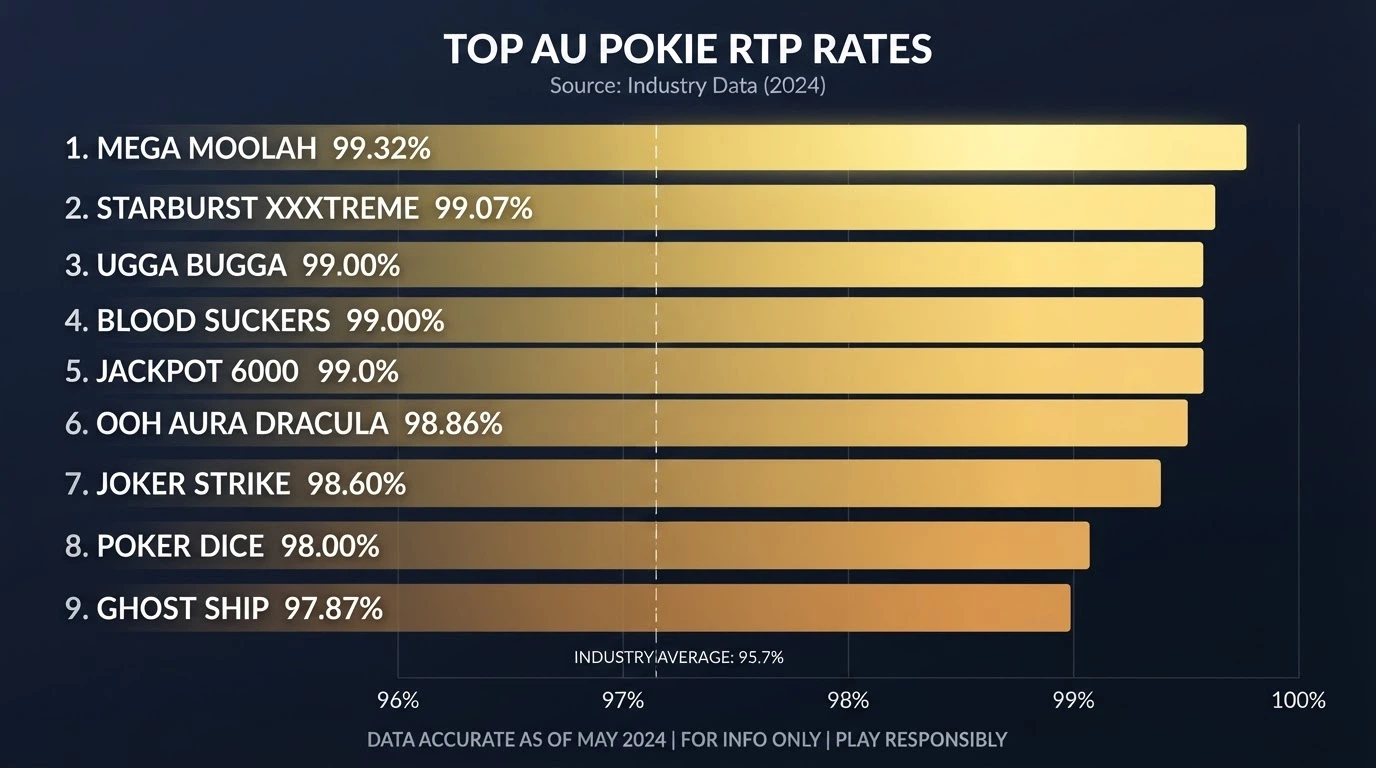
The “99% club” titles ranked from highest to lowest RTP:
| Pokie Title | Provider | RTP % | Volatility | Max Win |
|---|---|---|---|---|
| Goblin’s Cave | Playtech | 99.32% | Low | 900x |
| Ugga Bugga | Playtech | 99.07% | Low | 1,000x |
| Mega Joker | NetEnt | 99.00% | Low–Medium | 2,000x |
| Book of 99 | Relax Gaming | 99.00% | High | 12,075x |
| Ooh Aah Dracula | Barcrest | 99.0% | Medium | 50,000x |
| Jackpot 6000 | NetEnt | 98.86% | Low | 6,000x |
| 1429 Uncharted Seas | Thunderkick | 98.60% | — | — |
| Blood Suckers | NetEnt | 98.00% | — | — |
| Starmania | NextGen Gaming | 97.87% | — | — |
Three of the nine are NetEnt titles, two are Playtech, and the rest split across Relax Gaming, Barcrest, Thunderkick and NextGen Gaming. Volatility is the missing column for three of the titles — research confirms it for six of the nine and not for the remaining three, and a column that cannot be filled honestly should not be filled. For context, Queensland land-based pokies are legally required to return a minimum of 85%, with most venue machines paying between 87% and 90% — a useful baseline for what “high” looks like in a venue an Australian can walk into.
Mega Joker deserves a closer read because the headline figure is conditional. The 99% RTP only applies in Supermeter mode at maximum bet. Base play returns somewhere between 76.9% and 85.1% — well below the industry average. A player who treats the game as a casual spin session at low stakes is not getting the 99% payout. The “highest-RTP pokie available to Australian players” claim is technically true and operationally narrower than it sounds.
Pokies vs Slots: The Australian Terminology
The terms are interchangeable. “Pokies” is short for poker machines — the Australian name for what the rest of the world calls slot machines — and an Australian searching for online slots and an Australian searching for online pokies are looking for the same product. This page uses “pokies” throughout because that is the term a reader of an Australian casino guide will recognise, but every title, provider and RTP figure here applies equally to the same game listed on a slots-focused review site.
Classic Reels, Video Pokies and Progressive Jackpots: The Game Types That Pay
Not every pokie is built the same way, and the game type shapes what a player can expect. Classic three-reel pokies — fruit-machine-style games with a single payline or a small number of paylines — dominate the 99% RTP list. Mega Joker, Jackpot 6000 and Goblin’s Cave are all classic-format games. Their low-volatility profile means smaller, more frequent wins, and their max wins cap well below modern video pokies. A player chasing the highest payout percentage at the cost of session excitement ends up playing these.
Video pokies carry the bonus features and free-spin rounds most players associate with online slots. Book of 99 is the outlier — a video pokie with high volatility and a 12,075x max win that hits 99% RTP through a different mechanism. Ooh Aah Dracula takes a similar approach at medium volatility with a 50,000x ceiling. The video pokie format typically trades some RTP for features, but the top end of the format can still clear 99%.
Progressive jackpot pokies pool a fraction of every wager into a shared prize that grows until it hits. The trade-off is RTP: a chunk of every spin goes to the jackpot rather than to regular paytable returns, so progressive games typically run below the industry average RTP. The exception is when a jackpot has been growing long enough that the expected value of a spin starts to exceed the wager — but that calculation depends on the jackpot’s current size and is not something a static review can claim reliably.
The game type that offers the best payout odds for an Australian player is, on the figures, the classic-reel format at maximum bet. The trade is session experience: these games are visually dated, the bonus features are minimal, and the max wins cap low. Opting for a different style is a rational decision, as the 99% figure acts as a ceiling that other game types may never approach.
The 9 Highest-RTP Pokies for Australian Players — Ranked
The ranking above lists nine titles from 99.32% down to 97.87%. The top three — Goblin’s Cave, Ugga Bugga and the 99% trio of Mega Joker, Book of 99 and Ooh Aah Dracula — are the only widely-available pokies that clear the 99% line. Jackpot 6000 sits in the 98.86% band, 1429 Uncharted Seas at 98.60%, Blood Suckers at 98.00% and Starmania at 97.87%. The remaining gap from 97.87% to the 95.7% industry average is where the bulk of the online pokie market sits.
Why the Same Pokie Can Have a Different RTP at Different Casinos
A Pokie title is not a single mathematical object. Pragmatic Play ships popular pokies — Sweet Bonanza, Gates of Olympus, Wolf Gold — in up to four different RTP configurations, with each casino selecting which version to load. Sweet Bonanza is the clearest example: it ships in versions returning 96.51%, 95.45%, 94.51% or 91.51%. A player playing Sweet Bonanza at a casino that loaded the 91.51% version is getting a 5-percentage-point worse return than a player at a casino that loaded the 96.51% version — for the same game, with the same graphics, the same features and the same name.
The mechanism is not visible to the player from the game’s lobby. There is no tag on the thumbnail that says which RTP version is loaded, no filter to sort by RTP, and no warning when a low-RTP configuration is in play. The information is in the game’s paytable or help file, and a player who wants to check has to open the paytable on the specific casino where they intend to play. The practice is widespread enough that the operator’s choice of RTP version is a meaningful variable in what a player keeps — and it is one the marketing side rarely highlights.
Real-Money Play vs Free Demo Mode: What the RTP Actually Applies To
RTP percentages apply to real-money play. Demo or “fun” mode uses the same game engine but no real money is wagered and no real money is returned. The payout behaviour a player can observe in demo mode is the game’s feature structure — what triggers a bonus, how often free spins land, how the reels behave — not the long-run return. A session of demo spins tells the player how a game plays, not what it pays.
Demo mode is widely available at every offshore casino in this guide. It is the right tool for learning whether a game’s volatility suits a player’s taste, but it is the wrong tool for evaluating what the game pays. For that, the paytable RTP figure at the specific casino is the only honest number. The nine-title ranking above is built on real-money RTP figures sourced from third-party testers, not on demo-mode observations.
Top 10 Offshore Casinos for Australian Pokies Players
Every casino in this ranking operates from offshore. The Australian legal framework does not licence online casino games, so no operator on this page holds an Australian licence. The ranking is built on Australian-player market share — the share of AU-based players each operator captures relative to the wider offshore-AU market — which is the closest available proxy for trust, payout reliability and game fit. Market share is not a guarantee of payout behaviour; it is a signal that enough Australian players have decided the operator is worth using.
| Operator | Licence Jurisdiction | AU Market Share Rank | AU Market Share % |
|---|---|---|---|
| Rocket Play | Curacao | #3 | 9.4% |
| Skycrown | Curacao | #4 | 8.55% |
| Royal Reels | Curacao | #9 | 2.51% |
| WinSpirit | Curacao | #11 | 1.55% |
| Stake | Curacao | #12 | 1.28% |
| Rainbet | Curacao | #13 | 1.28% |
| Scream Casino | Curacao | #14 | 0.99% |
| FairGO | Curacao | #16 | — |
| Bizzo Casino | Curacao | #19 | 0.57% |
| Rocket Casino | Curacao | #20 | 0.57% |
FairGO’s specific AU market share percentage was not surfaced in this run’s research, which is why the cell reads as a dash. The rank position is confirmed. The rest of the table carries the operator’s licence jurisdiction and its rank-and-share position in the Australian market. Welcome-offer specifics for most operators were not confirmed from primary sources this run, so the table stops at the columns research actually covers. Skycrown is the exception: research confirms a welcome offer of up to A$4,000 plus 400 free spins, the largest confirmed offer among the featured set.
A note on what this table does not show: wagering requirements, bonus validity windows, withdrawal limits, payment-method specifics and game-count figures were not confirmed for individual operators from primary sources this run. A column that would have carried guesses was the wrong column to ship. Where the figures matter to a player — wagering requirements on a bonus, withdrawal time on a specific method — the operator write-up below says so in prose rather than filling the gap with a number that is not there.
Rocket Play: AU Market Leader With Pragmatic Play and NetEnt
Rocket Play is the third-largest offshore casino by AU player share, at 9.4% of the Australian market. The game library is built around the two biggest pokie providers in the international market — Pragmatic Play and NetEnt — which means the 99%-club titles and the popular high-RTP video pokies are all available. Pragmatic Play’s multi-RTP shipping model applies, so the specific version of any given Pragmatic title depends on which configuration Rocket Play has loaded; players who want to check should open the game’s paytable before wagering.
The market-share position is itself a signal. Capturing 9.4% of the Australian offshore casino market against operators that have been operating longer and spend more on affiliate marketing is the result of a substantial player base deciding Rocket Play is worth returning to. That decision is downstream of payout behaviour — players who are not paid do not return, and affiliate sites that send players to operators who do not pay lose their own traffic. Rocket Play’s share is not a guarantee, but it is more meaningful than a single reviewer’s rating.
Rocket Play is well suited to a player whose priority is high-RTP pokies from the two biggest providers, with the understanding that the offshore framework applies in full — Curacao licence, no ACMA recourse, no BetStop coverage. A player whose concern is regulatory protection should read the safety section of this guide before depositing.
Skycrown: Big Welcome Package and Strong AU Following
Skycrown holds the #4 position in AU market share at 8.55%, just behind Rocket Play. The headline feature is the confirmed welcome offer of up to A$4,000 plus 400 free spins — the largest welcome package confirmed for any operator in this set. The game library runs Pragmatic Play and NetEnt, the same combination that drives Rocket Play’s appeal.
The welcome offer is what most players will notice first, and the wagering requirements that attach to it determine what the package is actually worth. Research did not surface the wagering multiple or the bonus validity window for Skycrown this run, and those are the figures that determine whether A$4,000 plus 400 free spins is a generous opening or a marketing surface over restrictive terms. A player considering the offer should open the bonus terms page before claiming and check the wagering multiple, the maximum cashout, the game contribution weighting and the validity period.
Skycrown’s #4 position suggests a player base that finds the package and the payout behaviour worth returning to. That is more meaningful than the offer headline alone. For a player whose priority is a substantial welcome package at an established offshore operator, Skycrown sits at the top of this set on confirmed figures — with the caveat that the wagering specifics are the next thing to verify.
Stake: Crypto-First Casino With Provably Fair Pokies
Stake sits at #12 in AU market share at 1.28% — well behind the top four but the largest of the crypto-first operators in this set. The brand runs on cryptocurrency: deposits and withdrawals happen in Bitcoin, Ethereum, USDT and other coins rather than through PayID or bank transfer. The game library includes Pragmatic Play and Hacksaw Gaming, and a subset of games carry Stake’s provably fair system, which lets a player verify that each spin’s outcome was generated before the wager was placed and not adjusted afterwards.
Crypto-first changes the cost and speed calculus. Withdrawals in Bitcoin or Ethereum clear in hours rather than the business days that PayID or bank transfer require. Crypto volatility is a secondary risk: the value of a Bitcoin-denominated balance can move 5–10% in a day, and a player who holds crypto on the casino balance rather than converting to AUD is exposed to that movement on top of the pokie’s house edge. A player who deposits, plays and withdraws in the same coin minimises the exposure. A player who treats the casino as a crypto wallet is taking a different risk on top of the gambling one.
The credit-card and crypto payment ban for licensed Australian wagering does not bind Stake — Stake is offshore, not licensed. But the ban is informative: an Australian asked for a credit card or crypto deposit by a licensed wagering operator is being served by someone outside the rules. Stake accepting crypto is a feature, not a regulatory test. The regulatory test applies only to licensed operators, and there are no licensed online casino operators in Australia.
FairGO: Built for Australian Players
FairGO is the AU-focused brand in this set, operating from Curacao but built around Australian-facing support, banking and branding. It sits at #16 in market share — a smaller position than the top tier but a deliberate one. AU-focused operators tend to differentiate on payment-method fit (PayID support, AUD as the account currency, no conversion fees) and on support responsiveness for Australian time zones.
The trade-off is game library breadth. AU-focused operators are typically smaller and carry fewer providers than the global brands. A player who wants the largest possible library of Pragmatic Play and NetEnt titles will find FairGO narrower than Rocket Play or Skycrown. A player who values AUD-denominated play and Australian-facing support will find it a closer fit. Neither trade-off is decisive — both depend on what the player is choosing between.
Royal Reels: Solid Mid-Tier Offshore Option
Royal Reels holds a top-10 AU market share position at #9 with 2.51% of the Australian market. The operator sits comfortably above the sub-1% tier without reaching the market-share dominance of the top four. That mid-tier position is the most common shape of an established offshore casino — large enough to have a stable player base and small enough to be working harder per player than the dominant brands.
The specifics of Royal Reels’ offering were not confirmed from primary sources this run. What the market-share position suggests is that a meaningful number of Australian players have decided Royal Reels is worth using and returning to. That is not a guarantee, and a player considering Royal Reels should still verify identity documentation early, read bonus terms carefully and start with a smaller deposit before committing a larger balance.
WinSpirit: Growing AU Presence
WinSpirit holds the #11 AU market share position at 1.55%, just outside the top 10. The “growing” framing reflects the trajectory — operators below 2% AU share tend to be in a growth phase rather than at a stable equilibrium, and the ranking is more likely to shift quarter-to-quarter for an operator in this band than for one in the top five.
A growing operator offers a different profile from an established one. The game library and the bonus structure are more likely to change as the operator competes for share. The payout behaviour is more variable because the operational team is more likely to be scaling than optimising. A player choosing WinSpirit is choosing a mid-tier offshore operator with the understanding that the experience will evolve — for better or worse — over the next several quarters.
Rainbet: Emerging Contender for AU Players
Rainbet holds #13 in AU market share at 1.28%, alongside Stake. The same 1.28% figure does not mean Rainbet and Stake are equivalent — Stake runs on crypto and carries a provably fair subset, Rainbet is a more conventional offshore casino. The shared market-share position reflects a similar scale of player base, not a similar product.
For a player evaluating Rainbet, the question is the same as for any sub-2% AU share operator: the player base is real but small enough that payout behaviour is harder to predict from market signal alone. A smaller deposit and an early withdrawal test is the prudent approach with any operator at this share level.
Scream Casino: Niche Offshore Operator
Scream Casino holds #14 in AU market share at 0.99%, the first sub-1% position in this set. The “niche” framing is honest — at less than 1% AU market share, the operator serves a smaller and more self-selected player base. That is not a negative, but it changes what market share means as a signal. A 0.99% share reflects a player base that has chosen this operator for specific reasons, not a broad consensus.
Smaller operators can offer things larger ones do not — different bonus structures, more aggressive promotional terms, a narrower game library tuned to a specific audience. They can also have thinner operational capacity, which shows up as slower withdrawal processing when the team is stretched. A player choosing Scream Casino should treat it as a smaller-scale choice and apply the same early-verification and small-first-deposit discipline that applies anywhere in the offshore segment.
Bizzo Casino: Budget-Friendly Offshore Option
Bizzo Casino sits at #19 in AU market share at 0.57%, the second-smallest position in this set. The “budget-friendly” framing reflects a positioning rather than a confirmed pricing structure — research did not surface per-operator bonus specifics for Bizzo this run, so the positioning is inferred from the operator’s general market position rather than from a confirmed promotional headline.
At 0.57% AU share, the player base is small and the operational signal from market share is weak. A player considering Bizzo is choosing a small-scale offshore casino and should size deposits accordingly. The upside is that smaller operators often compete on bonus generosity to attract share, which can produce better headline offers than the larger brands. The downside is the same operational scale concern that applies to any sub-1% operator.
Rocket Casino: Compact Offshore Offering
Rocket Casino rounds out the featured set at #20 with 0.57% AU market share — tied with Bizzo but ranked below it. The name overlap with Rocket Play is a coincidence rather than a relationship, and the two operators are independent brands. Rocket Casino is the smallest operator in this ranking by AU market share, and the “compact” framing reflects that position.
A player choosing Rocket Casino is choosing the smallest operator in this set, with all that implies. The compact framing can suit a player who wants a smaller, less crowded casino — and it can also suit a player who values the simplicity of a narrower game library. The downsides are the same as for any sub-1% AU share operator: thinner market signal on payout behaviour, smaller operational team, and a higher premium on early verification and cautious deposit sizing.
How Fast AU Players Actually Get Their Winnings — and What Slows Them Down
A 99% RTP pokie means nothing if the casino does not release the winnings. Withdrawal speed is the second half of “best paying” and the half a paytable cannot tell a player about. The honest answer for offshore casinos serving Australian players is that speed varies dramatically by payment method, by operator, and by whether the player has completed identity verification before requesting the withdrawal.
The fastest route is cryptocurrency. Bitcoin and Ethereum withdrawals from offshore casinos routinely clear in under 24 hours, sometimes within an hour for established accounts with prior withdrawals. PayID sits in the middle, with most offshore casinos processing PayID withdrawals within one to three business days — slower than crypto but faster than bank transfer. Bank transfers take longest, typically three to seven business days, and the timeline stretches further when the transfer crosses jurisdictions. Debit card withdrawals are the least reliable route: many offshore casinos do not support card withdrawals at all, and those that do often revert to bank transfer under the hood.
The real bottleneck is verification. Offshore casinos routinely require passport or driver’s licence, proof of address, and sometimes proof of payment method before releasing a first withdrawal. The verification step can take days if the documents need review, and it is the single most common cause of “the casino is withholding my money” complaints. Completing verification immediately after registration — long before any deposit or withdrawal request — is the only way to avoid the predictable delay that typically traps those who wait until winnings are ready.
Payment Methods Australian Pokies Players Actually Use
Three routes cover the bulk of Australian deposits at offshore casinos: PayID, cryptocurrency and debit cards. PayID is the Australian real-time payment rail built into the major banks’ apps, and an AUD deposit clears in seconds with no fees on the player’s side. Crypto is the route for players who want speed on withdrawals as well as deposits and who are comfortable holding a coin-denominated balance. Debit cards work for deposits but rarely for withdrawals, and a player who deposits by card should expect to withdraw by PayID or bank transfer rather than back to the card.
The credit card and crypto ban that took effect on 11 June 2024 covers licensed Australian wagering operators only. Offshore casinos are not bound by the ban — they are not Australian-licensed — and an Australian depositing by credit card or crypto at an offshore casino is using a payment method that the licensed Australian market considers a regulatory red flag. The penalty for a licensed operator that fails to enforce the ban is up to A$247,500. The offshore operator has no equivalent penalty attaching.
POLi, a once-common Australian instant-deposit service, was decommissioned on 30 September 2023. The deposit landscape an Australian player sees in 2026 is PayID, debit cards, crypto and — less commonly — bank transfer or BPAY. The payment-method test is a useful regulatory litmus test for a player who wants to know whether they are dealing with a licensed or unlicensed operator: a licensed wagering operator will not accept credit cards or crypto; an offshore casino will.
Withdrawal Speed: What to Expect by Method
Crypto withdrawals clear fastest because the transfer is point-to-point and does not depend on a banking intermediary. Bitcoin transactions typically confirm within an hour, and the casino’s processing time on top of that is usually under an hour for established accounts. Ethereum is similar, with faster block times and slightly lower fees. USDT operates on multiple blockchains and the confirmation time depends on which chain the casino uses.
PayID sits in the middle of the range. Most offshore casinos process PayID withdrawals within one to three business days, with the variation coming from the casino’s internal processing rather than the PayID rail itself. A player who has completed verification can usually expect a PayID withdrawal to clear within two business days.
Bank transfers are the slowest route. Three to seven business days is the typical window, and the timeline stretches further when the transfer goes through an intermediary bank. The cost is also higher — bank transfer fees of A$15–A$30 per transaction are common at offshore casinos. Given the superior speed and lower costs, PayID or crypto should always be the preferred choice.
Payout Reliability: When an Offshore Casino Refuses to Pay
The honest framing of payout reliability at offshore casinos serving Australians is that the player has fewer protections than at a licensed Australian wagering operator. The Interactive Gambling Act 2001 makes the provider’s offering illegal — but it does not give the player a regulator to appeal to. The Australian Communications and Media Authority enforces the prohibition against the operator, not on the player’s behalf. There is no equivalent of the UK Gambling Commission’s dispute resolution service, no ADR provider the casino is bound to recognise.
The common reasons an offshore casino withholds a payout are: incomplete identity verification, a bonus-term dispute (often a player having triggered a bonus without realising, with the casino then applying the bonus’s wagering requirements to the withdrawal), and AML or fraud triggers (often a deposit pattern that looks unusual). The first two are preventable from the player’s side. The third is harder to predict and harder to resolve.
The most consequential risk is the site being blocked. The ACMA has blocked more than 1,154 illegal gambling and affiliate websites since November 2019, and 73 sites were blocked in Q2 2025 alone. A site blocked with a player balance still on it is a balance the player has very limited recourse to recover. The site may continue operating from its offshore base and may eventually release the funds — but there is no guarantee, and no Australian regulator to enforce a release. This is the most concrete operational risk of playing at an offshore casino, and it is the one most Australian players do not think about until it happens.
The Offshore Reality: Why No Licensed Online Pokies Exist in Australia
The Interactive Gambling Act 2001 prohibits providing online casino games — including online pokies — to a person physically in Australia. The prohibition covers all online casino products regardless of provider, jurisdiction or game type. The Act was strengthened by the Interactive Gambling Amendment Act 2017, which expanded the ACMA’s enforcement powers and extended the prohibition to in-play online wagering.
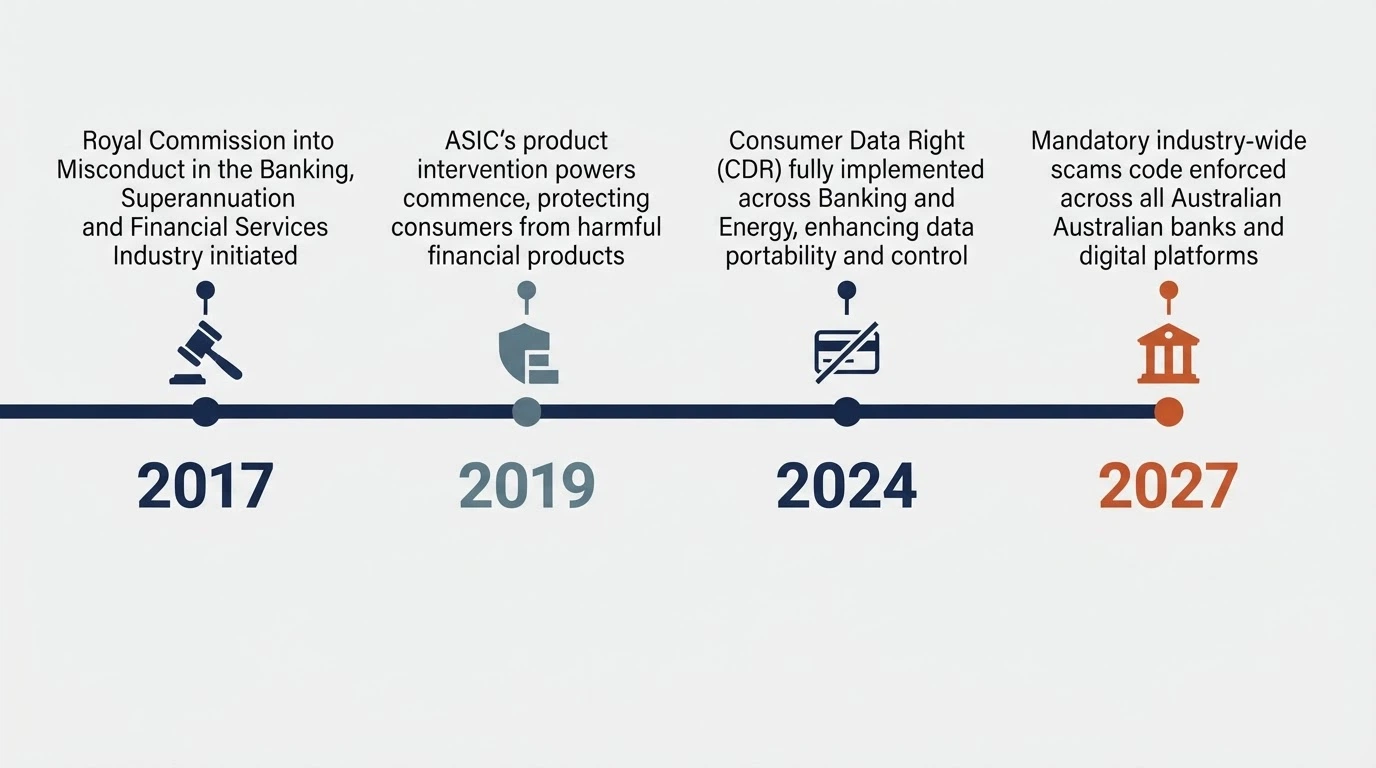
The product categories that ARE licensable in Australia are narrower than most readers expect. Pre-event wagering on racing and sport is licensable, through operators licensed by a state or territory (the Northern Territory Racing and Wagering Commission is the de facto national licensor for online wagering). Lotteries and keno are licensable. Online casino games are not, in any form. There is no licence pathway for an operator to legally offer online pokies to Australian customers, which is why every operator on this page is offshore.
The regulatory architecture treats the prohibition as targeting the provider rather than the customer. An Australian player using an offshore casino is not committing an offence under the IGA. The Act’s penalties apply to the operator providing the service. That distinction matters legally — but it does not give the player any consumer protection. No Australian regulator has jurisdiction over an offshore casino’s payout decisions, no Australian consumer law applies to its bonus terms, and no Australian dispute resolution service can compel a payout. “Not illegal for the player” and “safe for the player” are different statements, and the offshore casino market is the gap between them.
The minimum age for all commercial gambling in Australia is 18, and that applies to online play as well. Offshore casinos enforce age verification inconsistently, and an Australian under 18 using an offshore casino is in a regulatory grey area — not prosecuted under the IGA, but well outside the licensed framework’s age controls.
How the ACMA Enforces the Online Pokies Ban
The ACMA’s enforcement against offshore online casinos serving Australians operates on a quarterly cycle of investigations, warnings, civil penalty proceedings and ISP blocking requests. The pattern is consistent across recent quarters: hundreds of enquiries received, dozens of investigations completed, dozens of breaches found, and dozens of sites blocked. The scale of enforcement is substantial — it is not a token effort — and the cumulative effect since 2017 is the 1,154+ blocked sites and 220+ withdrawn services that define the current market.
The quarterly enforcement figures for 2025:
| Quarter | Investigations Completed | Sites Investigated | IGA Breaches Found | Formal Warnings Issued | Sites Blocked |
|---|---|---|---|---|---|
| Q1 2025 | 22 | 25 | 33 | — | — |
| Q2 2025 | 20 | 24 | 30 | 10 | 73 |
| Q4 2025 | 29 | 30 | 44 | — | — |
Q2 2025 carries the most complete picture — investigations, breaches, warnings and blocks all surfaced. Q1 and Q4 2025 figures cover investigations and breaches but did not surface warning and block counts from research this run, and the cells carry an em dash rather than a guess. Across the three quarters, 71 investigations completed, 79 sites investigated, 107 IGA breaches found. Q2 2025 alone produced 73 blocked sites.
The enforcement pattern is a meaningful context for any player considering an offshore casino. The ACMA is actively blocking sites on a quarterly cadence. A site that is accessible today may be blocked next quarter. The site’s operator may continue serving the player from offshore — but a site blocked by Australian ISPs is a site the player cannot reach without a VPN, and the operational risk of funds stranded on a blocked site is real.
The 2026 Gambling Reform: What Changes From January 2027
The Interactive Gambling Amendment (Gambling Reform) Bill 2026 passed Parliament on 19 August 2026. Its measures commence on 1 January 2027. This is the most significant Australian gambling-law change in a generation, and the parts that matter for offshore casino players are the bank-blocking powers and the advertising restrictions.
From 1 January 2027, banks and payment providers gain express statutory authority to block transactions to illegal gambling operators. The mechanism is direct: an Australian bank can decline a transaction it identifies as going to an illegal gambling operator, without requiring the ACMA to first block the destination site. For an Australian depositing at an offshore casino, the practical effect is that the deposit may not go through at all — not because the casino refused it, but because the bank refused to send it.
The advertising restrictions phase in over three years and target wagering advertising rather than casino advertising specifically (since casino advertising is already prohibited). The headline measures are: no more than three wagering ads per hour between 6:00 am and 8:30 pm; a live-sport blackout from 15 minutes before to 5 minutes after each event; radio ads barred during school hours; broadcasting sporting odds banned; online wagering ads only to logged-in, age-confirmed users who have not opted out; no ads in sports venues or on uniforms; athletes, celebrities and influencers barred from promoting wagering.
For an Australian player, the 2027 changes close one of the easy routes to offshore casino play. A player who can no longer deposit from an Australian bank account without the transaction being blocked is a player who has lost the path of least resistance. The offshore casino may still accept crypto — the bank-blocking powers apply to fiat transactions, and the regulatory treatment of crypto is less clear — but the AUD deposit route will narrow substantially.
Credit Cards, Crypto and the Payment-Method Test
The credit card and crypto payment ban that took effect on 11 June 2024 applies to licensed Australian wagering operators. It does not bind offshore casinos, because offshore casinos are not licensed in Australia. The ban is nonetheless useful as a regulatory litmus test: an Australian asked for a credit card or crypto deposit by a gambling site is being served by an operator outside the Australian rules.
The ban covers credit cards, credit-related products and digital currency (crypto) as payment methods for licensed online wagering. An Australian-licensed wagering operator that accepts any of these payment methods faces penalties of up to A$247,500 per breach. The ACMA’s consumer awareness campaign about the ban commenced on 22 May 2024, three weeks before the ban took effect.
For an Australian playing at an offshore casino, the payment-method test works in reverse. Offshore casinos accept credit cards and crypto because the Australian ban does not apply to them. The presence of these payment methods is a marker of offshore status, not a marker of regulatory compliance. A player who wants the protections of the Australian framework has no licensed online casino to go to — the product those protections would attach to does not exist. A player who accepts the offshore framework and plays at an offshore casino gets the payment-method flexibility that the licensed market prohibits.
Staying Safe: The AU Gambling Help Resources That Actually Cover You
Australia has world-class gambling support infrastructure. The National Gambling Helpline at 1800 858 858 is free, confidential and staffed 24 hours a day, seven days a week, with online chat and counselling through Gambling Help Online. BetStop, the National Self-Exclusion Register, binds every Australian-licensed wagering provider with a single registration. GambleAware state-level services deliver face-to-face and telephone support.
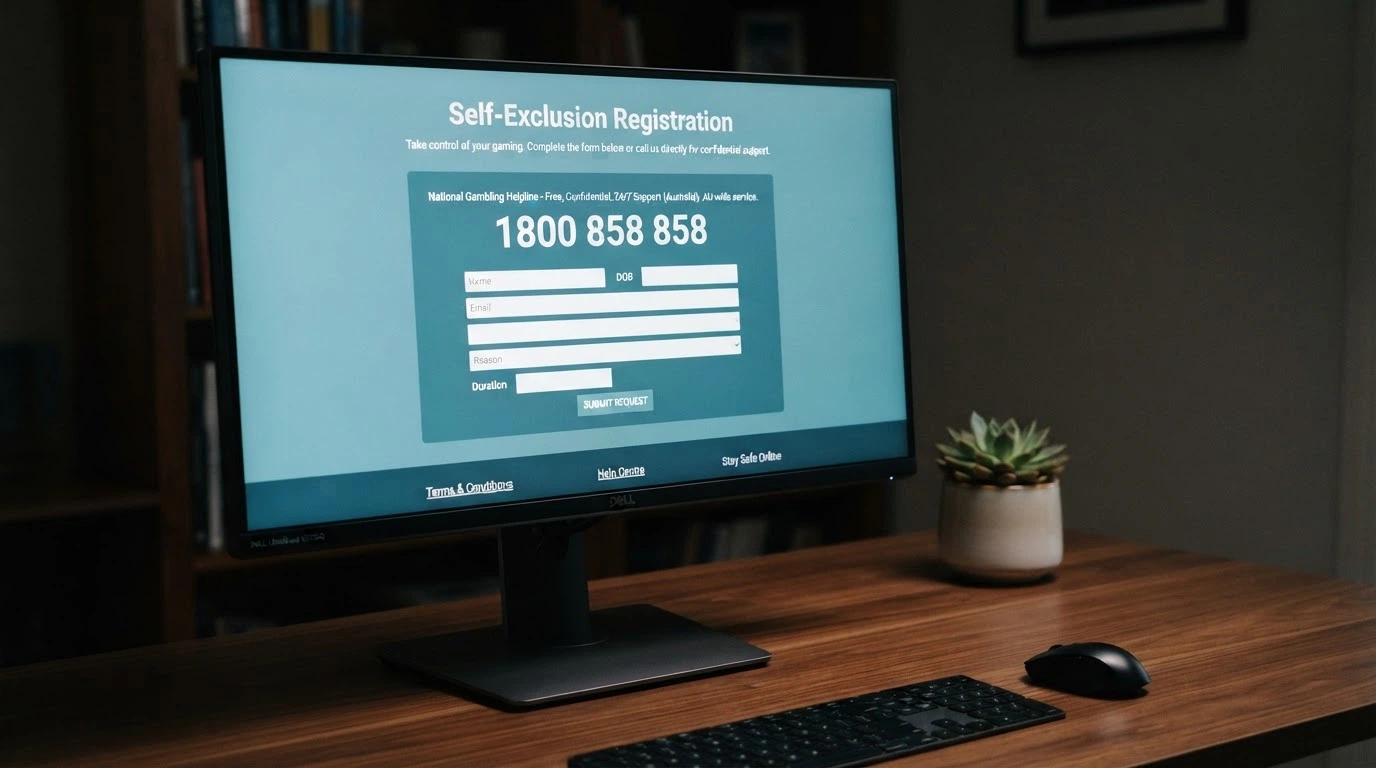
The infrastructure is built for licensed wagering, and offshore casino players fall through several of its gaps. BetStop binds approximately 150 Australian-licensed wagering providers. An offshore casino is not connected to the register, and a self-excluded person can still deposit and lose money at any site on this page. The support services — the helpline, Gambling Help Online, GambleAware — are available to anyone regardless of where they play, and that is the safety net an offshore casino player can actually use.
The scale of gambling harm in Australia is the context for why these services matter. Australians lost A$36.0 billion to gambling in the 12 months to March 2026 — the highest total on record, up A$1.3 billion on the prior year. The average Australian adult loses A$1,635 per year, the highest per-capita figure in the world. Approximately 3.29 million Australians are affected annually by their own or another person’s gambling, and the annual health loss associated with gambling harm is estimated at over 400,000 Years Lived with Disability.
BetStop Self-Exclusion: How It Works and Where It Fails
BetStop — the National Self-Exclusion Register — launched on 21 August 2023. A single registration excludes a person from every Australian-licensed online and phone wagering service. By 31 March 2026, 59,830 people had registered, with 37,247 holding active exclusions. The minimum exclusion period is three months, the maximum is lifetime, and a person cannot apply to be removed in the first three months regardless of which exclusion length they chose.
The mechanism is direct. A registered BetStop user cannot open a new account with any of the approximately 150 Australian-licensed wagering providers, and existing accounts are closed. The exclusion is enforced at the operator level by the licence conditions each operator holds.
The gap is offshore. BetStop does not bind offshore casinos. A self-excluded Australian can still deposit, wager and lose money at any of the operators on this page. The exclusion is meaningful for the licensed wagering market — which includes sports betting and racing — and it is silent on the offshore casino market. For a person whose gambling harm is concentrated on pokies rather than wagering, BetStop closes part of the exposure and leaves the offshore casino part open.
The statutory review of BetStop produced ten recommendations focused on community awareness, reducing circumvention, and improving user experience. One recommendation is to extend BetStop to online keno. None of the recommendations close the offshore casino gap, because the gap is structural rather than operational — offshore casinos are not within the BetStop framework’s jurisdiction by design.
For a person who needs exclusion from offshore casinos, the practical options are limited. Self-barring at individual casinos works on a per-operator basis and depends on each casino honouring the request. The support services — the helpline and Gambling Help Online — can advise on a coordinated approach across multiple operators. The fundamental limitation is that offshore casinos are not bound by an Australian regulator to honour any exclusion request, and a casino that declines to self-bar a player has no regulatory consequence.
Deposit Limits and Harm-Minimisation Tools
Australian-licensed wagering operators must offer customer-set deposit limits and activity statements under state and territory conditions. A player can set a daily, weekly or monthly deposit cap, and the operator is required to honour it. Activity statements provide a regular summary of deposits, wagers and time spent on the platform. The take-a-break feature lets a player suspend their account for a defined period without registering for full self-exclusion.
Offshore casinos may offer none of these tools, or they may offer them without regulatory enforcement. A “responsible gambling” page at an offshore casino is a voluntary commitment. A player who sets a deposit limit at an offshore casino is depending on the casino to honour it without an Australian regulator checking. Most established offshore casinos do honour voluntary limits — but “most” and “all” are different words, and the offshore framework does not give the player a remedy if a casino does not.
The practical harm-reduction steps for an offshore casino player are: set a session budget before logging in, not after; set a time limit and use a phone alarm to enforce it; withdraw winnings promptly rather than letting them accumulate on the casino balance; keep a written record of deposits across all operators; and use BetStop for the licensed wagering side even though it does not cover the offshore casino side. None of these are substitutes for the regulatory protection the licensed market provides, but they are the discipline the offshore framework rewards.
Where to Get Help: AU Support Services Directory
- National Gambling Helpline — 1800 858 858 (free, confidential, 24/7)
- Gambling Help Online — online chat, counselling and self-help tools
- BetStop — National Self-Exclusion Register (covers licensed wagering; offshore casinos not connected)
- GambleAware — state-level counselling services (NSW GambleAware alone supported 4,170 people in 2024-25 across more than 19,000 counselling sessions, with the GambleAware Helpline providing over 9,500 telephone crisis support contacts)
- Self-help tools — Gambling Habit Hacker, Gambling Less In The Moment (free apps for tracking and managing gambling behaviour)
These services are free, confidential and available to anyone in Australia regardless of where they play. The 9,500+ crisis calls to GambleAware NSW in 2024-25 is a single year’s evidence that the services are used — and a reminder that the offshore casino gap means some of those callers came from offshore casinos BetStop did not cover.
How We Picked and Ranked These Casinos and Pokies
Every casino and pokie on this page was evaluated against a consistent set of criteria. The pokie ranking is built on RTP figures sourced from third-party testers — Payoutverdict.com and AussiePokies96 — cross-checked against the specific titles the research confirmed. Volatility, max win and provider attribution come from the same sources. Where a figure was not confirmed, the cell carries an em dash rather than an estimate.

The casino ranking is built on Australian-player market share. The data reflects the share of Australian-based players each operator captures relative to the broader offshore-AU market, which is the closest available proxy for trust, payout reliability and game fit at the operator level. Licence jurisdiction is confirmed for every operator in the set. Welcome-offer specifics were not confirmed for most operators from primary sources this run, and the comparison table reflects that honestly rather than padding the table with figures that could not be verified.
The criteria this ranking measures — RTP, market share, licence jurisdiction, game-provider quality — are not the only criteria that matter. Customer service responsiveness, dispute resolution history, withdrawal processing consistency over time, and the operator’s behaviour during a site’s ACMA blocking are all material to a player’s experience, and none of them are fully captured by a market-share figure or a paytable number. The ranking is the best available signal from the sources consulted this run, and it is not a substitute for a player’s own early-stage testing with small deposits.
What AU Pokies Players Should Actually Do With This Information
The data on this page points to a sequence. Pick a high-RTP pokie from the ranked list — Goblin’s Cave, Ugga Bugga, Mega Joker (in Supermeter mode at max bet), Book of 99 or Ooh Aah Dracula are the five titles that clear 99%. Read the paytable at the specific casino where the player intends to play, because the RTP version the operator has loaded may not be the headline figure. Be aware that Mega Joker’s 99% requires a specific play mode the casual session does not hit.

Pick an operator from the comparison table based on what matters most. For game library breadth and the largest confirmed player base, Rocket Play and Skycrown are the top of the set. For a confirmed welcome offer of up to A$4,000 plus 400 free spins, Skycrown is the standout — with the wagering requirements as the figure to verify next. For crypto-first play and provably fair games, Stake is the established option. For AU-facing support and AUD-denominated play, FairGO is the targeted brand. For a smaller-scale choice with potentially better bonus terms, the sub-1% operators (Scream, Bizzo, Rocket Casino) are the budget end of the set.
Complete identity verification immediately after registering at any offshore casino, before depositing or requesting a withdrawal. Read the bonus terms before claiming any welcome offer — the wagering multiple, the game contribution weighting, the maximum cashout and the validity window are the four figures that determine what the bonus is actually worth. Start with a small deposit and a small first withdrawal to test the payout flow before committing a larger balance.
Set a session budget before logging in and stick to it. The industry average RTP of 95.7% means a A$100 wager session returns A$95.70 on average across the long run — the house keeps A$4.30 of every A$100 wagered. That is the cost baseline against which any session budget should be set. A player who treats the A$4.30 per A$100 as a known cost rather than an unexpected loss is making a decision the marketing side rarely invites them to make.
Accept that the Australian legal framework offers no safety net for offshore casino play and act accordingly. BetStop does not cover offshore casinos. ACMA does not enforce offshore casino payouts. Australian Consumer Law does not apply to Curacao-licensed operators. The 2027 reform will make it harder to deposit at offshore casinos from an Australian bank account, not easier. The decision to play at an offshore casino is a decision to accept the offshore framework on its terms, and the player who enters with that understanding is the player who makes better choices about which operator to use, how much to deposit and when to walk away.
Frequently Asked Questions
Can an Australian player get in legal trouble for using an offshore casino?
No. The Interactive Gambling Act 2001 targets the operator providing the service, not the individual customer. An Australian player using an offshore casino is not committing an offence under the IGA. The absence of prosecution is not the same as protection, however — the player has no Australian regulator to appeal to if the operator withholds a withdrawal or disputes a bonus term, and the site can be blocked by ISPs at any time.
Do offshore casinos actually pay out winnings to Australian players?
Most do, but the framework offers fewer guarantees than a licensed Australian wagering operator. Market share is the closest available signal — operators with high AU player share have a track record of paying out, because players who are not paid do not return. The risk that does exist is operational: identity verification delays, bonus-term disputes, and the small but real chance of the site being blocked by the ACMA with a balance still on it.
What is the difference between RTP and volatility when picking a pokie?
RTP is the percentage of wagers the game returns to players over millions of spins — a long-run average, not a short-run guarantee. Volatility is the shape of the payout distribution: low volatility means smaller, more frequent wins; high volatility means rarer, larger wins. A 99% RTP low-volatility pokie returns close to 99% in small steady chunks. A 99% RTP high-volatility pokie returns 99% on average but with long losing runs between big wins. The first suits a player with a fixed session budget; the second suits a player chasing a large payout who can absorb the variance.
Why do the same pokies have different RTP percentages at different casinos?
Pragmatic Play and other major providers ship popular titles in multiple RTP configurations, and each casino chooses which version to load. Sweet Bonanza is the clearest example — it ships in 96.51%, 95.45%, 94.51% and 91.51% versions, and the same game name at two different casinos can return five percentage points apart. The information is in the game’s paytable, and a player who wants to verify the loaded version should open the paytable at the specific casino before wagering.
What happens if an offshore casino blocks me or refuses to pay out?
The operator’s decision is largely final. There is no Australian regulator to appeal to, no ADR provider the offshore casino is bound by, and no consumer law remedy. The first line of defence is preventing the situation: complete identity verification early, read bonus terms before claiming, and avoid deposit patterns that trigger AML flags. If a withdrawal is being withheld, the support services listed in the safety section of this guide can advise on dispute escalation, though the operator’s willingness to cooperate is the determining factor.